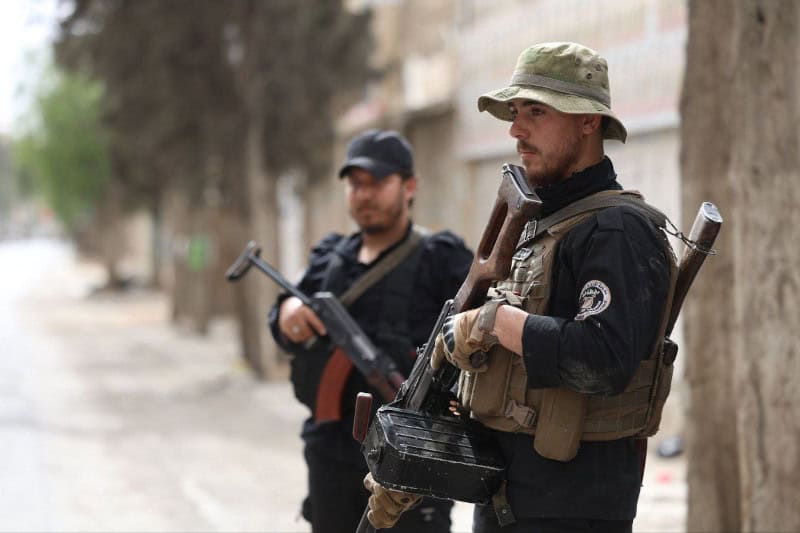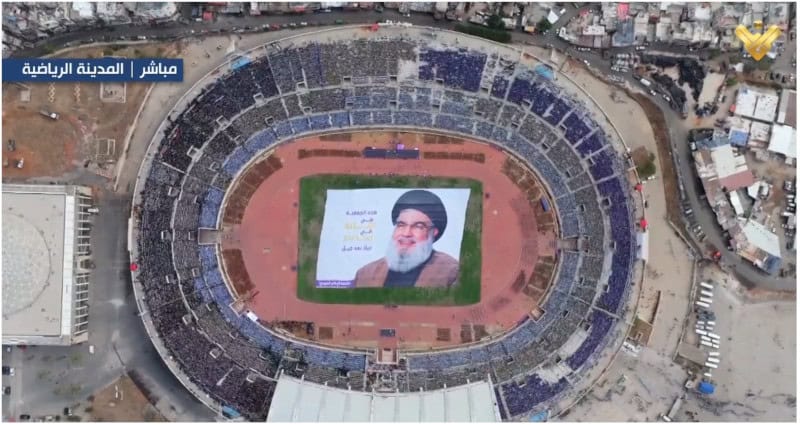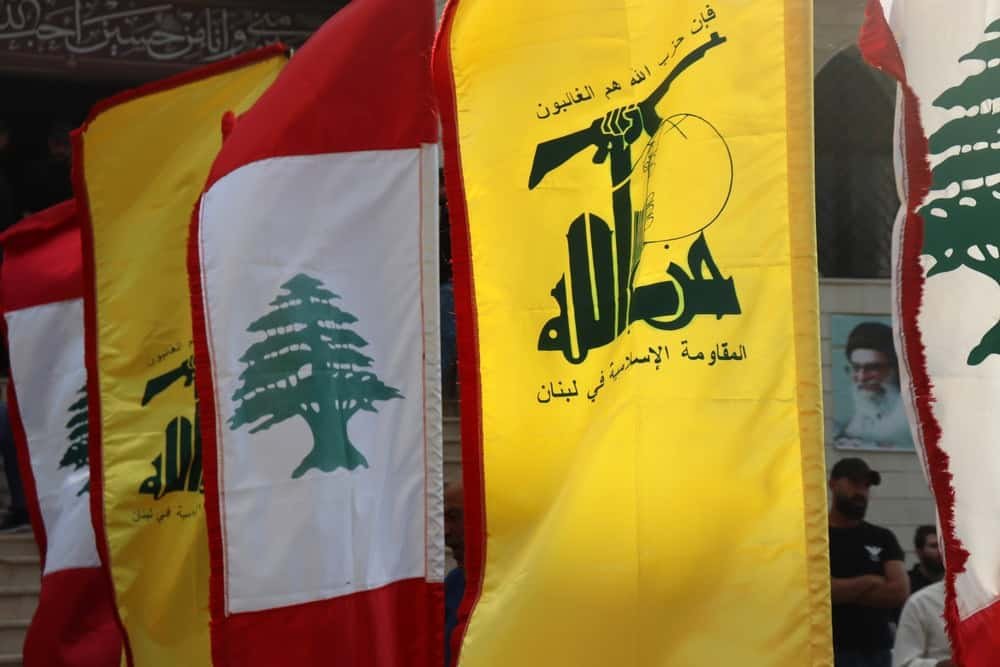
Israel assesses with “fairly high probability” that the Lebanese military is coordinating its activity in Lebanon’s disarmament pilot zones with Hezbollah, Israel’s Channel 14 reported on September 14. An unnamed Israeli political source said this coordination runs from Lebanese Armed Forces (LAF) Commander General Rodolphe Haykal “down to soldiers in the field,” and concluded that the pilot-zone mechanism “has failed.” Under the terms of the June 26 US-brokered Trilateral Framework Between the United States of America, the State of Israel, and the Republic of Lebanon, the pilot zones require the LAF to clear unauthorized armed personnel, weapons, and military infrastructure, obtain mutually acceptable third-party verification, and only then assume sole “operational control.”
Channel 14 did not independently establish Hezbollah’s alleged coordination with every LAF echelon. But the underlying phenomenon is hardly novel. Hezbollah and the LAF have coordinated in varying forms for decades, and the record since the November 2024 ceasefire in Lebanon shows coordination becoming part of how Beirut approached obligations that, on paper, required Hezbollah’s disarmament.
The November 27 ceasefire agreement reaffirmed Lebanon’s obligation to implement United Nations Security Council Resolution 1701, which ended the 2006 Israel-Hezbollah war, and related resolutions requiring the disarmament of all armed groups throughout Lebanon. The deal also required dismantling unauthorized military infrastructure and confiscating unauthorized weapons “starting south of the Litani River.”
Two days after the ceasefire’s announcement, Hezbollah Secretary-General Naim Qassem said there would be “high-level coordination” with the LAF to implement the deal. But Qassem quickly explained what Hezbollah believed that implementation should—and should not—mean. On December 5, he confined the agreement’s enforcement mechanism to south of the Litani and said the wider relationship between “the resistance and the state” and “the resistance and the army”—in practical terms, Hezbollah’s armed status elsewhere in Lebanon—would be handled through Lebanon’s internal political process. Nine days later, Qassem said the agreement was meant to “end the [Israeli] aggression, not the resistance.” Hezbollah’s proposed coordination with the LAF was therefore not a route to its nationwide disarmament.
Lebanese reporting that same week described an LAF approach similarly built around cooperation with Hezbollah rather than coercive disarmament. Al Joumhouria, a Lebanese daily, reported on December 4 that LAF Command intended to continue “coordination and communication with Hezbollah on the ground.” When a minister reportedly asked then-LAF commander Joseph Aoun how troops would respond if they encountered armed Hezbollah personnel south of the Litani, Aoun answered, “We coordinate [with the resistance], as we coordinated previously.” Sources close to the Defense Ministry likewise said that the LAF was accounting for Hezbollah’s “cooperation and facilitation” in carrying out its mission.
The Hezbollah-aligned daily Al Akhbar separately reported that senior LAF officers opposed turning the LAF into a force that would “confront Hezbollah” or “clash with the group,” while describing cooperation as necessary to the mission. The LAF’s public descriptions of its “mission” were narrower still: on November 27, it defined its mission as reinforcing deployment, asserting state authority, and implementing Resolution 1701—which Lebanon has historically interpreted as excluding Hezbollah from its disarmament requirement by classifying it as a “resistance organization,” rather than an “armed group.” The next day, the LAF listed checkpoints, reopening roads, destroying unexploded ordnance, and assisting returning residents among its activities. It did not describe an operation to disarm Hezbollah, coercively or otherwise.
That approach soon produced physical handovers from Hezbollah to the LAF. The Beirut-based Al Modon reported in February 2025 that Wafiq Safa, head of Hezbollah’s Liaison and Coordination Unit, coordinated with then-LAF commander Aoun immediately after the ceasefire, before Aoun’s January 9 election as president. Hezbollah then ordered its fighters out of the South Litani area and instructed its personnel not to move weapons they encountered, including individual arms, but to leave them for army collection. Al Modon described near-daily LAF-Hezbollah communication over weapons depots, military positions, civilian returns, and the ceasefire mechanism. In April, the Lebanese broadcaster LBCI quoted an official describing Hezbollah as “fully cooperating” and ceasefire-monitoring sources saying they had observed no obstruction by Hezbollah.
The arrangement had a strikingly similar historical analog after the 2006 war, when an expanded LAF deployment and selective weapons collection coexisted with an explicit decision not to root out Hezbollah’s arsenal. The Lebanese military deployed south under another ceasefire intended to restore state authority and address Hezbollah’s weapons. Sources close to Army Command, however, described a tacit understanding with the group that undercut that mission: Hezbollah fighters could return to southern villages if their weapons stayed out of sight. Displayed or discovered weapons would be handed to the LAF, but the army would neither actively search for hidden arms nor attempt to disarm Hezbollah.
Intelligence sharing and broader security cooperation formed another documented layer of the LAF-Hezbollah relationship. A Guardian report published days after the 2006 war quoted retired LAF General Nizar Abdel-Kader as saying the two institutions “cooperate on security issues.” An unnamed defense analyst said that intelligence gathered by LAF in southern Lebanon was put at Hezbollah’s disposal, though the report described this as part of a broader standing relationship rather than a new one established after the just-ended war. Retired LAF General Amin Hoteit likewise said the army assisted Hezbollah “as best it can.”
That relationship was also reflected at command level: Michel Suleiman, then LAF commander, had stated the previous year that “protection of the resistance is the army’s basic task,” and said in 2003 that the LAF coordinated with Syria’s military and the “national resistance” (Hezbollah) to confront possible Israeli attacks. A 2009 CSIS study, based partly on interviews with senior LAF officers, likewise found intelligence sharing and coordination on security operations.
Counterintelligence activity, liaisons, and security handoffs offer other examples, although not every episode proves direct institutional coordination between the LAF and Hezbollah. In 1996, LAF intelligence used agents inside Israel’s occupation zone to abduct Ahmad Hallak, wanted for masterminding a bombing that killed, among others, the brother of a Hezbollah official. When Israel and its South Lebanon Army (SLA) proxy withdrew in May 2000, Hezbollah and the Shiite Amal Movement transferred surrendering SLA personnel to Lebanese authorities; by May 27, the LAF said it had received 1,488 detainees. In 2019, Hezbollah stated that it coordinated with Army Intelligence after an Israeli drone incident in Beirut’s southern suburbs and transferred the recovered drones to the service.
The relationship also functioned as deconfliction during internal crises. For example, during Hezbollah’s May 2008 armed takeover of western Beirut, the LAF largely stood aside, then reversed government measures that had triggered the fighting while pledging not to harm “the security of the resistance.” Hezbollah subsequently withdrew its gunmen and handed the streets back to the Lebanese military.
Claims of direct battlefield cooperation also exist. During the June 2013 battle in Abra, near Sidon, against followers of anti-Hezbollah Salafi cleric Ahmad al Assir, residents and political actors alleged that Hezbollah gunmen fought alongside or supported the LAF, citing armed men, video footage, and reported Hezbollah fatalities. However, caretaker Defense Minister Fayez Ghosn, a member of the Hezbollah-aligned Marada Party and the March 8 bloc serving in Najib Mikati’s caretaker government, which Hezbollah and its March 8 allies dominated, denied Hezbollah’s involvement.
A similar dispute accompanied the 2017 border battles. Hezbollah transferred positions on the Lebanese-Syrian frontier to the LAF in May. During Hezbollah’s July offensive against Jabhat al Nusra around Arsal, Prime Minister Saad Hariri denied coordination between the Lebanese and Syrian militaries and publicly opposed Hezbollah’s participation there. Three months after the May handover, the LAF attacked Islamic State positions from Lebanon, while Hezbollah and Syrian forces launched a simultaneous offensive from Syria. LAF spokesman Brigadier General Ali Qanso said, “There is no coordination, neither with Hezbollah nor with the Syrian army.” A subsequent CSIS analysis, based partly on interviews with senior LAF commanders and their US and UK counterparts, also said the Army’s “Dawn of the Barrens” campaign was conducted without LAF-Hezbollah coordination.
Pro-Hezbollah media, however, alleged “continuous open communications” between the LAF operations center and the Hezbollah-Syrian command. At the same time, a commander in the pro-Syrian military alliance said that coordination occurred “naturally,” though without a joint operations room. Whatever occurred tactically, communications, prior position transfers, complementary operations, and command-level deconfliction were visible.
The historical record, therefore, spans intelligence and security cooperation, negotiated handoffs, deconfliction, and disputed battlefield coordination. And the post-November 2024 arrangement did not create a new relationship; it applied those longstanding practices to an agreement that formally required Hezbollah’s disarmament. By January 8, 2026, the LAF announced that it had “effectively and tangibly” completed the first phase of the government’s plan to place weapons exclusively under state control south of the Litani, including establishing “operational control” over the sector.
Events tested that claim within weeks. Hezbollah resumed attacks on Israel on March 2, reopening the war begun on October 8, 2023. By mid-March of this year, the group was again fighting Israeli troops around Khiam, south of the Litani. On March 27, the IDF said troops there found three new shafts that Hezbollah had built during the ceasefire around an underground site Israel said it had cleared in December 2024. The Israeli military also said that it found hundreds of weapons in a school and another armed Hezbollah position connected to an underground shaft. On April 30, the IDF announced that troops at Ras al Bayada destroyed a Hezbollah tunnel more than 140 meters long containing living and preparation rooms, operational shafts, numerous weapons, and infrastructure the IDF said Hezbollah had used recently—precisely the sort of surviving or rebuilt infrastructure the post-2024 process was supposed to eliminate.
On March 2, the Lebanese government formally responded to Hezbollah restarting the war by declaring all Hezbollah military and security activity immediately illegal, ordering the group to surrender its weapons, instructing security agencies to act immediately and arrest violators, and directing the LAF to begin “immediately and firmly” implementing its north-Litani plan using “all means” necessary. Yet at that same session, Prime Minister Nawaf Salam said, “We do not seek a confrontation with Hezbollah.”
The same qualification continued down the chain. Five days later, Haykal told LAF commanders that army decisions would prioritize Lebanese unity, the country’s internal stability, and the preservation of its military institution, and that the solution was “not solely a military one.” Aoun has repeatedly echoed that position, calling for the state’s weapons monopoly to be implemented through dialogue “away from force.” On September 16, he said that Hezbollah’s disarmament was “neither negotiable nor open to discussion,” then added, “The objective is not a confrontation. We are determined to resolve this issue peacefully. This is not about building a state at the cost of a bloody conflict … or a new civil war.”
Hezbollah, meanwhile, has continued to reject Beirut’s official end state. Qassem said in June that “any project to disarm us will not pass” and later rejected linking Israeli withdrawal to Hezbollah’s disarmament throughout Lebanon.
Beirut has nevertheless persisted with this restrained approach despite Hezbollah’s intransigence. On August 20, an LAF officer said that troops lacked a mandate independently to confront Hezbollah if it obstructed a disarmament operation. On September 3, Colonel Raja Amer, deputy commander of the LAF’s South Litani Sector, told CNN that the army would proceed “slowly” and “in a reasonable way” to avoid violence against “our own people” and another civil war.
The non-confrontational route applied by the Lebanese government and military has not resulted in Hezbollah’s disarmament by gentler means. Instead, similar to the post-November 2024 period, it has led to deficient enforcement of Lebanon’s obligations—this time under the June 26 framework.
For example, during an August 20 visit to Zawtar al Gharbiyeh, This Is Beirut reported that soldiers waved its reporters’ black Audi with tinted windows through the main LAF checkpoint without identifying the occupants or inspecting the vehicle; two vehicles immediately ahead of it, including a van, also passed without identification checks. An LAF intelligence source told the outlet that the army regarded its primary responsibilities there as disposing of unexploded ordnance, clearing rubble, and assisting residents rather than prioritizing Hezbollah’s disarmament. A local source said he could identify no case in Zawtar al Gharbiyeh where LAF had dismantled a Hezbollah weapons depot or military infrastructure. Al Modon‘s September 8 report underscored this, quoting official sources describing the purpose of LAF’s expanded deployment in Nabatieh as “to reinforce LAF’s deployment, not to begin a [Hezbollah] disarmament process or make the city weapons-free.”
The next day, the LAF issued a statement that demonstrated the results of its approach. On September 9, the military said it had achieved “operational control” in the three pilot zones of Zawtar al Gharbiyeh, Froun, and Srifa and detailed approximately 1,818 confiscated weapons and pieces of ammunition. Of those items, 1,560—roughly 86 percent—were undefined “light ammunition.” The statement did not identify how much belonged to Hezbollah, any Hezbollah operative disarmed or arrested, or any Hezbollah weapons depot, tunnel, or command center dismantled in the three zones.
David Daoud is Senior Fellow at at the Foundation for Defense of Democracies where he focuses on Israel, Hezbollah, and Lebanon affairs.