Nearly a week after demolishing Hezbollah’s underground complex at Ali Al Taher in south Lebanon, the Israel Defense Forces on September 16 disclosed new details about its roughly three-month battle for the ridge.
At the outset of the battle, forces from the Maglan and Egoz commando units captured the village of Mazraat Ali al Taher below the heights and began climbing toward the 600-meter ridge, where commanders said roughly 50 Hezbollah fighters were entrenched in a fortified tunnel network. The terrain favored the defenders: only a few routes led upward, while dense vegetation and boulders concealed Hezbollah booby traps, surveillance equipment, and explosive drones. Egoz’s commander described Ali Al Taher as the most complex battlefield his unit had faced during the war.
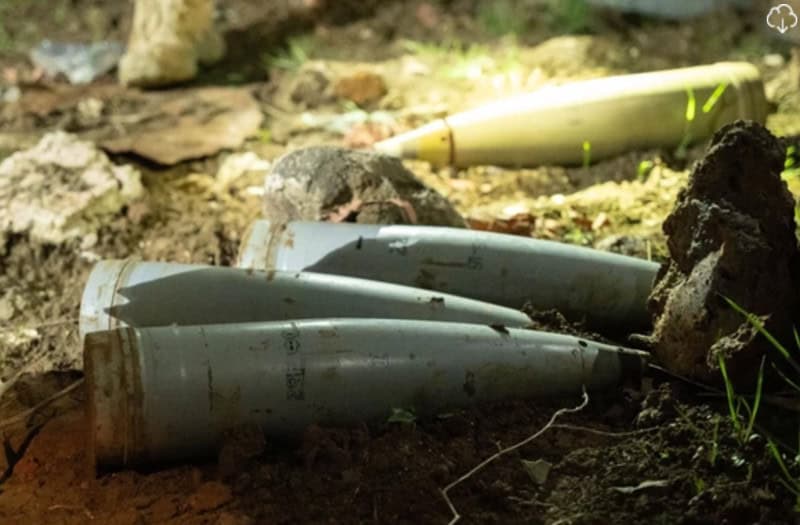
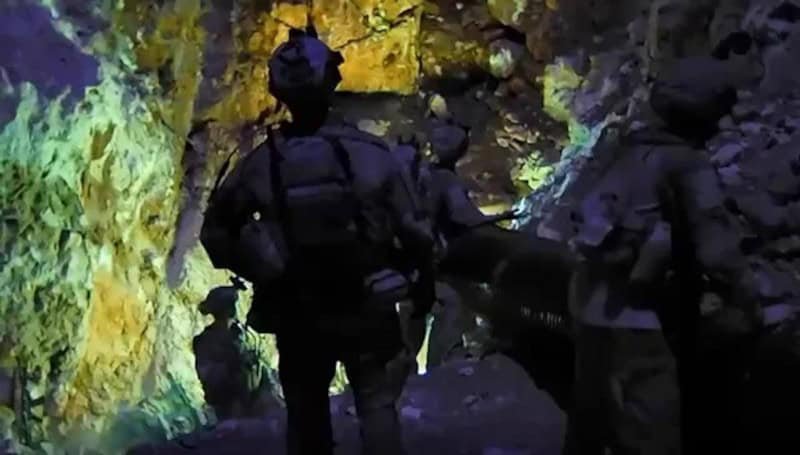
Later Israeli accounts filled in how the battle developed. Small teams gradually seized positions around the complex, stripped away Hezbollah’s surveillance and explosives, mapped shafts, and tightened a surface siege around the fighters below. Troops intercepted food, water, fuel, and other supplies; commanders later said they discovered Hezbollah was also attempting to resupply the tunnels through drones. Some Hezbollah fighters trying to leave the complex were ambushed or killed in close combat. By September 3, Israeli forces had entered and cleared two of the installation’s underground routes. On September 10, they destroyed the network with roughly 1,100 tons of explosives.
Hezbollah’s public narrative did not deny those developments throughout the battle. As successive Israeli gains made the group’s earlier claims or metrics of victory untenable, the group admitted neither failure nor defeat. Rather, Hezbollah repeatedly adapted its narrative to minimize Israeli battlefield successes and the installation’s importance and reformulate the meaning of victory.
Below is a summary of Hezbollah’s shifting messaging during the course of the battle:
June 15–July 7: Israel cannot reach Ali al Taher
At this stage, Hezbollah defined success as physically keeping Israeli ground forces off Ali al Taher Ridge. On June 18, after four days of Israeli attempts to advance from the nearby Kfar Tibnit village toward the ridge, Hezbollah’s Islamic Resistance Operations Room said that its fighters had repelled the assaults, inflicted losses, and forced Israeli troops back. It claimed that Israeli forces remained on Kfar Tibnit’s southern outskirts and declared that Ali al Taher would become the scene of “Karbala epics” to remain “impervious” to Israeli penetration—invoking Imam Hussain’s steadfastness at Karbala as a model of sacrifice in the service of eventual victory.
That evening, the Hezbollah-affiliated Al-Manar television network reported that Israel was claiming control of the ridge, but challenged this account by asking why the IDF was still shelling Ali al Taher if it had already captured it. On June 20, Hezbollah parliamentarian Hassan Fadlallah said that Hezbollah had prevented Israeli forces from advancing and controlling the area.
The IDF challenged that account on June 25, saying that its Commando Brigade was already operating on the ridge and restricting Hezbollah movement above and below ground. Hezbollah did not yet modify its narrative. Instead, its Operations Room flatly denied Israel’s claim the next day, saying Ali al Taher remained under Hezbollah’s control and “free of any [Israeli military] presence.”
July 8–August 16: Presence is not control
Hezbollah’s categorical denial of Israel’s presence became untenable once IDF troops were visibly established on portions of Ali Al Taher. On July 8, after IDF soldiers raised an Israeli flag on the ridge’s outskirts, the Hezbollah-aligned Al Akhbar newspaper conceded what Hezbollah had denied less than two weeks earlier: Israeli troops were present on parts of Ali al Taher. It then narrowed the standard, arguing that presence did not amount to control.
Two days later, the IDF said its forces were operating on the ridge, had killed a Hezbollah fighter near a tunnel shaft, and were preventing operatives from emerging from the underground network. Hezbollah-aligned media now retroactively redefined success from entirely preventing Israel from reaching Ali al Taher to denying the IDF had secure control or consolidation over the site.
Continued attacks became proof that Israeli troops remained exposed, Hezbollah could still contest the ridge, and the underground network remained intact. Accordingly, Al Akhbar highlighted a July 28 explosive-drone strike that burned an Israeli D9 bulldozer, while Al Manar later presented another drone attack as evidence Hezbollah could still observe and strike Israeli forces around the ridge. After an explosive drone seriously wounded three Yahalom combat engineers on August 15, Al Akhbar emphasized that the attacked force had been searching for openings into the tunnel network—the task Israel still had to complete before turning its surface presence into control of the installation below.
August 17–September 2: A loss can still be “resistance”
In September 16 interviews reconstructing the operation, Israeli commanders described how, by mid-August, the IDF was gradually encircling Ali al Taher, mapping shafts, restricting resupply, and expanding its hold above the tunnel network. They said Hezbollah fighters underground initially failed to realize how much of the terrain above them Israeli troops had already occupied.
As that process was occurring, Hezbollah’s messaging began preparing for the ridge itself to fall. On August 17, retired Lebanese Brigadier General Munir Shehadeh, a former Lebanese government coordinator to the UN Interim Force in Lebanon (UNIFIL), wrote in the Hezbollah-affiliated news outlet Al Ahed that Israel was moving beyond bombardment toward exposing and destroying underground infrastructure and potentially expanding its forces’ territorial control. He nevertheless argued that control of the heights would not automatically give Israel mastery of the surrounding ground. The next day, Hezbollah parliamentarian Hassan Ezzedine called Ali al Taher one of Hezbollah’s “essential positions” and vowed not to abandon it, but immediately added that it was “not the basis of the confrontation.”
However, Hezbollah media simultaneously began minimizing the significance of Ali al Taher falling into Israeli hands. An August 18 Al Manar special, as described by Al Akhbar, portrayed the installation as tactical rather than, as Israel maintained, a command complex for Hezbollah’s Badr Unit. The Badr Unit is Hezbollah’s regional formation responsible for operations in the sector north of the Litani toward Sidon, including the Nabatieh area. Al Ahed took a different take the next day: it described Ali al Taher as strategically important but argued that Hezbollah, unlike a conventional army, did not depend on one fixed defensive line whose collapse would unravel the wider force.
By August 21, Hezbollah’s narrative had conclusively undergone another substantive change: success no longer depended on holding the ridge indefinitely, but on refusing to surrender it voluntarily and making Israel fight for it before the position became untenable. A Hezbollah source told the Lebanese newspaper Al Joumhouria that Israel might eventually take Ali al Taher, “but [only] through a battle,” while stressing that Hezbollah’s fighters “are not tasked with suicide.”
The same logic governed Hezbollah’s refusal to hand Ali al Taher to the Lebanese Armed Forces. Al Akhbar reported on August 29 that Hezbollah rejected Lebanese President Joseph Aoun’s proposed handover because withdrawal under Israeli pressure would establish that coercion alone could force the group from other positions. The distinction was no longer whether Ali al Taher could be lost, but how, after fighting, the loss could still be framed as resistance; surrendering it on demand could not.
September 3–8: Hezbollah control becomes partial, and withdrawal becomes planned
On September 3, the IDF announced that troops had entered Ali al Taher’s underground network, cleared Hezbollah fighters from two routes, and achieved “operational control” above and below ground.
Hezbollah issued no immediate official response. Rather than continue denying Israeli presence, its politicians and media now disputed the completeness and significance of Israeli control. One part of the narrative suggested that Ali al Taher had yet to fall, or as Al Manar insisted on September 4, “the battle of Ali Al Taher has not ended.” Al Akhbar narrowed Israel’s gain geographically—arguing that Ali al Taher comprised multiple connected and separate positions and tunnels, so controlling one point did not eliminate Hezbollah’s presence across the entire complex. It was not claiming that the group would retake captured portions; it was arguing that Israeli penetration still did not equal complete control of the whole ridge.
A complementary part of the narrative began minimizing its impact. Reusing Al Manar’s June logic, Hezbollah parliamentarian Ihab Hamadeh asked why Israel was still bombing Ali al Taher if it controlled it. But he also conceded the possibility of Israeli control outright, saying that even that would be “not a catastrophe in military terms, nor the end of the road”—meaning the loss of the position would not end Hezbollah’s broader ability to fight.
As Israel continued clearing the network, Hezbollah’s narrative made one further adjustment that went beyond centering success on making the capture of Ali al Taher costly for Israel. On September 8, retired Lebanese Brigadier General Ali Abi Raad told Al Ahed that every defensive position requires both a plan for “steadfastness” and one for “fallback”; fighters should impose maximum losses, then withdraw to prepared positions if continued defense becomes untenable. This new element now presented retreat itself as part of Hezbollah’s defensive plan.
September 10–16: After demolition, geography stops being the metric
Israel’s demolition of Ali al Taher on September 10 forced Hezbollah to make a further narrative adaptation. With the installation now demonstrably lost, Hezbollah’s media recast success as having forced Israel to fight for the position without obtaining a surrender. Al Manar’s September 11 evening broadcast opened, “We fell as martyrs and did not kneel,” emphasizing the months of fighting and explosive tonnage used while saying the defenders accepted neither “deals nor surrender.”
Al Ahed made the reversal clearer. Three weeks after describing Ali al Taher as strategically important, it now called the destroyed installation a “limited tactical facility.” An informed source acknowledged that Israeli pressure had made remaining inside nearly impossible, then argued that Hezbollah “does not defend geography” but seeks to impose losses and increase the cost of occupation.
Al Akhbar then used Israel’s own operational account to support that new measure of success. The months-long siege, Hezbollah’s attempts to resupply the tunnels, continuing drone attacks, close-range fighting, and a reported Israeli offer for the encircled fighters to emerge under a white flag were presented not as the process by which Israel gradually dismantled Hezbollah’s position. Instead, they were presented as proof that taking the position had required a prolonged fight and that Hezbollah had denied Israel a surrender, even when continued defense became impossible. Israel’s siege narrative had become Hezbollah’s attrition narrative.
The September 16 publication sequence crystallized that inversion. At 5:02 pm local time, the IDF’s official Telegram channel distributed its new retrospective, linking directly to the military’s account of the roughly three-month operation and presenting it as a deliberate process of gradual encirclement, the destruction of Hezbollah’s surveillance and logistics, the interdiction of supplies, troops’ underground entry, and the final demolition. Twenty-four minutes later, at 5:26 p.m. local time, Al Ahed published an article titled, “A Battle that Exhausted It [Israel] and Inflicted Losses.” The news outlet’s retrospective inverted the significance of the offensive’s duration: instead of three months demonstrating the method by which Israel progressively dismantled Ali al Taher, Israel’s need for that time to do it became Hezbollah’s achievement—evidence, in the group’s telling, that defending one position had “exhausted” Israeli forces and caused casualties.
David Daoud is Senior Fellow at at the Foundation for Defense of Democracies where he focuses on Israel, Hezbollah, and Lebanon affairs.