The US-backed peace plan for Gaza has continued to progress slowly, though ceasefire talks held in Cairo in the first week and a half of June appeared to stall over the issue of Hamas’s disarmament, Israel’s i24News media reported on June 10. Nevertheless, the London-based Asharq al-Awsat newspaper reported on June 18 that there were some positive developments in recent days.
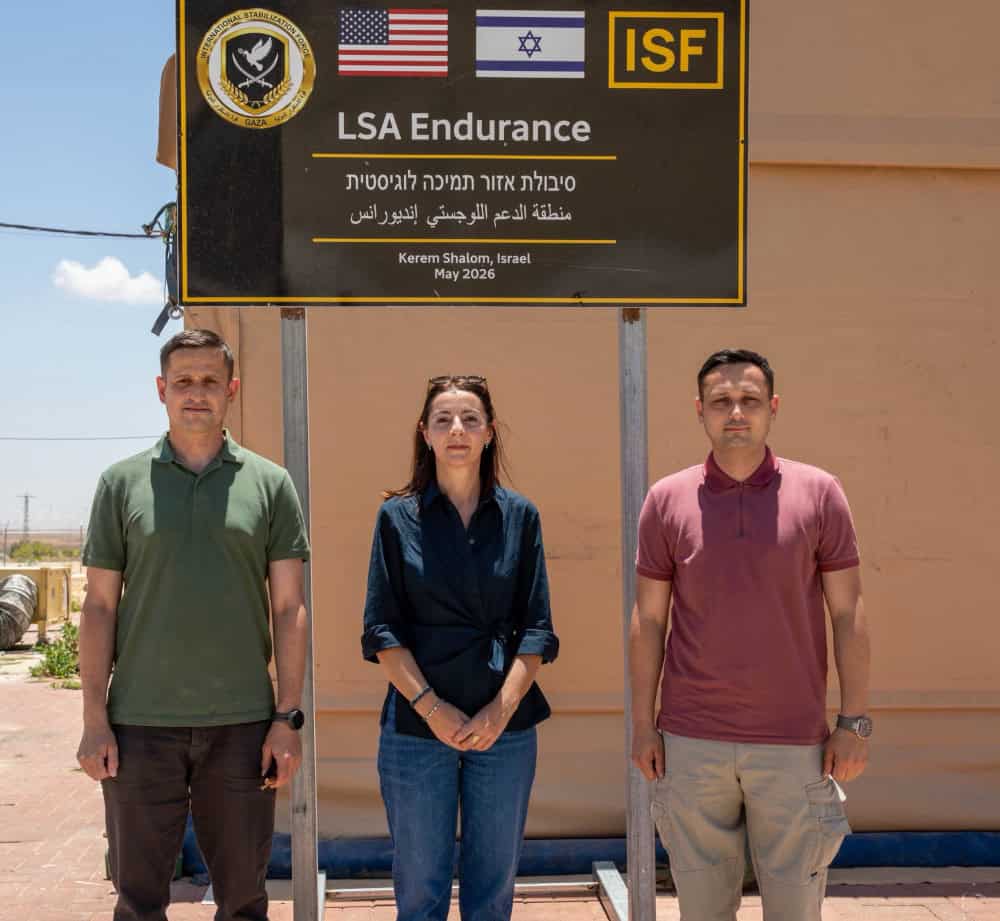
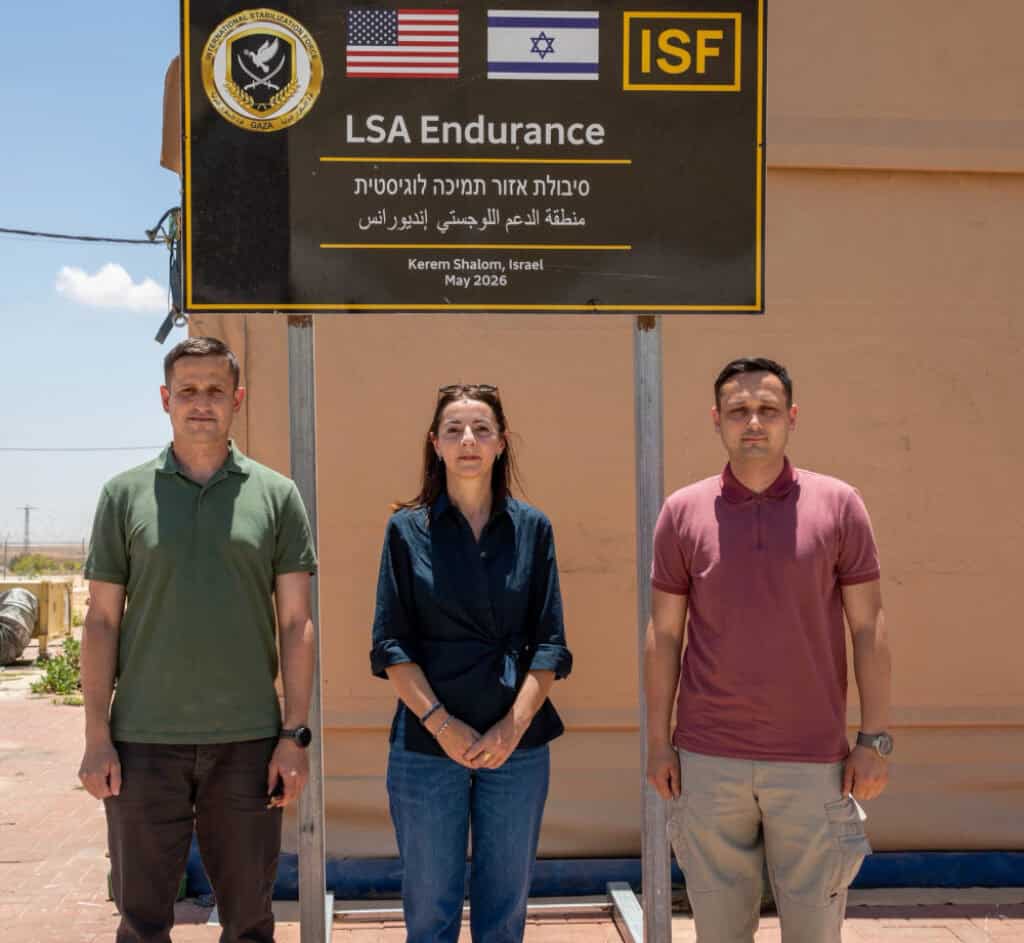
On June 18, Kosovo Ambassador to Israel Ines Demiri visited a logistics site near the Gaza border that is part of ongoing efforts to secure peace in the territory. The Board of Peace, the international organization established by US President Donald Trump to promote stability in Gaza, calls the site Life Support Area Endurance and says it “will serve as a vital waypoint for ISF to refit while supporting restoration & humanitarian efforts.” The ISF is the International Stabilization Force that is intended to be deployed to Gaza.
The Gaza peace plan was announced in early October 2025 and led to a ceasefire and hostage deal between Israel and Hamas, followed by several key steps. On October 17, 2025, US Central Command set up a Civil-Military Coordination Center in southern Israel to facilitate the delivery of humanitarian aid into Gaza. In mid-November 2025, the UN backed the US’s 20-point plan. This January, the US announced the formation of the Board of Peace to play a key role in the territory and appointed Nickolay Mladenov, a former Bulgarian official, as the High Representative for Gaza. A Palestinian civil-governance National Committee for the Administration of Gaza (NCAG) was created alongside the International Stabilization Force in the same month.
Nevertheless, key aspects of the peace plan have encountered resistance, particularly over the condition that Hamas and other Gaza groups disarm and what that would entail. Asharq al-Awsat reported on June 18 that Mladenov presented Palestinian groups with disarmament-related provisions. “A source from the team of Board of Peace envoy Nickolay Mladenov and another from Hamas said there were ‘positive’ signs toward completing implementation of the fragile ceasefire agreement in Gaza, announced last October,” the report added.
There is a dispute about the wording relating to the restriction on weapons in Gaza. “Some faction leaders had advised Hamas that the definition of infrastructure should be limited to tunnels, weapons manufacturing workshops, and weapons storage facilities, without extending to additional elements such as personnel, military sites, vehicles, or other assets,” Asharq al-Awsat noted. The eighth and ninth clauses of the US and UN-backed plan, dealing with weapons and the ISF, are the focus of the Cairo discussions.
Hamas and other unnamed Palestinian factions had arrived in Cairo in early June for meetings with Egyptian officials and the Board of Peace. Disarmament is one key issue for Israel, while Palestinian sources told Turkey’s Anadolu News Agency that Gazan groups accuse Israel of ceasefire violations. Israel HaYom, an Israeli newspaper, reported that Hamas “continued to sidestep demands that it disarm” while demanding that Israel implement military withdrawals in Gaza. After the ceasefire agreement, the Israel Defense Forces (IDF) controlled around 50 percent of the territory, which is divided from the Hamas-run area by “the Yellow Line.” However, Israeli Prime Minister Benjamin Netanyahu said in late May that Israel controlled around 60 percent of Gaza, indicating that the IDF had taken over more ground.
The formation of the ISF is another key issue in moving forward with the plan for Gaza. Morocco, Kazakhstan, Kosovo, Albania, and Indonesia are expected to play a role in the security organization. Several members of the Kosovo Security Forces and the Albanian Armed Forces arrived in Israel in April to examine a future deployment. Ambassador Demiri also noted on June 18 that two KSF officers accompanied her to the LSA site, where a sign indicates that the facility was inaugurated in May 2026.
Regardless of the ongoing peace process, the IDF continues to target Hamas in Gaza while stating it and other groups are violating the ceasefire. On June 17, the IDF said that it struck Hamas members in the central part of the territory, accusing the targets of being involved in ceasefire violations by seeking to restore the group. The IDF also carried out strikes on June 15 and June 12, according to WhatsApp messages distributed by the Israeli military. The IDF said it had eliminated 20 terrorists in a week of operations in Gaza in early June.