On June 18, the Islamic Republic’s new supreme leader, Mojtaba Khamenei, who succeeded his father, issued a statement on the recent memorandum of understanding between Washington and Tehran. Khamenei confirmed that an agreement had been signed, claimed the United States pursued it “out of desperation,” and reiterated that his regime would not accept “excessive demands” in future negotiations.
The regime’s third supreme leader has not been seen or heard from publicly since assuming the role, and unconfirmed reports suggest he is either disfigured or incapacitated. However, Mojtaba Khamenei never maintained a public profile before the war. Despite holding influential behind-the-scenes positions in his father’s office, he rarely appeared in public, delivered no major speeches, and gave no interviews.
Significantly, Khamenei’s latest statement distances him from the deal with the United States. The supreme leader stated that he “held a different view” regarding the agreement, implicitly signaling his opposition before ultimately accepting it after receiving assurances from Iranian President Masoud Pezeshkian that the arrangement served the regime’s interests.
Former Supreme Leader Ali Khamenei, who was eliminated on February 28, employed a similar form of plausible deniability when dealing with Washington, allowing him to avoid full responsibility if agreements collapsed. In 2013, he said that while he was not optimistic about talks with the United States, he was “not opposed either.” Two years later, Ali Khamenei reiterated that position, stating, “Despite the fact that I was not optimistic about negotiating with America, I did not express my opposition to these specific negotiations.”
Mojtaba Khamenei’s statement yesterday also sought to place responsibility for the deal on Pezeshkian rather than on the Parliament Speaker and member of the Islamic Revolutionary Guard Corps (IRGC) Mohammad Bagher Ghalibaf, who had been leading the negotiations on Tehran’s behalf. The supreme leader noted that he accepted the agreement because of Pezeshkian’s “commitment” and “explicit acceptance of that responsibility,” a reference to the president’s role as head of Iran’s Supreme National Security Council. Although Ghalibaf had led the negotiations with the US, Khamenei appears to be shielding him from internal criticism over the agreement.
A backlash has already surfaced within the regime’s support base. Hardliner demonstrators gathered outside the Foreign Ministry’s office in the city of Mashhad, chanting, “Death to Araghchi, the dishonorable compromiser,” and “Death to Araghchi, the dishonorable infiltrator,” targeting Foreign Minister Abbas Araghchi and the negotiating team. Similar protests took place in Tehran, where participants chanted “Ghalibaf, Araghchi, what about my Leader’s blood?” and “Araghchi, have shame and leave the country alone.”
The infighting extended beyond street protests. Senior figures affiliated with the conservative Islamic Coalition Party warned against hardline opposition to a potential agreement, arguing that similar divisions emerged during the 1981 hostage negotiations with the United States and again during the 2015 nuclear deal. Meanwhile, Jomhuri-ye Eslami, a newspaper aligned with traditional conservative factions of the regime, accused opponents of the talks of slandering negotiators, pursuing factional interests, and pushing the country toward further conflict despite Iran’s economic and military challenges.
Iran seeks to rebuild proxy capabilities
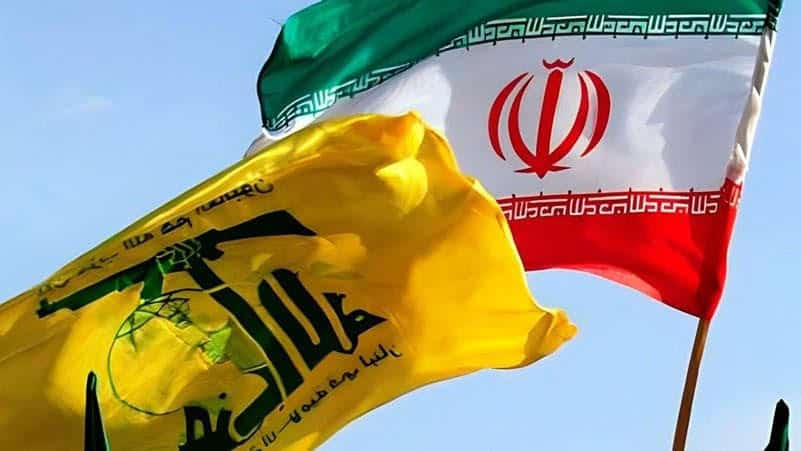
Citing four sources familiar with ties between Tehran and Hezbollah, Reuters reported on June 17 that Iranian officials had informed Hezbollah that it would receive additional funding once frozen Iranian assets are released. The report also cited Lebanese sources who claimed Tehran was preparing to increase its support following sanctions relief.
Two days later, Israel and Hezbollah reportedly agreed to a ceasefire, giving Hezbollah an opportunity to recover as Tehran prepares to expand its support.
Hours after the agreement was signed, Ghalibaf stated in an interview, “If we truly seek justice [for Ali Khamenei], then that justice will be achieved through the liberation of Jerusalem. […] We must uphold that honor, remain committed to that vision, and carry out that mission.” Media affiliated with Ghalibaf also wrote that the deal is simply an “opportunity” for Iran “to rebuild its offensive and defensive military capabilities” and “prepare for a large-scale battle.”
Similarly, the commander of the Islamic Revolutionary Guard Corps-Qods Force, Esmail Qaani, declared that “Hamas will soon be rebuilt” and threatened to use Yemen’s Houthis to close the Bab al Mandab Strait in the Red Sea.