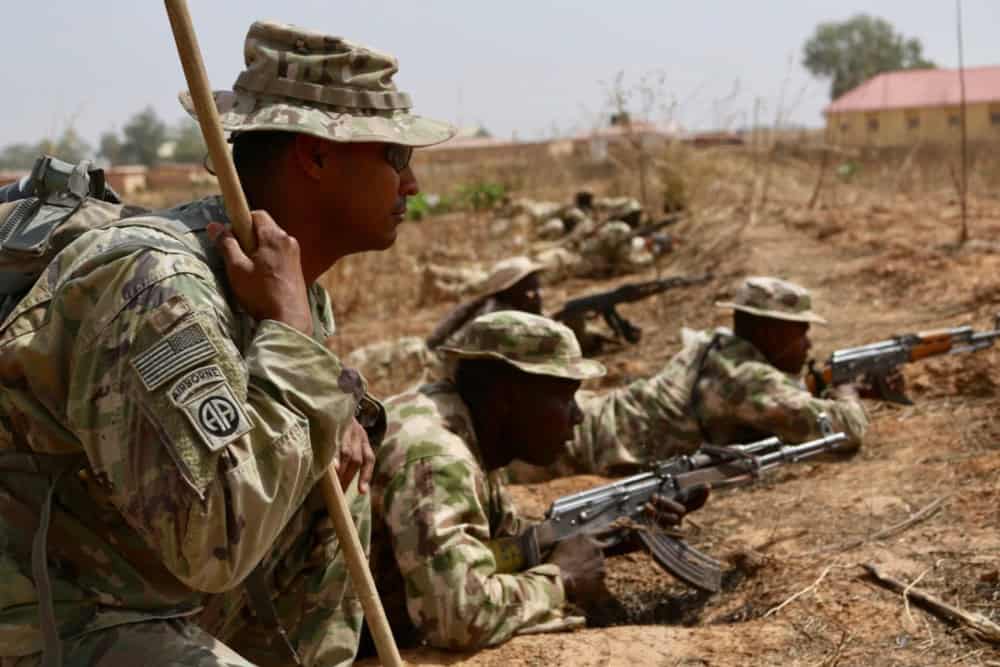
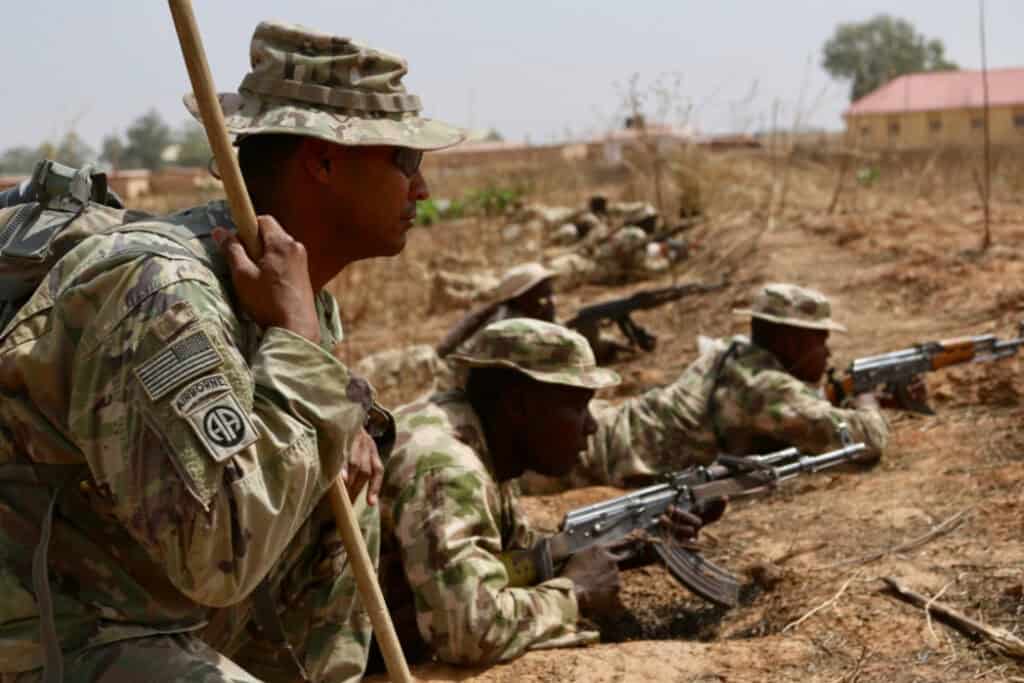
The US military and the Armed Forces of Nigeria killed Abu Bilal al Minuki, a top Islamic State leader, and other unnamed commanders in a combined operation in northeastern Nigeria on May 16. Minuki was identified by US Africa Command (AFRICOM) as the “director of global operations” and the “ISIS [Islamic State] number two.”
“The command’s initial assessment is that multiple terrorists, to include Abu Bilal al Minuki, the director of global operations for ISIS, as well as other senior ISIS leaders, were killed during this operation,” AFRICOM reported in a press release. The Islamic State has not commented on reports of Minuki’s death.
The operation that killed Minuki and the other Islamic State leaders “was made possible through the cooperation and coordination” of US and Nigerian forces “in recent months,” US Air Force General and AFRICOM commander Dagvin Anderson stated. “Make no mistake, our two nations will relentlessly pursue and neutralize terrorist threats and are committed to protecting our people and interests.”
The Trump administration has pressured the Nigerian government to take action against the Islamic State. The US also launched a strike against the Islamic State in Nigeria (Islamic State West Africa Province, or ISWAP) on December 25, 2025, in retaliation for the group’s targeting of Christian communities in the country.
Islamic State’s number two?
Both President Donald Trump and AFRICOM identified Minuki as the Islamic State’s second in command. However, experts who track ISWAP are skeptical.
According to AFRICOM, Minuki “provided strategic guidance to the ISIS global network on media and financial operations as well as the development and manufacturing of weapons, explosives, and drones.” Additionally, he “was the most active terrorist in the world and has a significant history of involvement in planning attacks and directing hostage taking,” the release stated.
However, despite US assertions that he was the terrorist group’s second in command, Minuki had not previously been identified as the Islamic State’s deputy leader. In its latest report on global terrorism from February 2026, the United Nations Analytical Support and Sanctions Monitoring Team identified Minuki as the head of the Islamic State’s Al Furqan office, one of the group’s regional offices it set up to assist the jihadist group in managing its global affairs and moving funds to other Islamic State wings worldwide. The Al Furqan office helps oversee most of the Islamic State’s activities in the Sahel, wider West Africa, North Africa, and Sudan.
The UN Monitoring Team had noted that some countries believed that Minuki “assumed a more prominent role within the global [Islamic State] leadership, with some suggesting he may have become head of[the Islamic State’s] General Directorate of Provinces (GDP).”The GDP is responsible for coordinating the activities of the Islamic States’ 12 provinces throughout the world.
As head of the GDP, Minuki would most certainly be in the upper echelons of the Islamic State’s leadership cadre. The head of the GDP is considered by some analysts to be the second-most-powerful position in the Islamic State. However, Minuki had not previously been identified as the Islamic State’s global deputy leader.