
Taliban and Pakistani forces have clashed repeatedly along their border since October 29, while the Movement of the Taliban in Pakistan (TTP) claimed responsibility for an attack on November 11 that killed 10 Pakistani policemen.
The attack occurred in the Kohat district in Khyber Pakhtunkhwa province, where militants ambushed Pakistani police vehicles. The officers were returning from an operation targeting criminals involved in illegal gold mining when the TTP attacked, triggering an hours-long firefight. Pakistani authorities alleged that the TTP had collaborated with the criminals to stage the ambush. Authorities reported that 10 officers and 18 militants were killed in the fighting.
“The sacrifices of the Khyber Pakhtunkhwa Police in the war against terrorism are a source of pride for the entire nation,” said Pakistani President Asif Ali Zardari on his official X account.
Pakistan accuses the Taliban of sheltering the TTP and other Islamist groups that conduct attacks inside Pakistan, resulting in a deterioration of relations between the two former allies. Fighting has persisted since a September 18 complex suicide attack on a Pakistani police compound killed 31 people. Ittehad ul Mujahideen Pakistan, a militant alliance with roots in the TTP, claimed responsibility for the attack.
On October 29, Taliban and Pakistani forces clashed in the Angoor Adda area of Barmal district in southeastern Afghanistan’s Paktika province. Both sides reportedly used light and heavy weapons.
Local sources told Afghan media that Pakistani forces initiated the fighting, though neither side publicly commented on its cause. The exchange reportedly forced residents to flee their homes.
On November 1, the two sides clashed again at Angoor Adda and near the Torkham border crossing, which connects eastern Afghanistan’s Nangarhar province with Pakistan’s Khyber Pakhtunkhwa province.
Pakistani press reported that mortar shelling killed one civilian near Angoor Adda, while fighting at Torkham temporarily closed the crossing for five hours.
“The pattern of unprovoked firing from Afghan border posts onto Pakistani border checkpoints continues,” the deputy commissioner of Lower South Waziristan stated. “Pakistan security forces, in an immediate and effective retaliatory operation, targeted multiple Afghan border posts, mortar positions, and defensive checkpoints.”
The Taliban police command reported that Pakistani fire killed a young man and wounded two students in Sordagh village, in Paktika’s Shkin district. Local sources told Afghan media that rockets struck residential homes in the area.
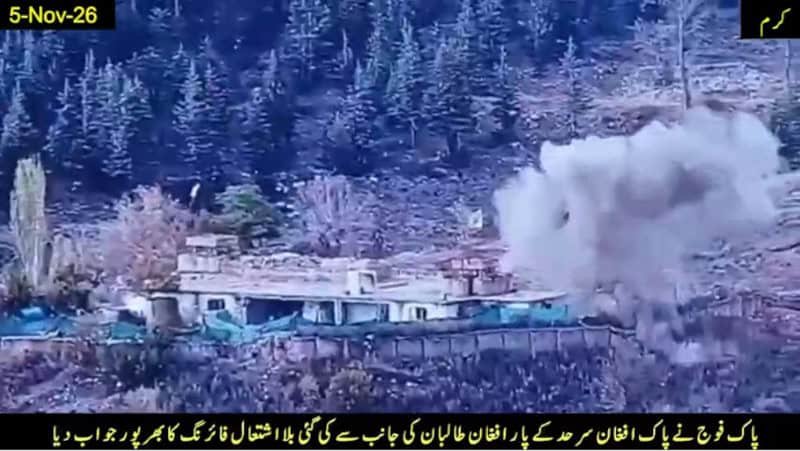
On November 5, Pakistan claimed to have foiled a TTP infiltration attempt in the Shalozan sector of Kurram district, in Pakistan’s northwestern Khyber Pakhtunkhwa province.
Pakistani security sources claimed that Taliban forces opened fire as Pakistani troops moved to prevent the militants from entering the country. Pakistani personnel reportedly responded with heavy weapons, thwarting the infiltration attempt and inflicting heavy damage on Taliban border posts.
Pakistan also reported capturing Qari Waqas, an Afghan national, near the border in Upper Kurram. Waqas, also known as Qudus, allegedly intended to join a militant faction identified by Pakistani security sources as the Kazim group. Pakistani sources said he carried a submachine gun, 88 rounds of ammunition, and a notebook containing notes on bomb-making techniques.
Separately, on October 29, Jawad Ajmal, a counselor at Pakistan’s Mission to the UN, claimed that terrorist attacks originating from Afghanistan had killed 4,700 Pakistanis over the past three years. Ajmal also criticized the Taliban’s human rights record, particularly its treatment of women, which he said violated Islamic law.
On October 31, US Secretary of State Marco Rubio said that Washington was open to helping address Pakistan’s concerns about terrorism originating from Afghanistan, noting that “if there’s a productive role for us to play, we’ll play it.”
“Pakistan is concerned about terrorist attacks that are being sponsored from the territory of Afghanistan,” Rubio said. “We obviously have heard those concerns on their part, we obviously don’t want them to be targeted.”
Will Selber is a retired US CENTCOM foreign area officer with over 4 years in Iraq and Afghanistan. He is the owner of Grumpy Combat Veteran on Substack.


