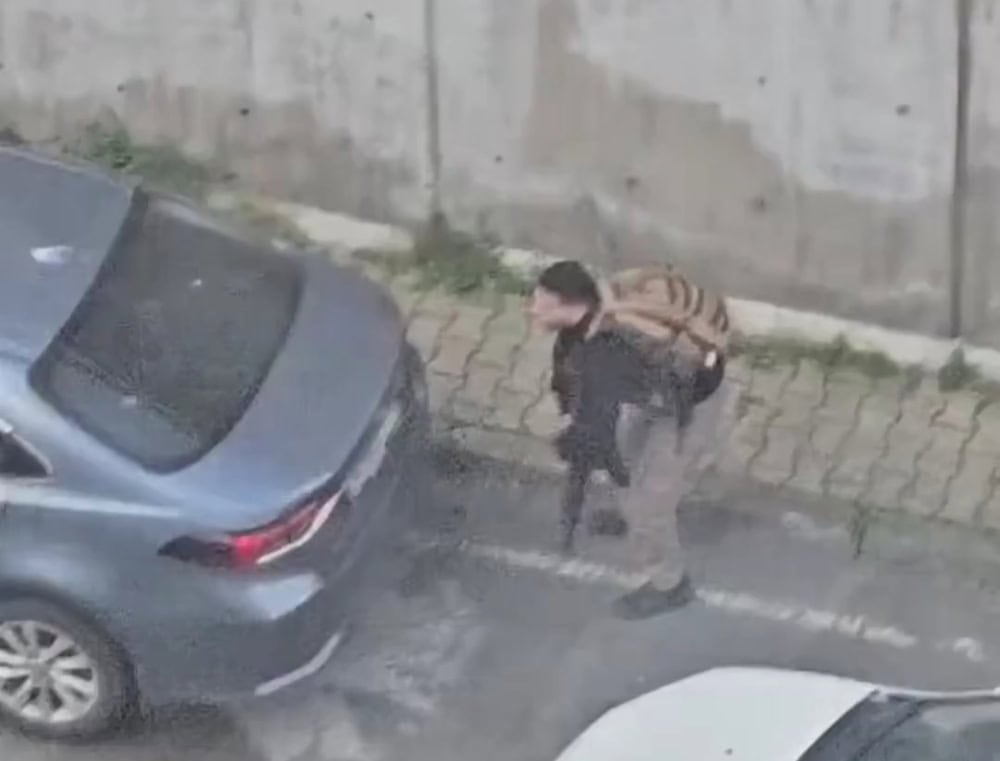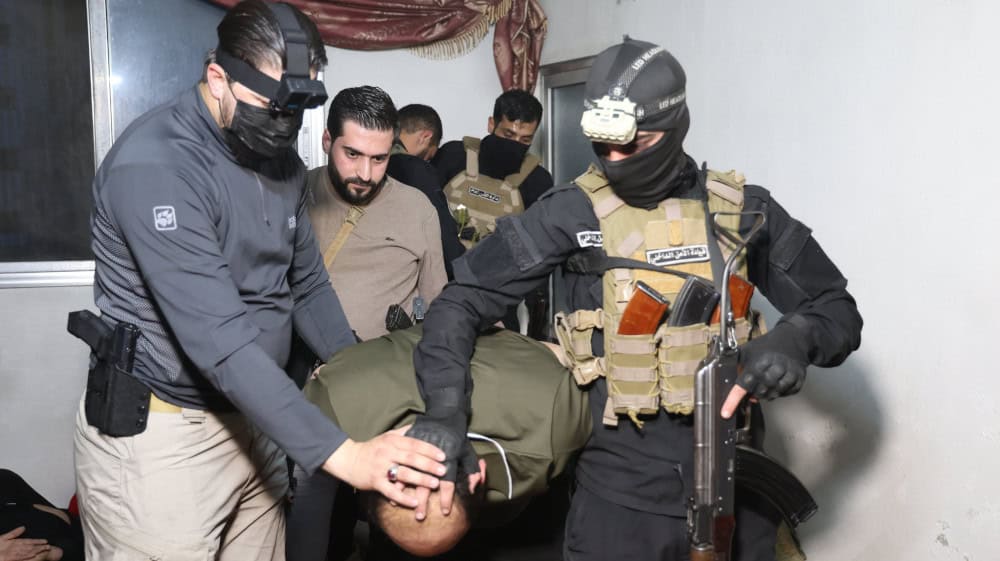
On May 5, the Syrian Ministry of Interior and the General Intelligence Directorate announced that security forces thwarted a major terrorist attack aiming to destabilize the country. In a series of coordinated operations carried out in the Aleppo, Rif Dimashq, Homs, Latakia, and Tartus Governorates, Syrian forces arrested 11 militants allegedly linked with Lebanese Hezbollah and seized a large arsenal of weapons that included small arms and rocket-propelled grenade (RPG) launchers and warheads.
Authorities said the cell crossed into Syria “after receiving intensive specialized training in Lebanon” and planned to conduct imminent “sabotage operations, including targeted assassinations of senior government officials.”
After the arrests, the ministry published mugshots of the 11 cell members on its official X account, stating that “among the most prominent of those arrested is the main individual responsible for the assassinations file in the [Hezbollah] militia, who oversaw on-the-ground planning and target identification.”
At the time of reporting, the individuals and their prior affiliations were not disclosed. However, open-source research and analysis by FDD’s Long War Journal identified affiliations of several detainees. One individual, flagged by an open-source X account, is a former member of the Syrian Arab Army from the town of Hayyan in Aleppo Governorate. A Facebook post identified him as “Aqel Mahmoud Aqel al-Bej.”
Long War Journal also found that another individual had served in Liwa al Quds (the Jerusalem Brigade), a predominantly Syrian-Palestinian paramilitary group aligned with the Assad regime that was later integrated into the Syrian military. The group drew many of its recruits from the Neirab Palestinian refugee camp in Aleppo, suggesting the individual was likely part of what Syrian authorities said was an Aleppo-based assassination cell.
At its peak in 2017, Hezbollah, which entered the Syrian civil war in support of Assad’s regime, maintained roughly 7,000–10,000 fighters in Syria. While most of these individuals were Lebanese, the group also recruited Syrians, including units such as the “Golan File,” which was positioned in southern Syria near the Golan Heights to target Israel.
These cells have continued to operate in Syria despite the fall of the Assad regime. In April alone, Syrian authorities reportedly disrupted multiple Hezbollah-linked plots. On April 19, the Syrian Ministry of Interior announced that it had “thwarted a sabotage plot orchestrated by a cell linked to the terrorist Hezbollah militia” in Quneitra Governorate. According to the ministry, the operatives had disguised a civilian transport vehicle to conceal rocket-launching equipment for a surprise attack likely targeting Israel. The rockets reportedly bore the slogan, “Victory for our brothers in Lebanon and Palestine.”
Earlier, on April 11, the Syrian Ministry of Interior announced the arrest of five individuals in connection with a plot to target a religious figure in Damascus, later identified as Rabbi Michael Khoury. One suspect was allegedly preparing to plant an explosive device near the rabbi’s residence. “Preliminary investigations revealed the cell’s link to Lebanon’s Hezbollah and that its members received specialized military training abroad,” the ministry stated.
Syria has routinely interdicted Hezbollah-linked weapon shipments destined for Lebanon since December 2024. On April 16, 2026, one day before the Israel-Hezbollah ceasefire formally took effect, Syrian authorities announced they had stopped the smuggling of 6,000 explosive detonators intended to be used in improvised explosive devices (IEDs). That operation followed the seizing of five Konkur anti-tank missiles on March 14 and small arms, RPGs, and explosives on March 20, both along the Lebanon-Syria border. On January 26, nine Konkur anti-tank missiles, 68 RPG warheads, two 107 rockets, and five boxes of BKS ammunition were seized from a vehicle in the Homs Governorate, and drones were seized from a series of raids around Damascus on February 1.
Last year, on December 10, security forces confiscated 42 Malyutka anti-tank guided missiles and 4 Metis anti-tank guided missiles in an operation in the eastern Daraa countryside. On December 3, a raid near Damascus resulted in the capture of 1,250 mines armed with detonators, garnering the praise of Admiral Brad Cooper, the head of US Central Command. In addition, on September 11, Syrian authorities seized 19 Grad rockets, large quantities of various types of ammunition, and an undetermined quantity of missile launchers, anti-tank missiles, and small arms in the western Damascus countryside.