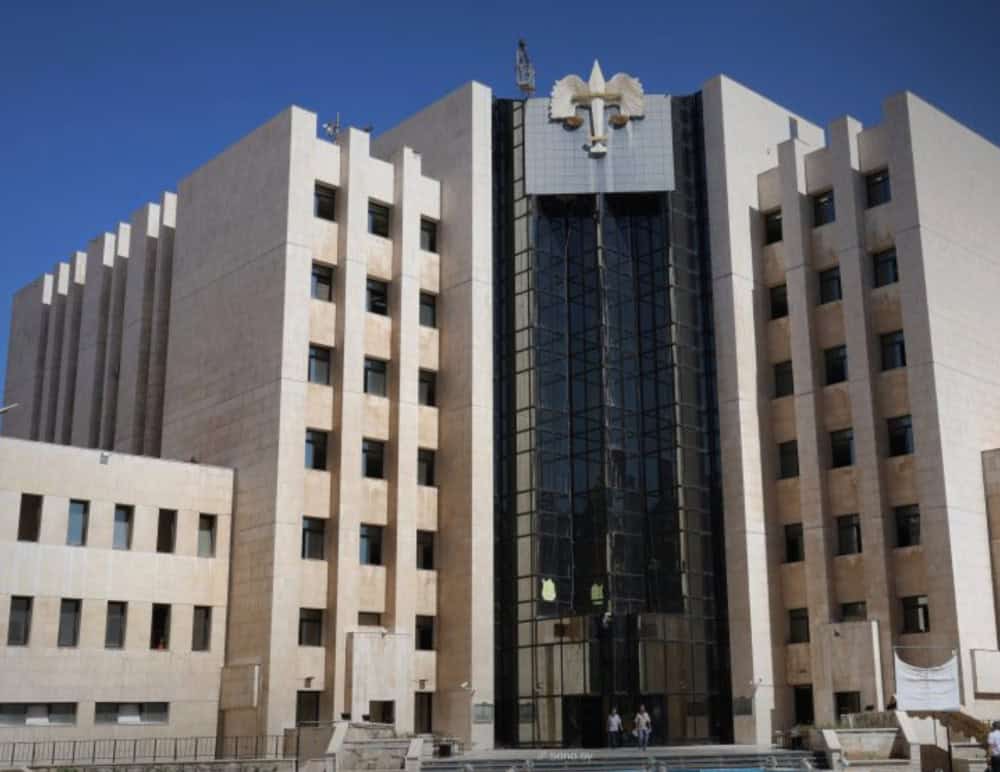

Protesters in Hasaka in eastern Syria tore down a government billboard at the Justice Palace on May 7. The protests by local Kurdish residents came after the Syrian government changed the language on a billboard from Kurdish and Arabic to English and Arabic.
“The move sparked public anger, with locals chanting ‘Kurdistan.’ Residents later forcibly removed the newly installed billboard,” the Rudaw Media Network reported. The protests happened as Syria attempts to address several issues relating to the Kurdish minority in the country’s east, including integrating Kurds into the security forces and addressing a lack of citizenship.
Many governance and minority issues in Syria remain unsettled, and the national government faces a range of controversies as it attempts to extend its control. Etana Syria, a civil society organization, notes that Damascus’s current approach “prioritizes consolidation of interim authorities’ position without sufficient incentivization for reparative, progressive reform, even despite repeated instances of serious violence and other concerning indications of authoritarian consolidation.” Local authorities and minorities, who are used to a degree of autonomy after more than a decade of the previous civil war, want to see their rights guaranteed.
The protests in Hasaka also took place amid changes that have occurred since the Syrian Interior Ministry took over areas in eastern Syria from the Kurdish-led Syrian Democratic Forces (SDF) in January and February 2026. An agreement between the SDF and Damascus is intended to pave the way for the SDF’s integration into the Syrian security forces.
“The [Kurdish unrest] comes as efforts are underway to integrate Rojava’s civilian and military institutions into state structures,” Rudaw noted, adding, “The move against the Kurdish language comes despite a recent presidential decree recognizing Kurdish as a national language.” Similar protests have taken place in Qamishli and Kobane.
Kurdish is supposed to be one of the national languages of Syria, according to Presidential Decree No. 13 of 2026, issued in mid-January, as Damascus worked to integrate Kurdish areas into the new government. However, questions remain about how Kurdish will be incorporated into education and official communications. Syria’s Ministry of Justice accused “saboteurs” of vandalizing the sign in Hasaka, according to the official Syrian Arab News Agency (SANA). The report did not mention the protestors’ complaints about the sign’s new language.
Damascus is addressing numerous Kurdish issues. Many Kurds in Syria have lacked citizenship due to the discriminatory laws of the previous regime. On May 7, SANA reported on Syrian Kurds applying for citizenship. “Article 4 of the [Presidential Decree No. 13] decree grants Syrian citizenship to all citizens of Kurdish origin residing in Syria, including those with unregistered civil status, while guaranteeing full equality in rights and duties,” it noted. “Syria’s Interior Ministry has extended the deadline for receiving citizenship applications from Syrian Kurds by an additional 15 days at centers in al-Jawadiyah, Hasakah and Qamishli, officials said Thursday,” SANA added.
Kurdish members of the SDF are also waiting to integrate into the Syrian security forces. Sipan Hamo, a deputy defense minister responsible for part of eastern Syria, said in an interview with Hawar News Agency on May 2 that “four brigades were formed from the Syrian Democratic Forces and have been officially integrated into the military structure.” This group includes SDF units from Kobane in northern Syria, as well as units from Hasaka, Qamishli, and Derik in eastern Syria.
Initial integration plans in 2025 called for three SDF divisions to become part of the security forces. Hamo indicated that more work is needed to achieve cohesion and integrate more units.