Winter Wildlife Photography Experience in Japan
These feathered friends, endemic to the Kamchatka Peninsula, Sea of Okhotsk, and other parts of Siberia in Russia, are the very reason I’ve had Eastern Hokkaido on my wish list for many years. On par with drift ice, a fascinating environmental process I’ve tracked and wanted to photograph since I saw a poster in Sapporo about it, way back in 2000.
Luckily, the two combine to form one of the most photogenic experiences you can have outdoors, especially if you’re a fan of icy wonders and wildlife like me.
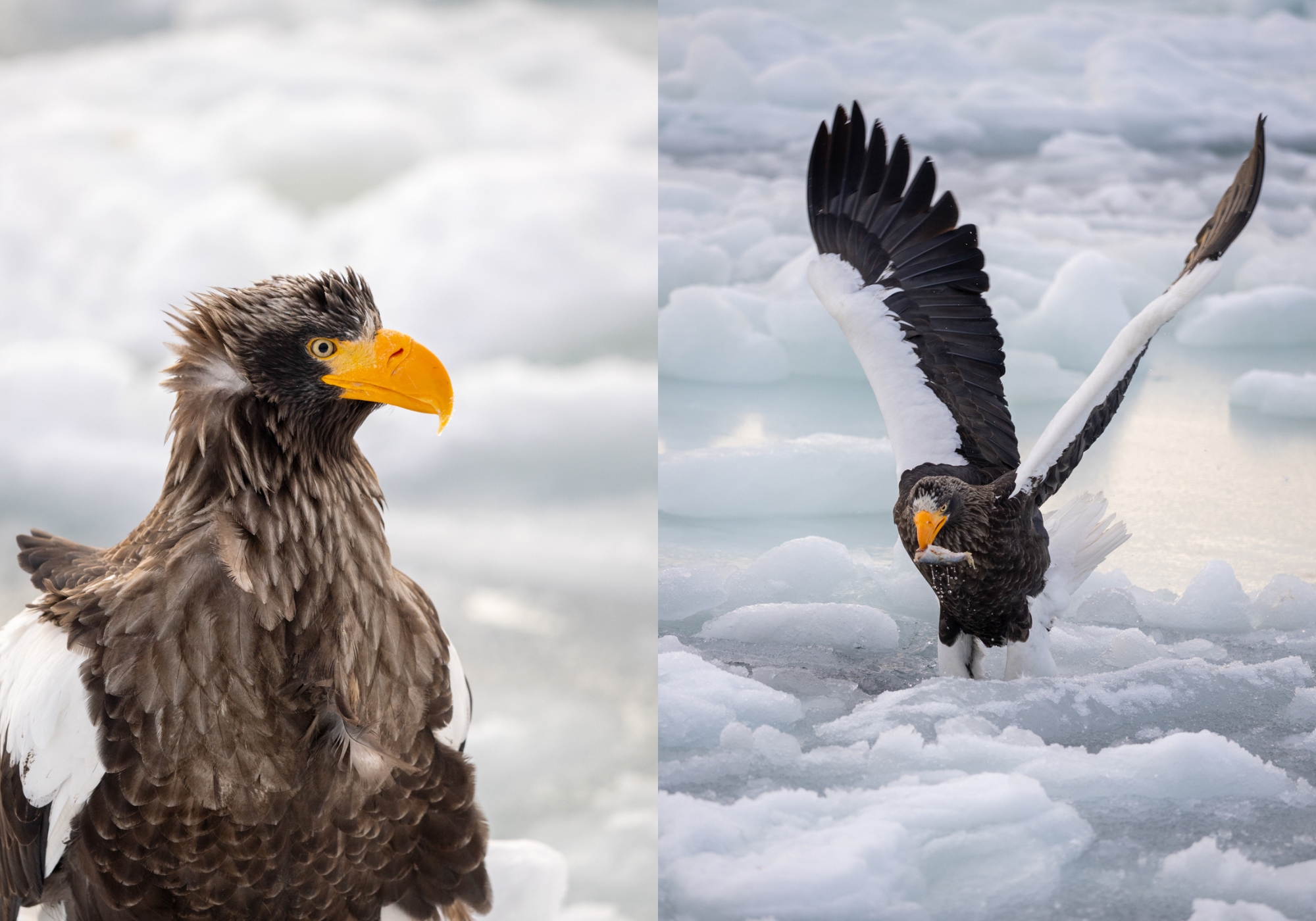
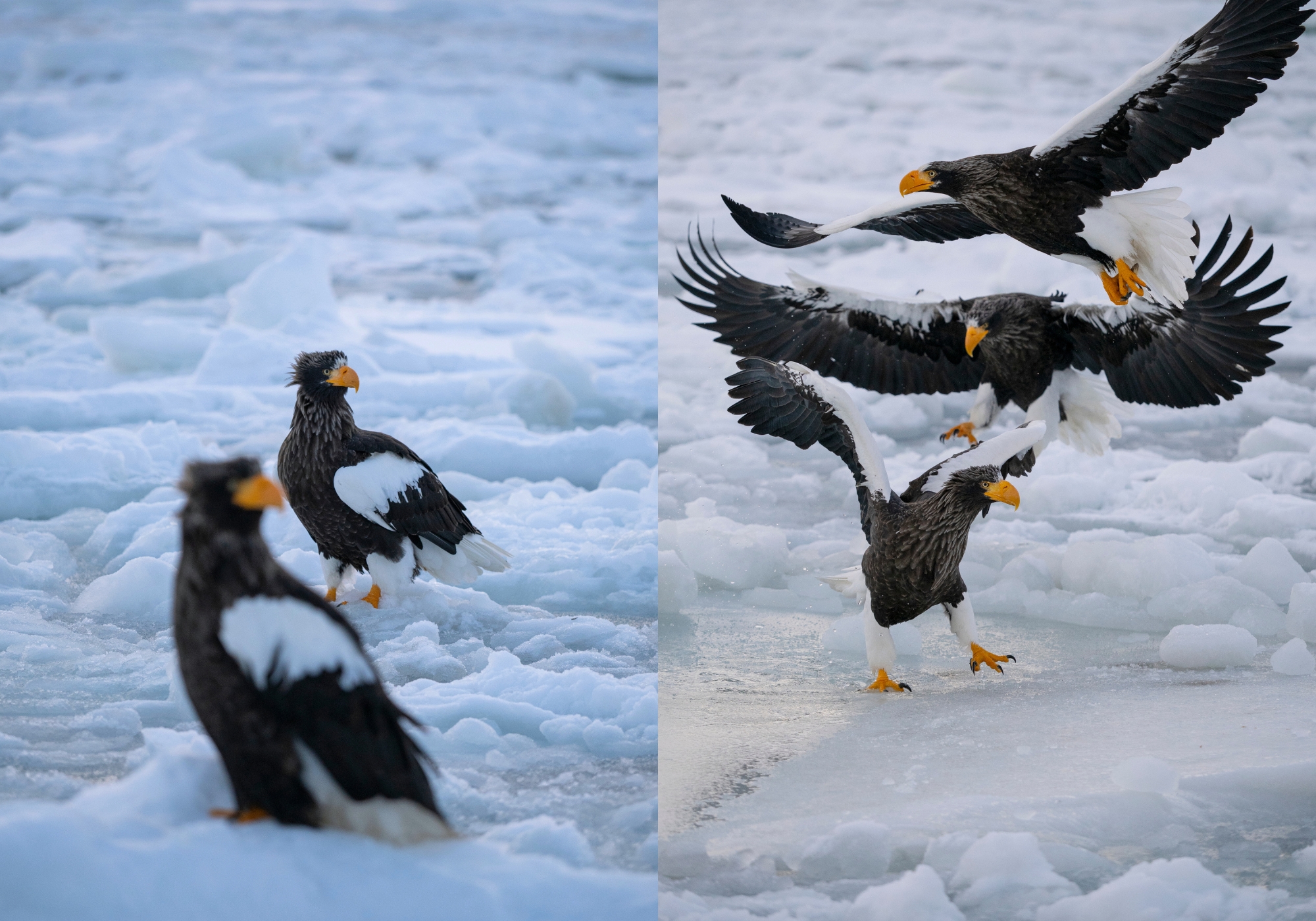
The Steller’s Sea Eagle is one of the biggest draw cards for wildlife photographers, with their immense wingspan of up to 2.5m (8ft), striking yellow beaks, and dramatic fishing behaviour, presenting an action-packed experience to witness these beauties in the wild.
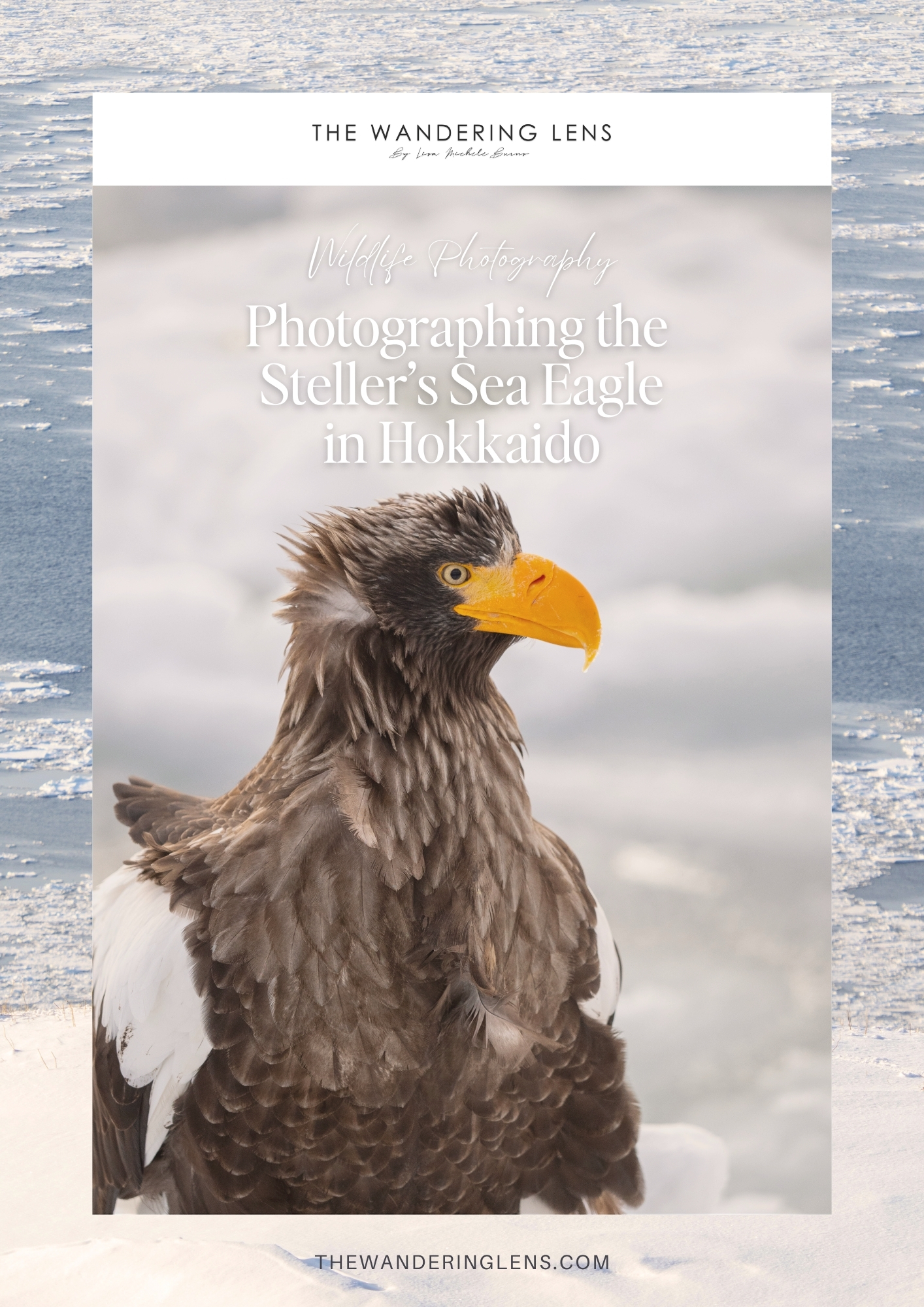
While you can get lucky and see the eagles amongst the drift ice along Hokkaido’s northern coastline in winter, Rausu offers the chance to see them up close, with trained captains knowing where to find them to ensure you’re capturing images as the warm glow of sunrise illuminates the scene.
*Just to note, the conditions will determine if boats depart or not. If seas are high or the drift ice is too far away, cruises will be cancelled. I’d spent most of my time on the Shiretoko Peninsula over in Utoro, where I also saw eagles close to the shore, floating on the ice, however, really wanted to document the experience from Rausu, so I ventured over to spend the night prior and lucked out with a beautiful, calm morning! Phew.
Waking up at 4am to ensure there was enough time to layer up, lace up our snow boots and double check the cameras, we had a quick Boss Coffee from the vending machine on our walk down to Rausu Port.
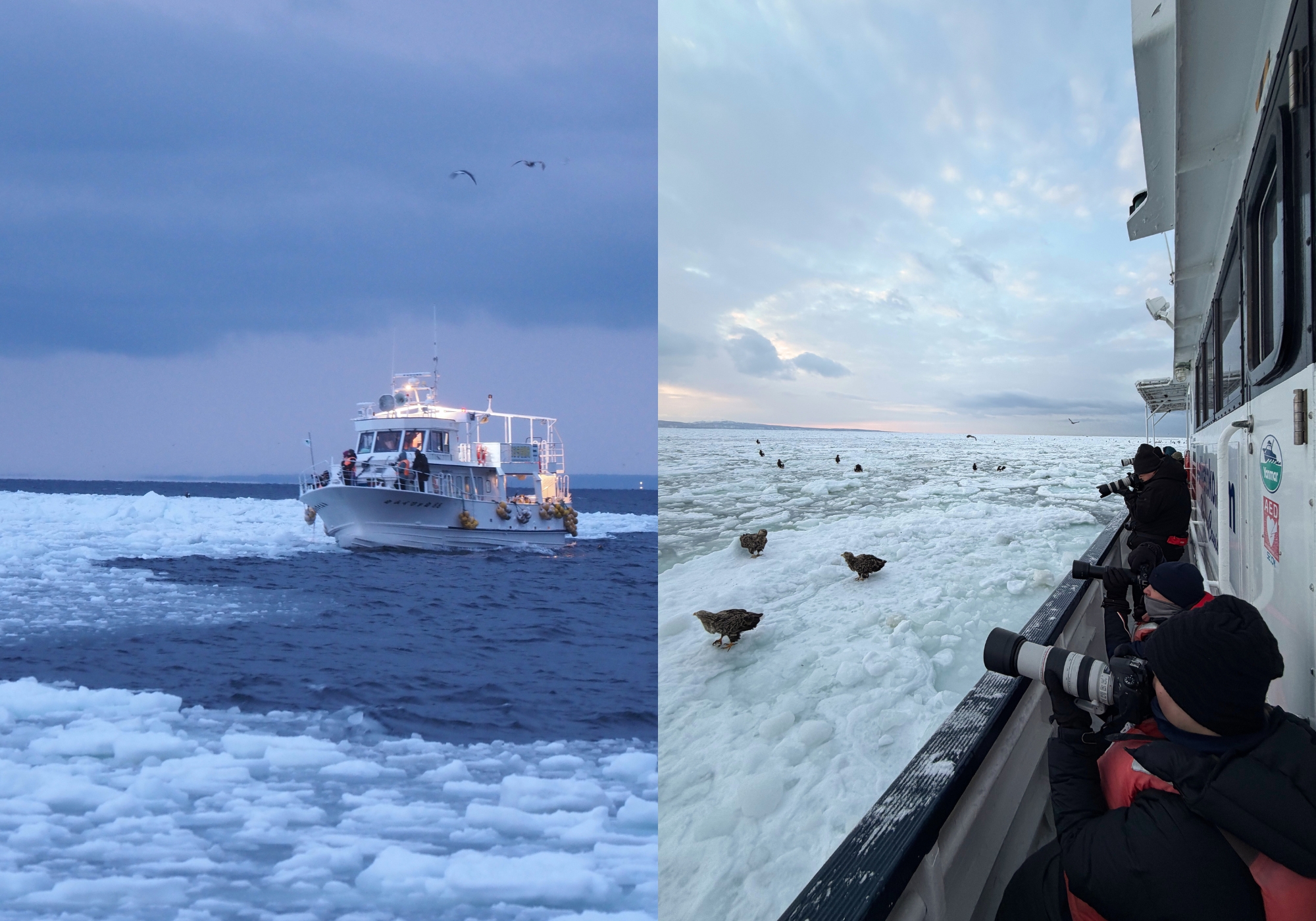
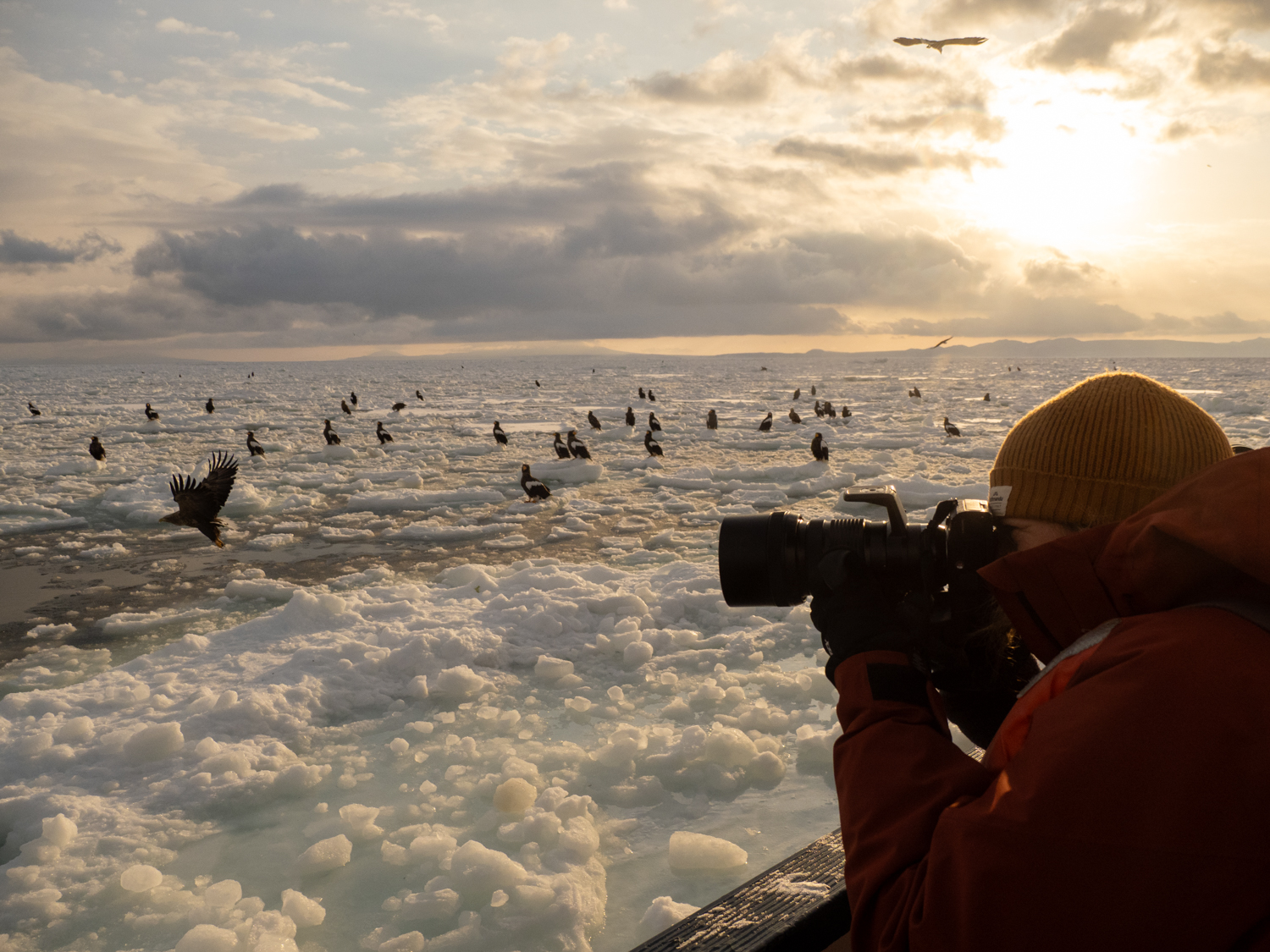
The sound of seagulls and boat engines got louder as we approached, and soon four boats were visible in the darkness, each with photographers boarding one by one. It’s quite the operation! Showing our ticket, we were assigned a boat and jumped on board to secure our spot along the lower deck.
It’s these situations that always make you second-guess your choice. Is this a good place to stand? Should we go inside first? How long are we sailing for? Will we freeze before we even see the eagles?
The last question is the one I should’ve been most worried about, because yes, it was chilly. With the combination of -5 degree temperatures at sunrise, a gentle sea breeze rolling off equally icy seas, not to mention the fact that the entire deck was iced and slippery, with snow sprinkles hitting us in the face as the boat gained speed.
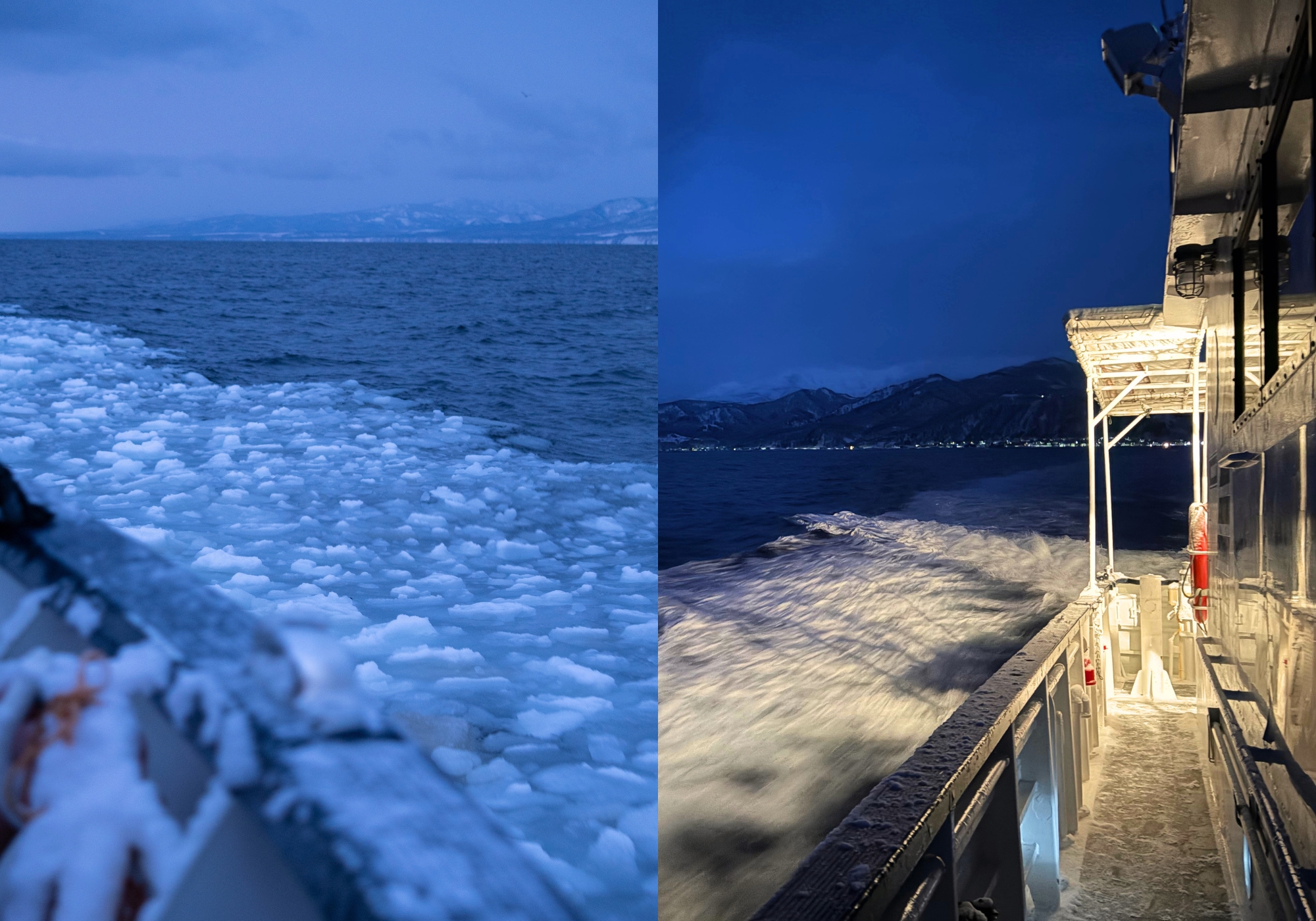
We were definitely cold before we even got close to the eagles, so had to try and gain heat by dancing on the spot, shaking hands, and crouching down on the deck to get away from the breeze. That said, by this time, we were surrounded by other photographers, as we had indeed chosen the ideal spot and it was impossible to venture inside even if we could no longer feel our fingers.
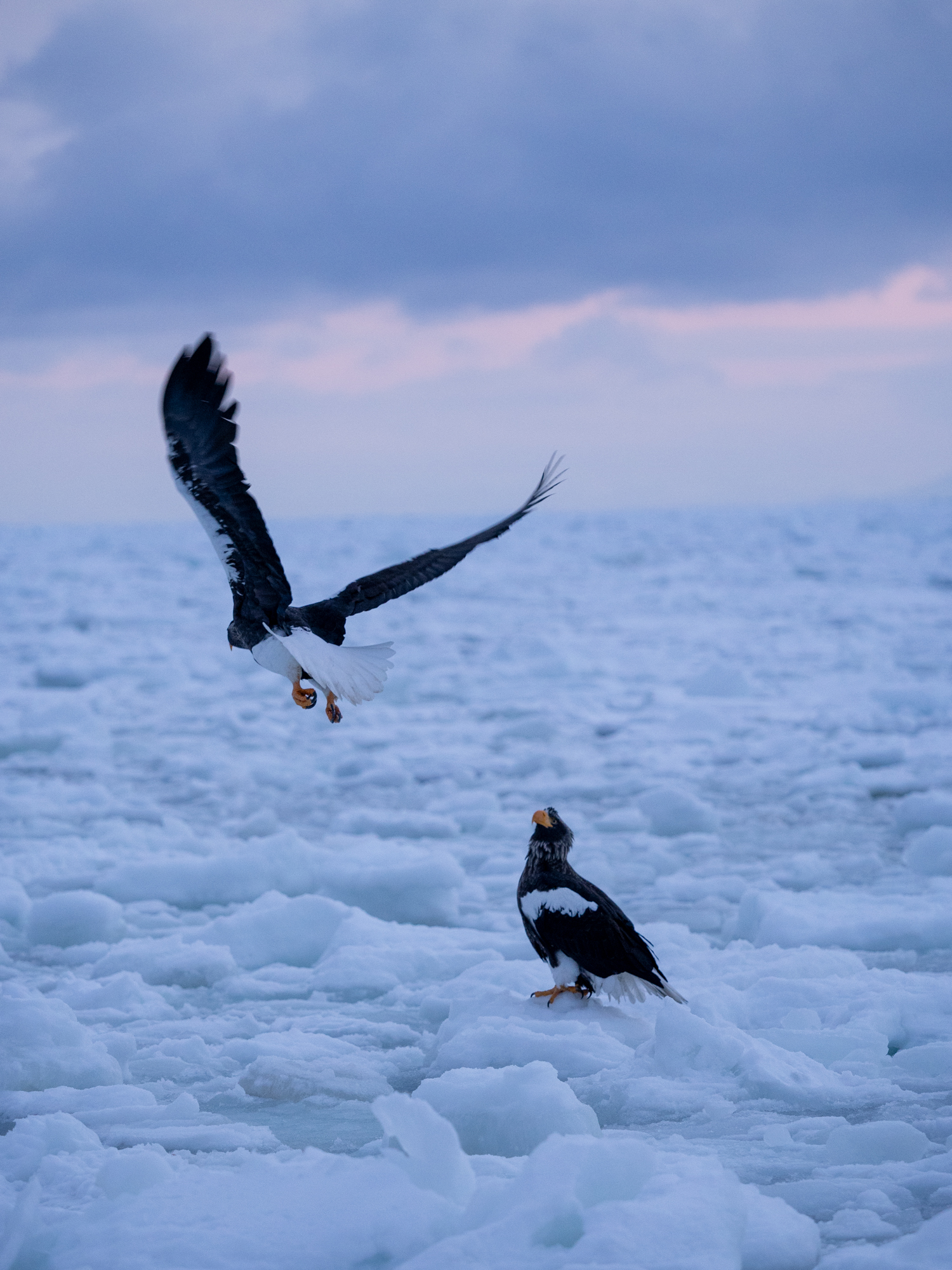
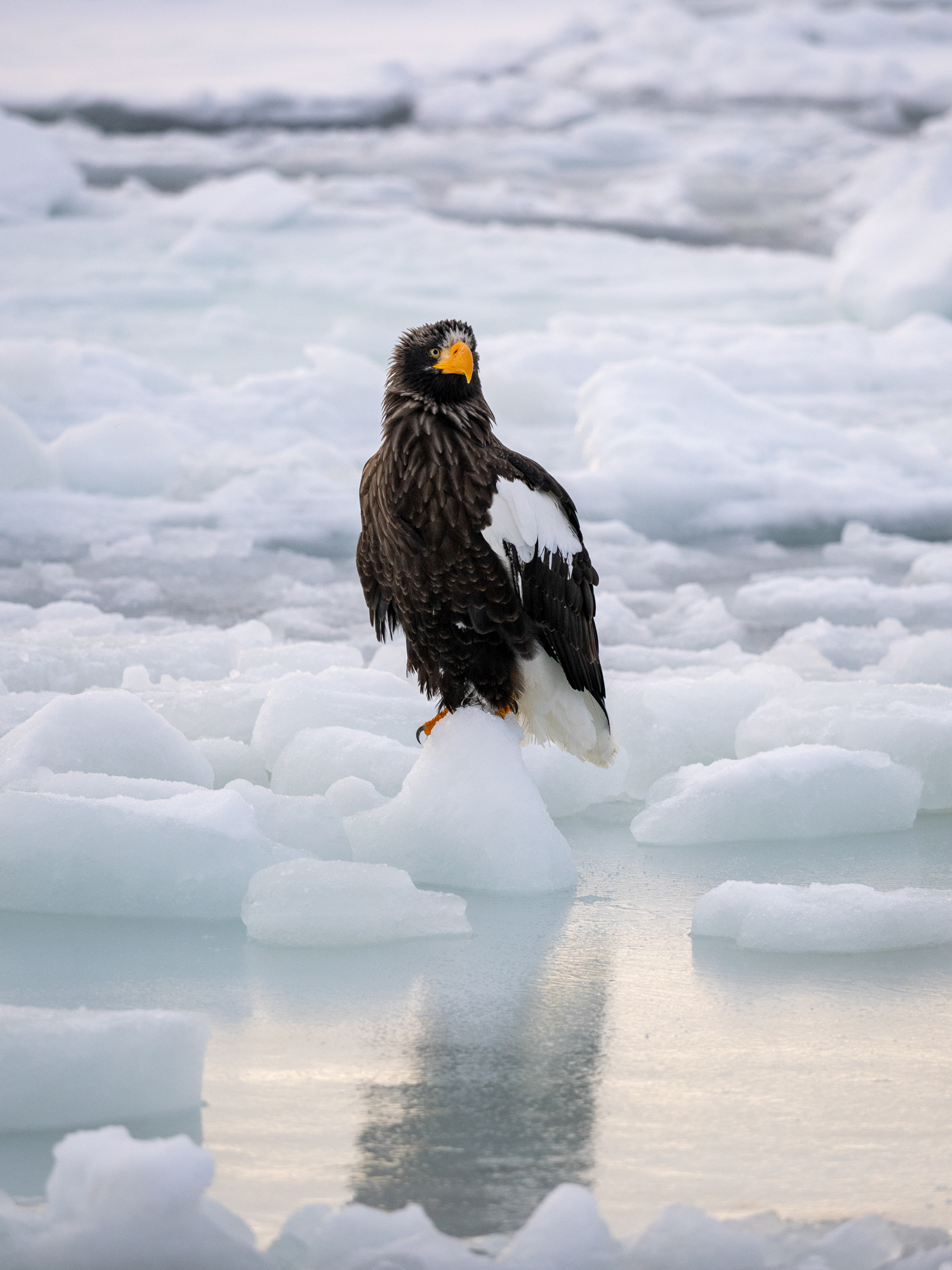
As we drifted closer to Kunashiri Island, a white line appeared across the sea. The drift ice was soon all around us and we slowed speed to look for the eagles. The cold instantly became a second thought, we’d found the drift ice, and within seconds, the Steller’s Sea Eagles were visible. Calmly sitting on the icebergs and very curious about our arrival.
A Quick Note – Feeding
Now, what happened next is something that surprised me, as I’d never heard other photographers talk about this, and believe it’s quite important to mention. As the birds grew in numbers close to the boat, the staff on our boat opened a chest of frozen fish and started throwing it out to them.
This is what set everyone off with the rapid shooting, clicks creating a soundtrack to the experience as a wave of excitement swept across everyone on board.
I’d always been in awe of the images I’ve seen, with so much action and detail, it led me to assume that those capturing them were insanely talented photographers with huge telephoto lenses. While I know talent does play a role, particularly with settings and composition, you’re also heavily aided by the placement of the fish, with numerous opportunities to capture a great image, or a series of images if you’re shooting on a high-sequential mode.
While I was keen to capture some beautiful images, especially since it was the one subject I’d really, really wanted to see. I was a bit taken aback by the feeding aspect. On the boat, I must admit to feeling a little disappointed, sure it was resulting in some incredible moments, enabling us to capture the birds up close, in flight, swooping and splashing, but it took away the chance or spontaneity of a good shot, and replaced it with an almost guaranteed outcome.
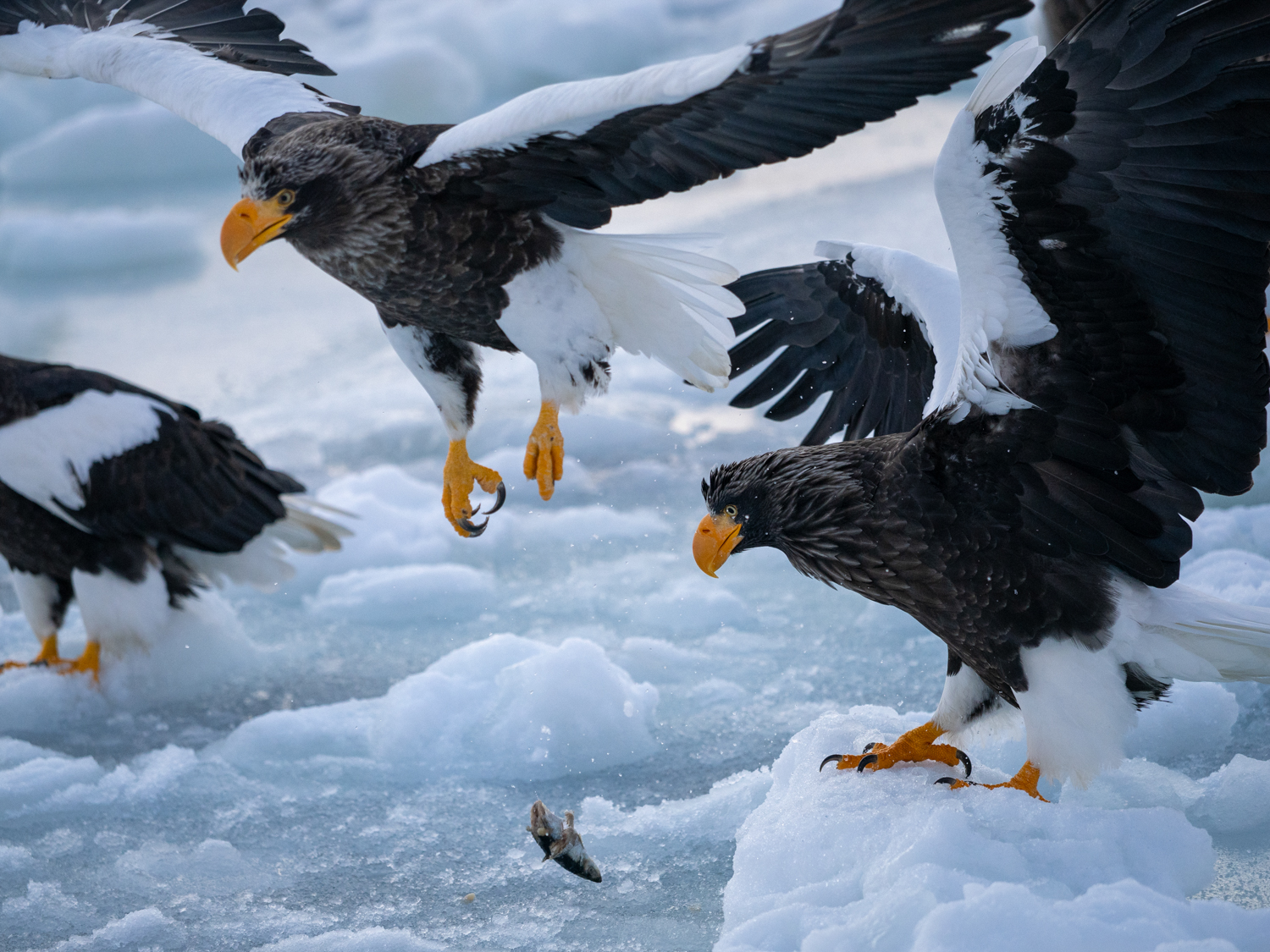
Plus, I’m not a fan of staged moments, especially when it comes to wildlife photography. I’d rather miss a shot than have it set up, orchestrated, or impact the animal behaviour in any way that’s not natural.
Before I move on to the imagery, I’ll just mention that after the trip, I did some research to find out why the feeding is necessary. Obviously, it helps deliver the experience guests on board are hoping for, but mainly, the feeding aids in helping the eagles maintain the fish levels they require.
With a global population of around 4 to 5,000 birds, they’re listed as a vulnerable species, with their food supplies declining each year. The feeding from tourist boats helps to top up these sources while they’re in Japanese waters, before the long journey north for summer.
I wish I’d read that before my cruise, so I hope it can help if you’re planning to visit, so you understand why, and instead focus on enjoying the experience and being in the presence of these giant birds.
The Photography Experience
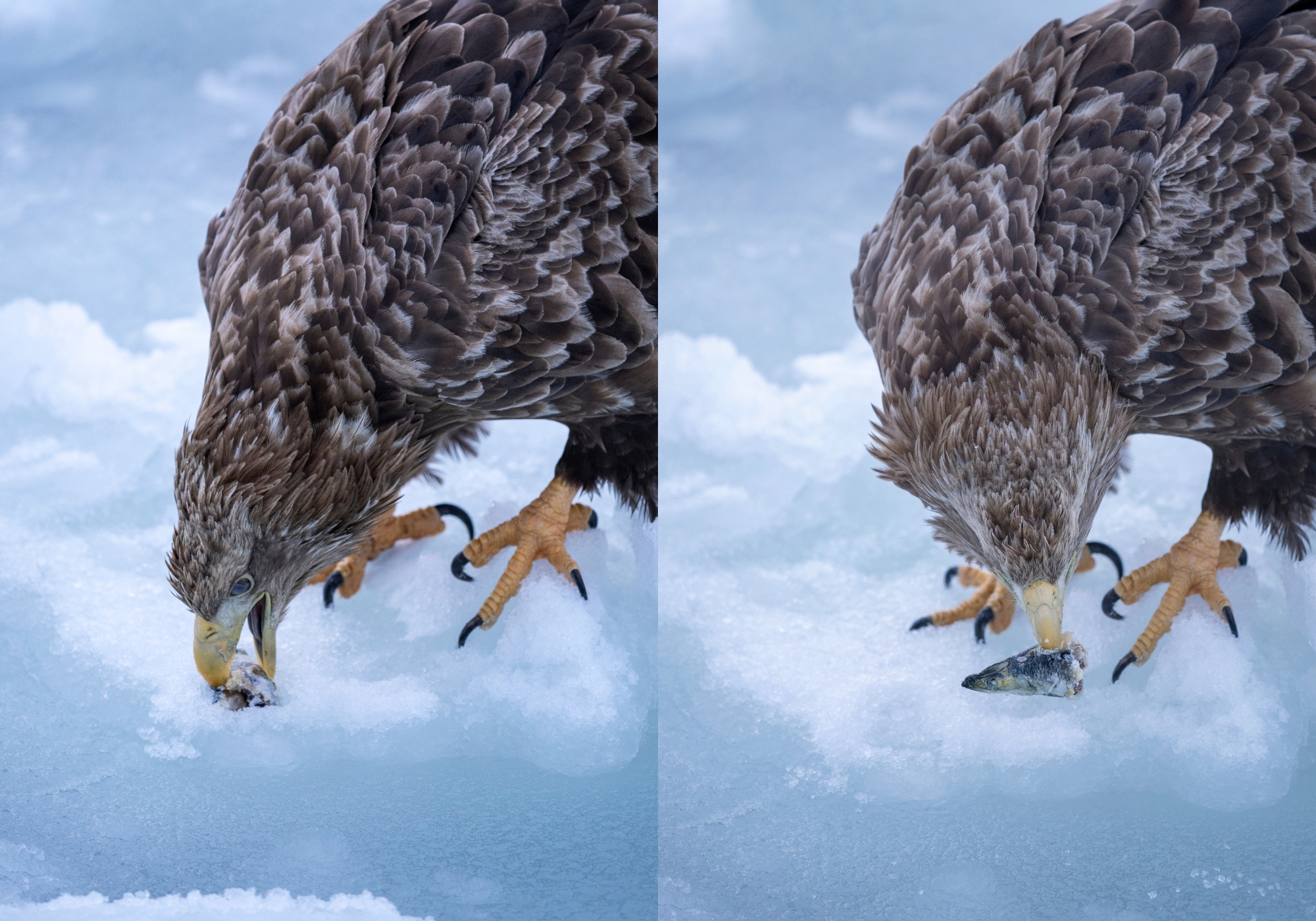
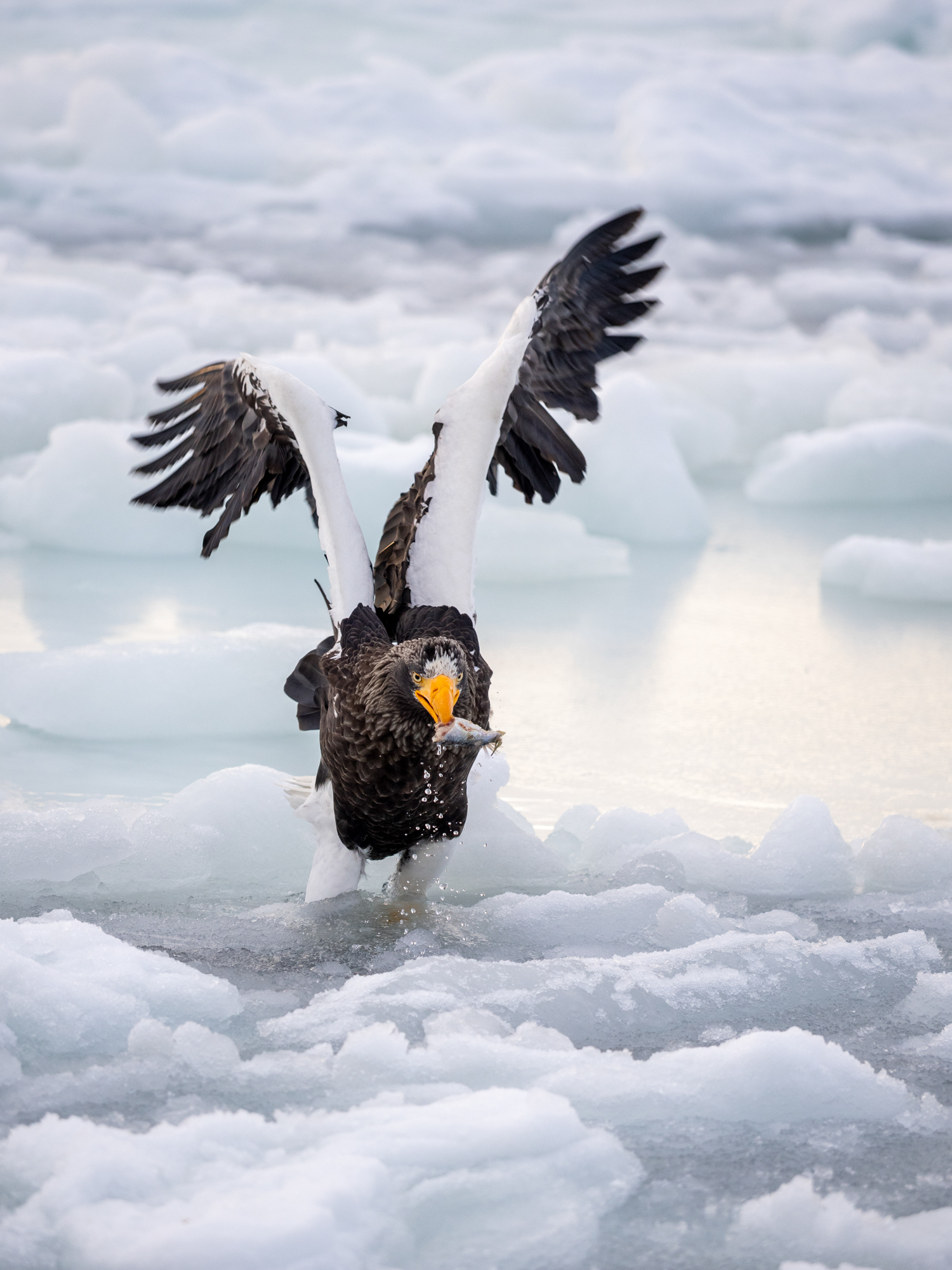
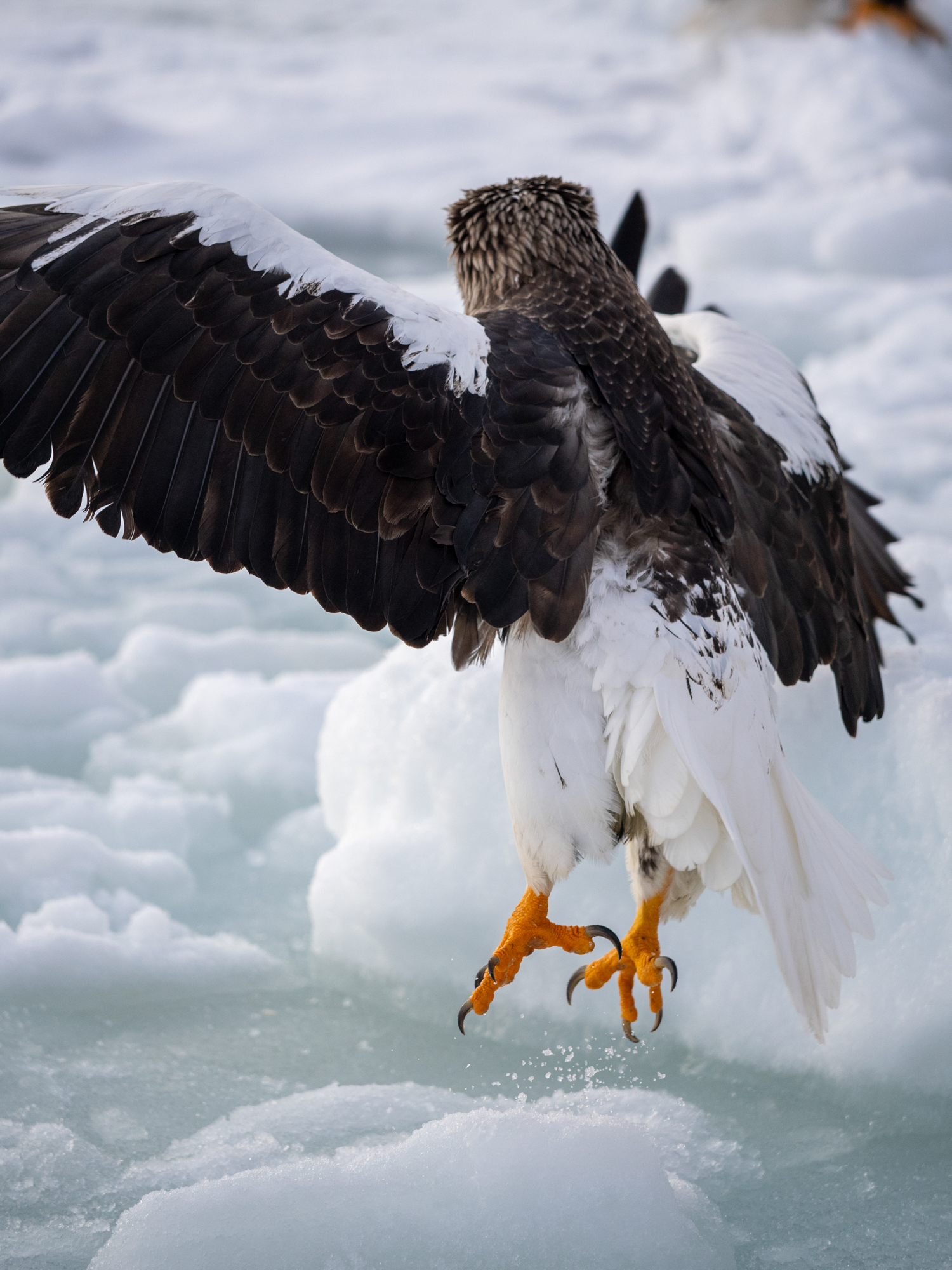
Getting back to the photos, stopping to pause and observe the feeding gave me a chance to watch the birds rather than fire off shots continually, and their size, shape, and colours are so impressive, particularly up close. As one of the largest birds of prey in the world, I found their legs so fascinating, strong, white, and so solid, particularly as their vibrant yellow claws clench the fish and ice.
The wider scene was quite dark for the first 30 minutes or so with the eagles, and as the sunrise illuminated the scene, I tried to document the wider landscape, and zoom in on those cute claws and strong leggies.
Most of the activity occurs at relatively close range, so I was shooting with the OM-1 MKII + 40-150mm f2.8, and the MC20 2x teleconverter to enable quick access to those longer focal lengths as I focused more on the details. I also had my OM-1 around my neck, to alternate between wider angles with the 12-40mm f2.8 pro lens too, the light was so stunning and I’m thankful for remembering to get both cameras out because once my hands started to get colder and colder, it was almost impossible to unzip my bag or grip anything.
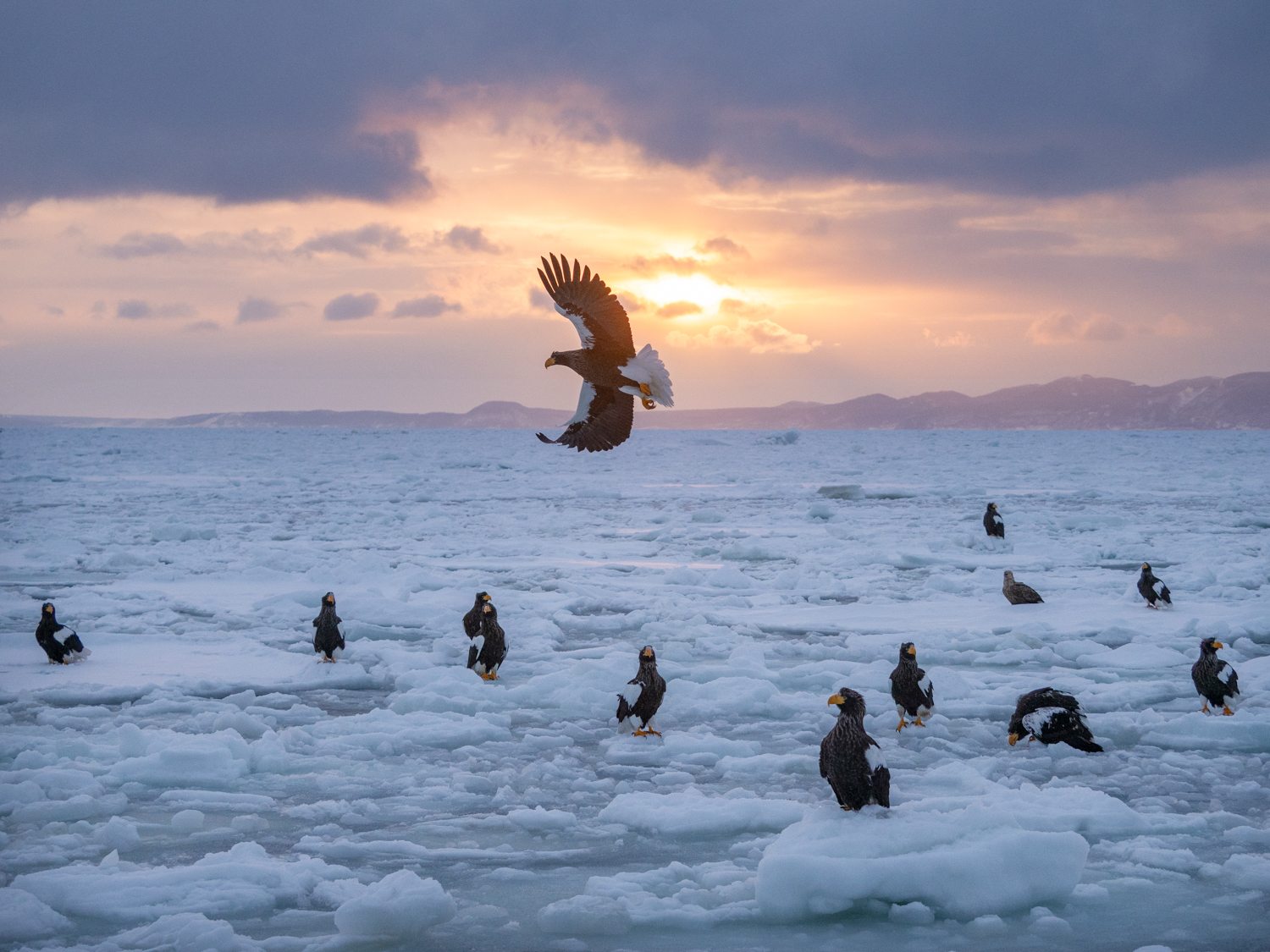
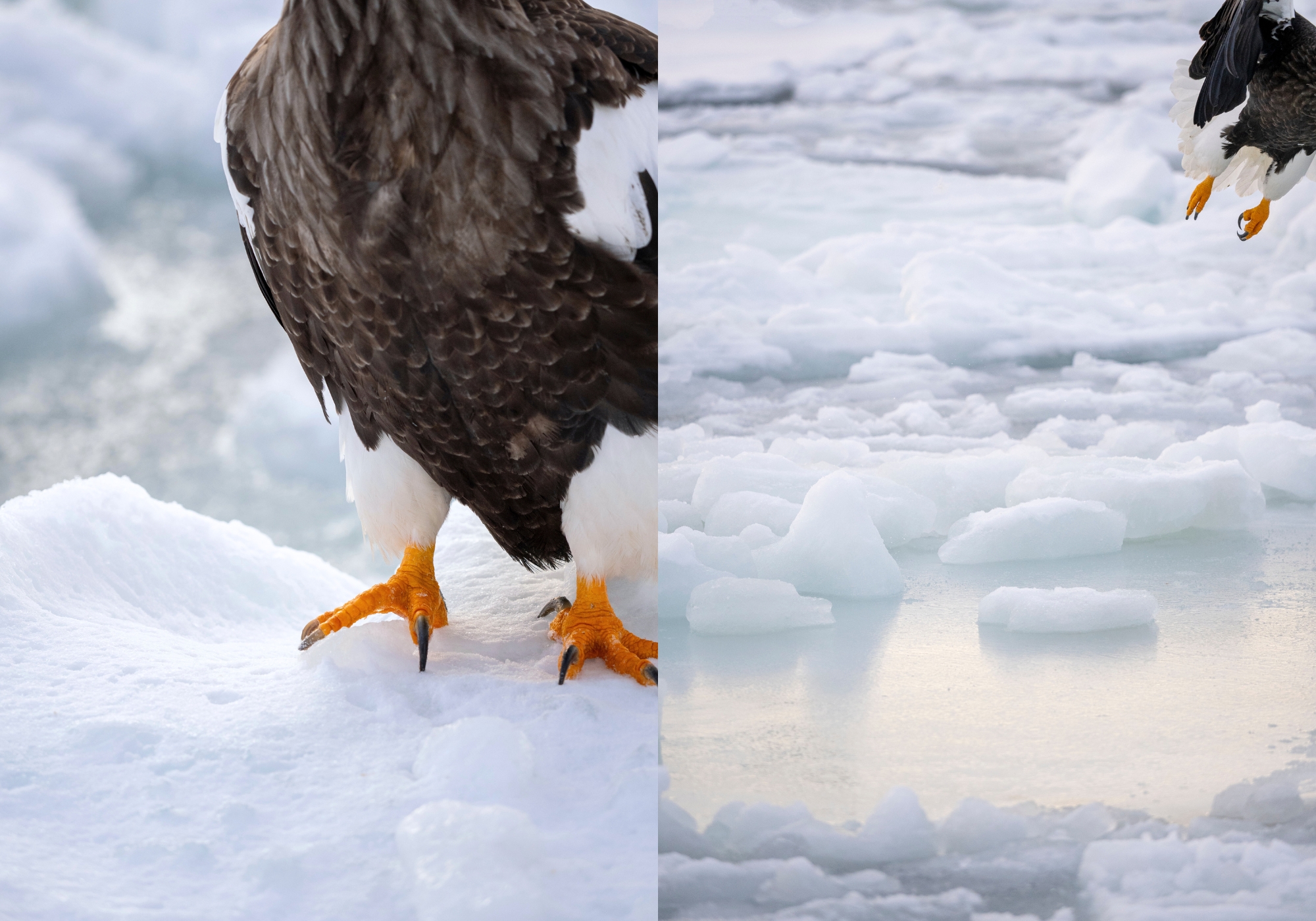
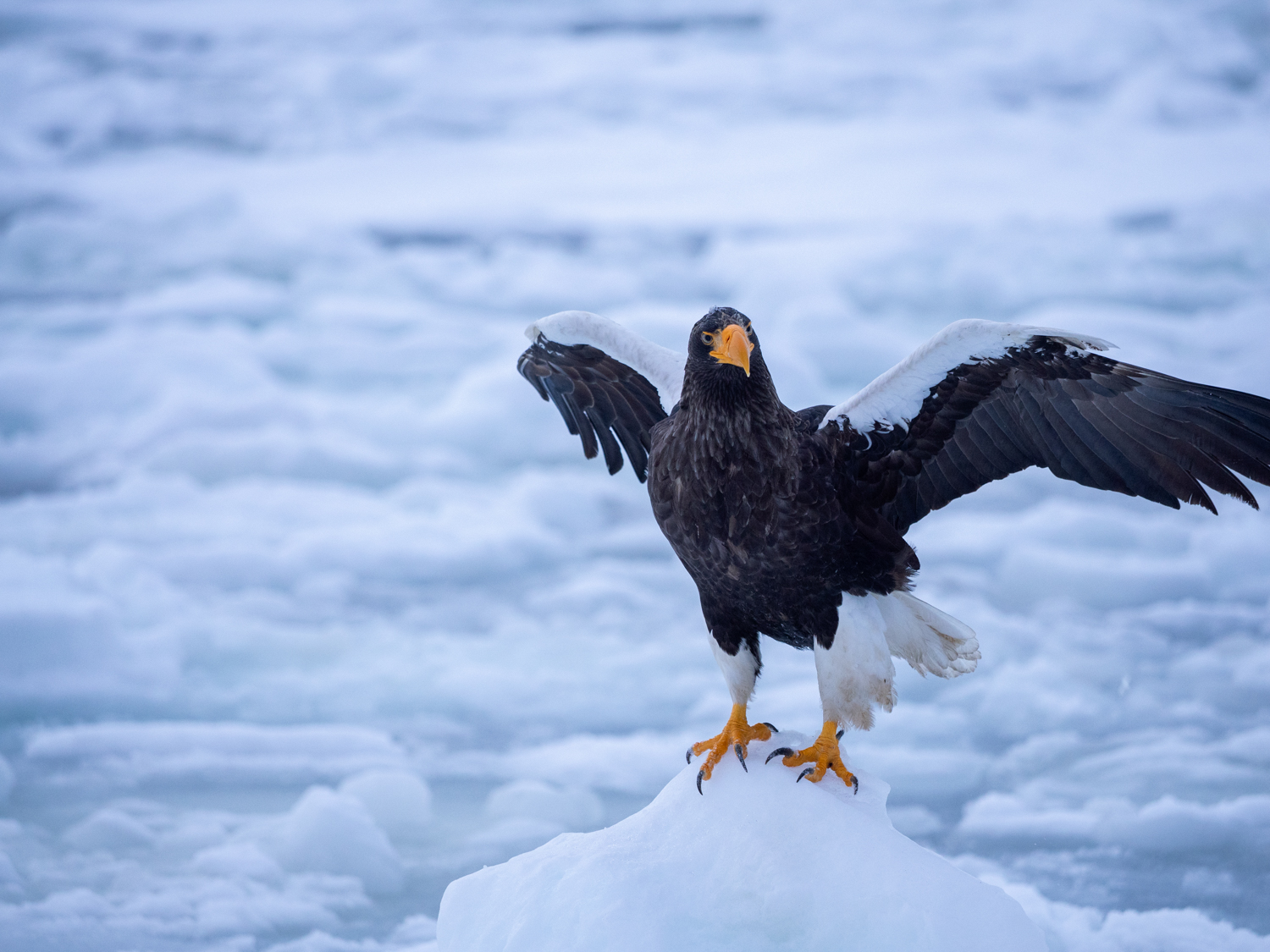
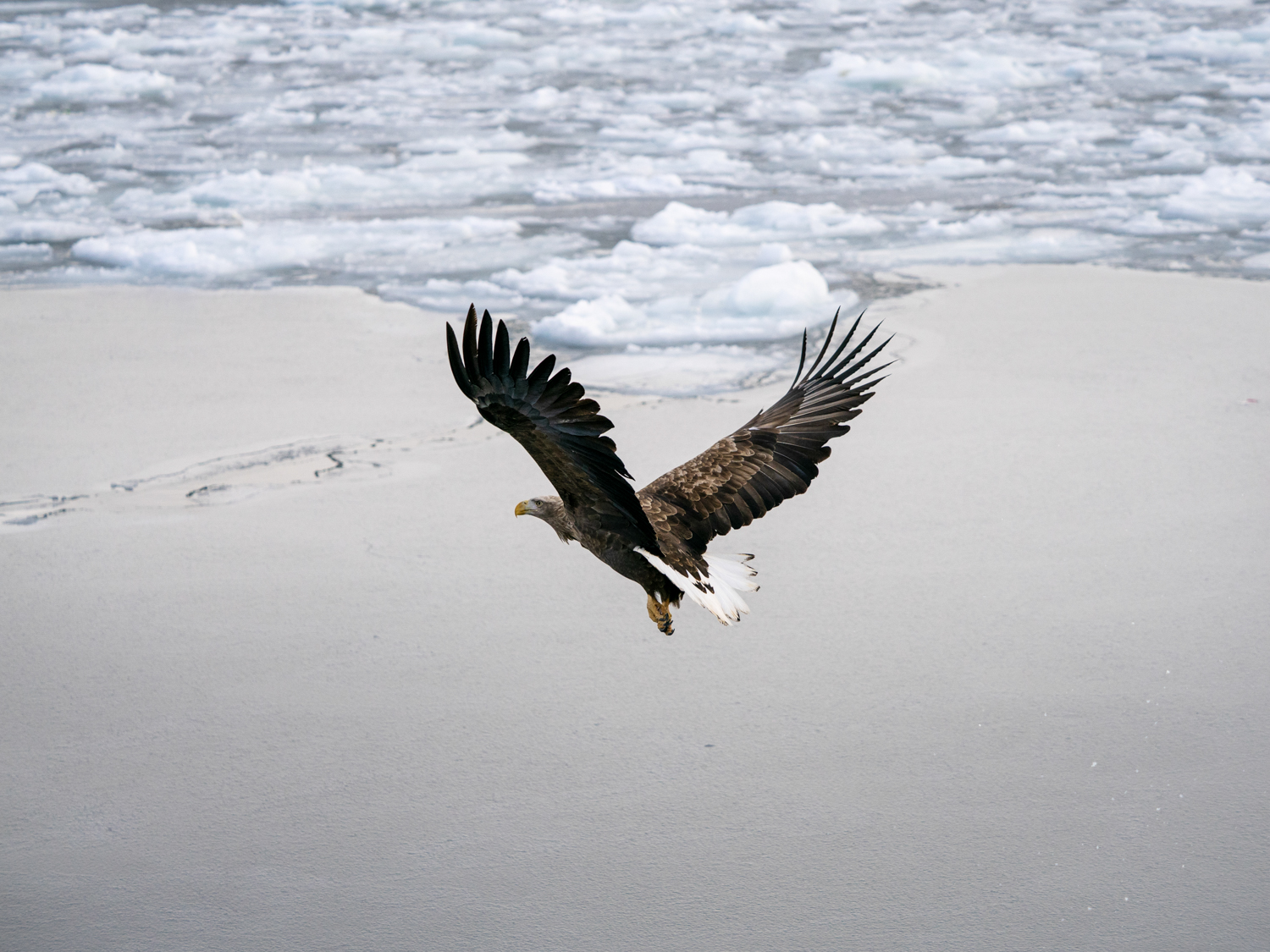
Eagles circle above the water, descend quickly to feed, and then lift again, often repeating the same movements. Their flight is powerful rather than fast, with slower wingbeats that allow for more deliberate tracking through the frame. The Steller’s Sea Eagles are also joined by the White-tailed Eagles, whose legs I found even more fun to photograph, with less feathers making them stand out as two strong little pillars grasping the ice.
Some quick notes for anyone planning to do this cruise:
- Secure your spot on the lower outside deck, but try to grab a spot about half-way down, to avoid the chilly breeze as the boat cruises across the open ocean. The best side will depend on where the birds are, so unfortunately, this can’t be predicted.
- Layer up, and I mean it. Ensure you’ve got good thermals, fleece layers, windproof and waterproof outer layers, thick socks and snow boots with good grip as the deck is slippery and icy.
- Fully charge your batteries the night prior, before the high-sequential shooting plus cold conditions will drain your batteries faster, and it’s tricky to change on the boat as it’s moving, and your hands may freeze up.
- Don’t rush your shots, take some time to observe the birds, their movement and plan for your shots to capture the images you’re seeking.
- I found the best shots were closer details as the birds rested on the drift ice, and the moment before grabbing fish, then just as they took off.
- Finally, as soon as the boat starts moving away from the birds to venture back to Rausu, head inside, your hands and face will thank you for a little warmth!
If you’re keen to book the same experience, I travelled with Shiretoko Nature Cruise on the Drift Ice & Bird Watching B Early morning cruise which doesn’t note a departure time online because they determine this based on the conditions and sunrise. You’ll be notified of the departure time and meeting point the day prior.
The entire trip takes roughly 2-2.5hrs and if you’re not up for the early rise (although, I strongly encourage this for the gorgeous light!), they also offer 8:30am departures, and a shorter sightseeing cruise around 1pm which only focuses on the coastline and doesn’t typically venture out to the drift ice.
Accommodation note: Book this early if you can, as Rausu is a very small town with most accommodation reserved well in advance. I stayed at the Shiretoko Serai hotel on the waterfront which was ideal as it was close enough to walk to the port, yet comfortable and clean.
A big thank you to my friends at Eastern Hokkaido Style DMO for help with transport on this adventure – so fun exploring with you and learning more about the region!
Continue reading: View ‘The Photographer’s Guide to Eastern Hokkaido’ here.
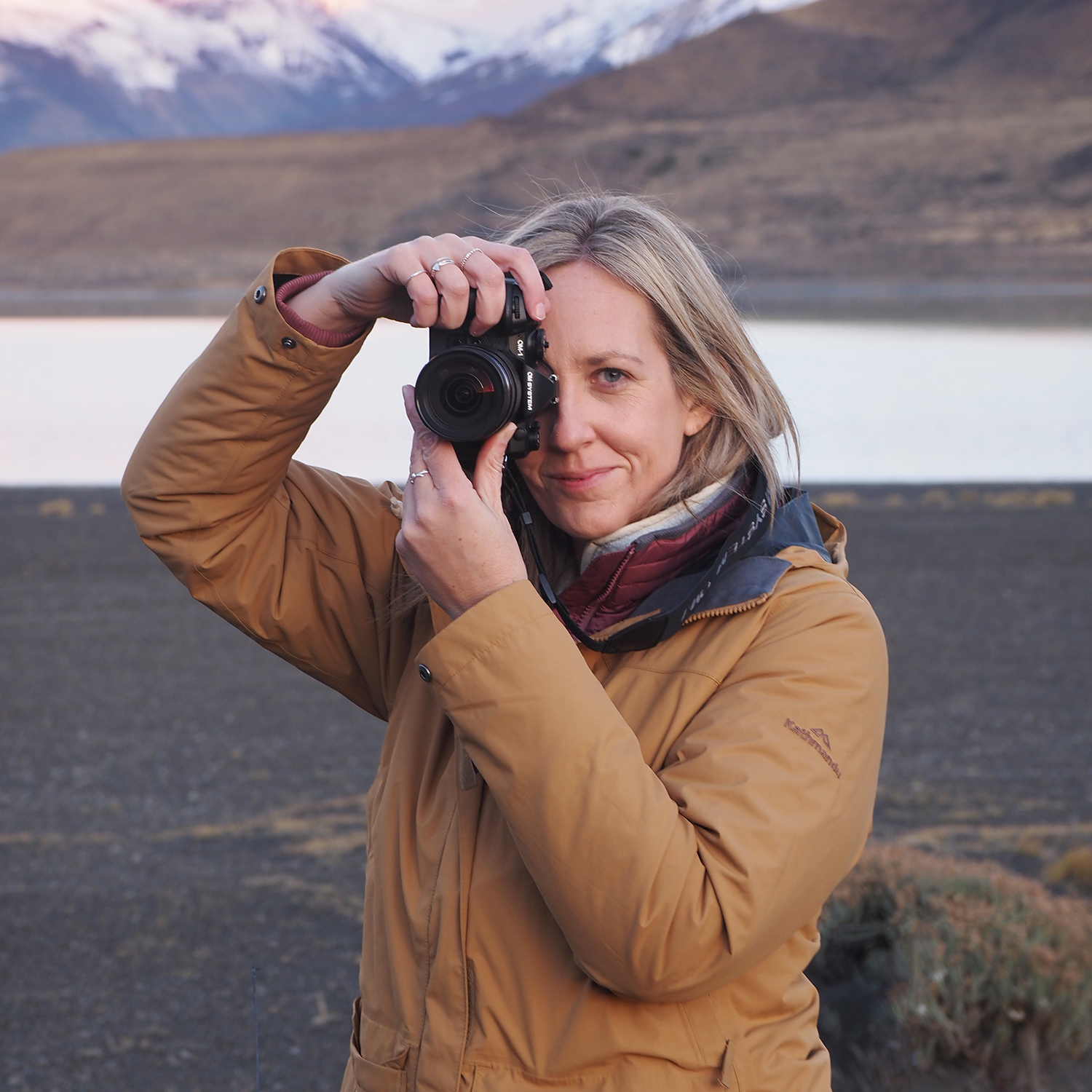
Hello! I’m the founder and photographer behind The Wandering Lens.
With 19+yrs experience as a professional travel and landscape photographer, all advice found on this site is from my personal experience, or that of contributors, on the road. I hope it’s useful for your own travels and would love to hear in the comments about your trips and experiences around the world.