United States officials are reportedly frustrated with Israeli Prime Minister Benjamin Netanyahu’s reticence to implement parts of their Gaza strategy. The US-backed Board of Peace (BoP), which is to oversee the planned political transition in the Gaza Strip, has seen Netanyahu block certain initiatives as he faces a hotly contested election. Meanwhile, the Israeli Defense Forces (IDF) continued strikes and reported 14 ceasefire violations in Gaza between September 4 and 15.
US special envoy Jared Kushner blamed Israel’s upcoming election for the continued impasse over the Board of Peace’s plan to disarm Hamas, saying on September 6 that Washington and Jerusalem agree on Gaza’s desired “end state,” but that Israeli politics have complicated implementation.
“They just have a crazy election, and that makes them a little irrational in certain regards,” Kushner said. An unnamed BoP official subsequently told The Times of Israel that Netanyahu had “100% entered campaign mode” and that the panel does not expect to regain meaningful leverage over Israel until after the October 27 election. The official added that American pressure on Netanyahu before the vote could benefit him politically by allowing him to portray himself as resisting US demands to “surrender” to Hamas.
One dispute concerns the Palestinian police force intended to replace Hamas’s security apparatus and receive weapons surrendered under the disarmament plan. Roughly 16,500 of 283,000 applicants have passed Israeli security vetting, but Israel has not permitted them to leave Gaza for training in Egypt. A BoP official said that the delay “prolongs the existence in Gaza of Hamas police armed with AK-47s.”
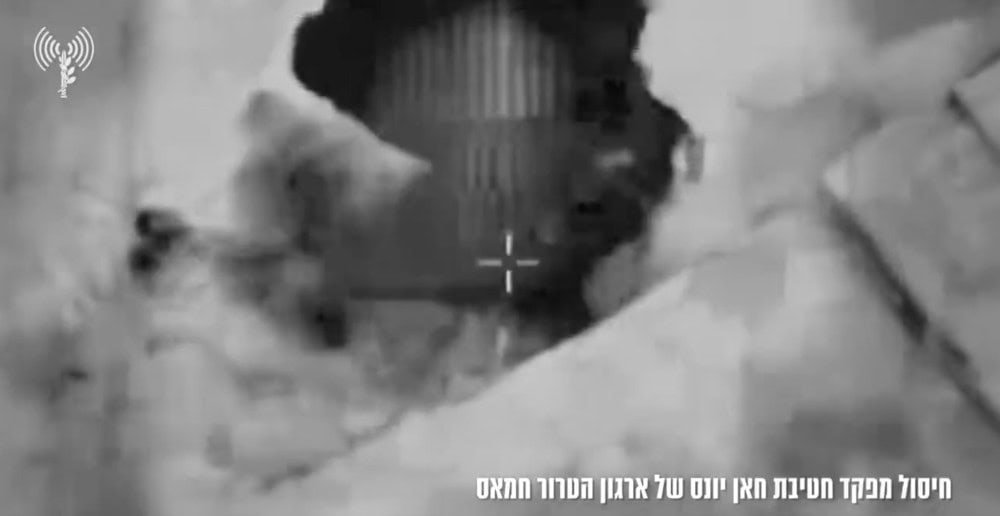
Israeli strikes have emerged as another point of disagreement. Kushner previously told Netanyahu that Israel could target Hamas members posing an “imminent threat,” but warned against interpreting that exception broadly. Israel has continued near-daily strikes on Hamas commanders, including Khan Younis Brigade commander Muhammad Yazouri, Rafah Brigade sniper-cell commander Muaman Abu Labda, and Jabalia Battalion commander Ahmed Betesh, between September 10 and 15.
The strikes target terrorists Israel says are rebuilding Hamas’s military capabilities and actively posing a threat to Israelis. The IDF reported a total of 14 ceasefire violations from September 4 to 15:
- On September 4, the IDF said that gunfire targeted Israeli forces operating east of the Yellow Line in northern Gaza. No Israeli troops were injured, and the IDF struck in the area in response. The military called the incident “a blatant violation” of the Gaza ceasefire agreement.
- Later the same day, the IDF and Shin Bet intelligence agency said that they killed Muhammad Mahmoud Marshud al Qadi, a Hamas Nukhba company commander who led the October 7 raid on the Sufa outpost and later participated in holding hostages captive in Rafah. Qadi had recently led training for Hamas members and “acted to restore the organization’s capabilities,” according to the Israeli military.
- On September 7, the IDF said that it killed Youssef Akilah, a Hamas Nukhba company commander, in Gaza City. Akilah had recently promoted attacks against Israeli forces and civilians and “acted to restore the organization’s capabilities” while violating the ceasefire, according to the military.
- Later the same day, the IDF said that it killed Zevhi Hadar Asam al Batarchi, a Palestinian Islamic Jihad (PIJ) member who had participated in planting explosives targeting Israeli forces, in the Shati area.
- Also on September 7, the IDF said that it killed Ahmed Fouad Khalil Khals, a member of Hamas’s military wing who participated in planting explosives and other activity against Israeli forces in Gaza, in a separate strike several days earlier.
- On September 10, the IDF and Shin Bet said that they destroyed three Hamas weapons-storage facilities in separate strikes across Gaza. The facilities contained “weapons, charges, anti-tank missiles, and additional combat equipment,” according to the Israeli military.
- Later the same day, the IDF said that it killed Ismail Ibrahim Darwish Kandil, a member of Hamas’s Nukhba force, in Khan Younis. Kandil had infiltrated Israel during the October 7 massacre and participated in the killing of Nahal Brigade commander Colonel Yonatan Steinberg, according to the Israeli military.
- Also on September 10, the IDF, Shin Bet, and Israel Police said that they killed Faraj Hamad, a member of Hamas’s military wing who had previously served as a senior figure in the organization’s “West Bank Headquarters.” Hamad had participated in attacks in which Israeli soldiers and civilians were killed and had fought against Israeli forces during the war, according to the Israeli military.
- On September 11, the IDF and Shin Bet said that they killed Muhammad Yazouri, the commander of Hamas’s Khan Younis Brigade, in a strike the previous night.
- Later the same day, the IDF and Shin Bet said that they killed Muaman Ghabr al Said Abu Labda, the head of a sniper cell in Hamas’s Rafah Brigade, in Khan Younis. Abu Labda had conducted sniper training aimed at attacking Israeli civilians and forces operating near the Yellow Line and had recently “acted to restore the capabilities” of Hamas while violating the ceasefire, according to the Israeli military.
- On September 13, the IDF said that it killed Mahmoud Hassan Ali Abu Nada and Abd al Rahim Ahmad Khalil Kwar, two members of the engineering array of Hamas’s military wing, in Gaza City. The pair had recently produced and developed weapons, promoted attacks against Israeli forces and civilians, and “acted to restore the organization’s capabilities,” according to the Israeli military.
- On September 15, the IDF said that it killed Rafat Abu Zamar, a platoon commander in the operations headquarters of Hamas’s military wing, in Khan Younis. Zamar had led training for Hamas members ahead of the October 7 massacre and, in recent months, continued training operatives and developing the organization’s combat capabilities, according to the Israeli military.
- Later the same day, the IDF and Shin Bet said that they killed Ahmed Betesh, the commander of Hamas’s Jabalia Battalion in its Northern Gaza Brigade, in northern Gaza.
- Also on September 15, the IDF said that it killed Muhsan Farid Saeed Abu Hadid, the head of a rocket cell in PIJ, in Khan Younis. Hadid had participated in the October 7 raid on the Kissufim area and had recently promoted attacks against Israeli forces and civilians while “systematically violating the ceasefire,” according to the Israeli military.
Samuel Ben-Ur is a research analyst at the Foundation for Defense of Democracies.