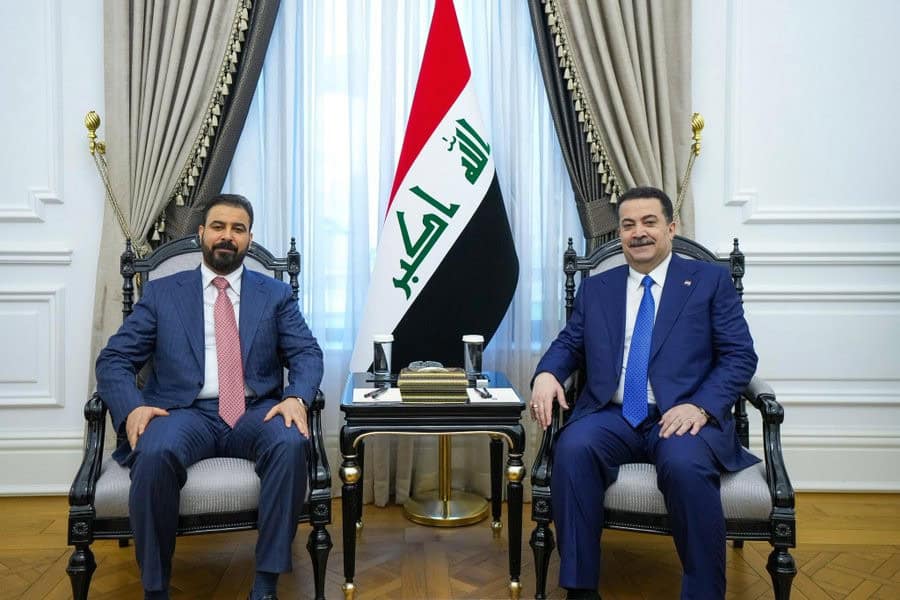

The Coordination Framework (CF), a coalition of Iraqi Shiite parties that is the largest bloc in the country’s parliament, announced on April 27 that it is nominating Ali al Zaidi for prime minister. Iraqi President Nizar Amidi officially tasked Zaidi with forming the next government the same evening. The new prime minister-designate will now have 30 days to select members of his cabinet, each of whom must be approved by parliament before the government assumes authority.
Zaidi is a businessman who has not previously held a government position or been publicly affiliated with a specific party. He is the chairman of the board of Al Wataniya Holding Group, a conglomerate involved in many sectors of Iraq’s economy. In this role, Zaidi “sits among Iraq’s more influential business figures without being among its publicly recognizable ones,” according to Iraq’s Shafaq News.
Previously, Zaidi was the chairman of the board at Al Janoob Islamic Bank. In February 2024, the Central Bank of Iraq banned Al Janoub, one of Iraq’s larger financial institutions, from participating in the Iraqi dollar auction, the primary means by which banks received US dollars, over concerns of fraud or money laundering. The US government has pressured Iraq to crack down on the use of the US dollar in illicit financial activity that benefits the Islamic Republic of Iran.
Zaidi is viewed as a compromise figure after months of deadlock in the Coordination Framework over the next PM. The Shiite bloc, which is largely comprised of Iran-backed parties, has previously preferred to elevate a figure with limited political or popular backing to the prime minister’s office. This enables the CF to maintain decision-making authority while the prime minister executes the coalition’s preferred policies.
The Coordination Framework took nearly five and a half months to select a prime minister after the country’s elections on November 11. In late January, the Shiite bloc indicated it would nominate former Prime Minister Nouri al Maliki, but US President Donald Trump opposed Maliki’s selection over his close ties to Iran, leaving the CF at an impasse it could not resolve for months.
Zaidi’s appointment as prime minister-designate does not guarantee his ascendance to the role. In 2020, two prime minister-designates did not take office after failing to assemble cabinets that received the support of Iraq’s parliament.
US-Iraq relations
The United States has recently exerted increased pressure on Baghdad after Iran-backed militias launched hundreds of attacks on US interests in the country, Gulf neighbors, and energy infrastructure in Iraq. The US Rewards for Justice program issued three $10 million rewards for information on Iraqi militia leaders in April, in addition to a $3 million reward for information on attacks against the US embassy in Baghdad.
On April 21, The Wall Street Journal reported that the US was withholding a $500 cash shipment to Iraq, as well as some security cooperation, to pressure Baghdad to act against the militias and ensure a government was not formed that empowered Iran-backed militias. The US is still allowing the use of Iraq’s oil revenue, held at the New York Federal Reserve Bank, to pay for imports electronically. On April 17, the United States designated seven militia leaders for attacks against US interests as part of Operation Epic Fury.