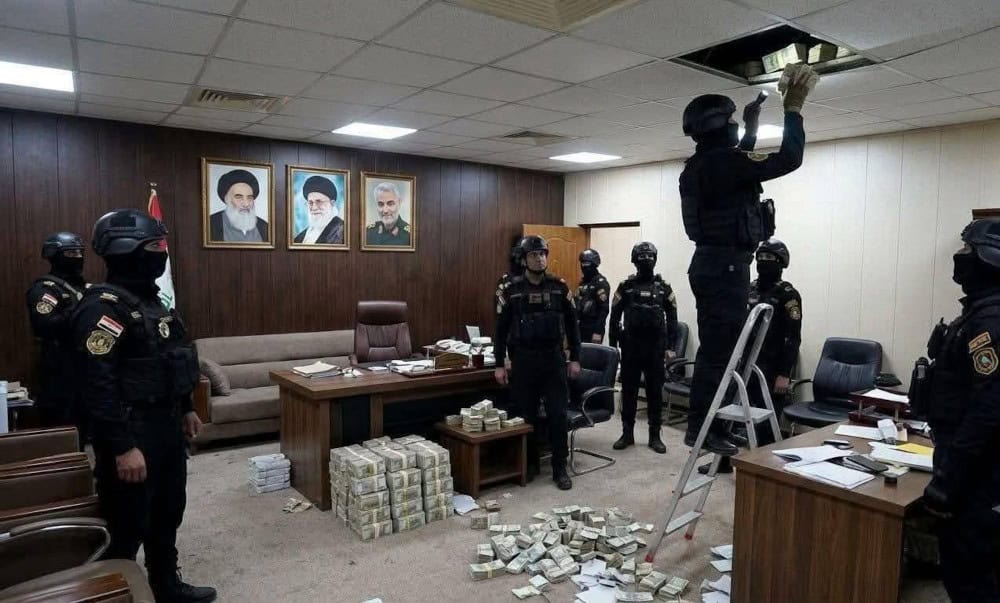
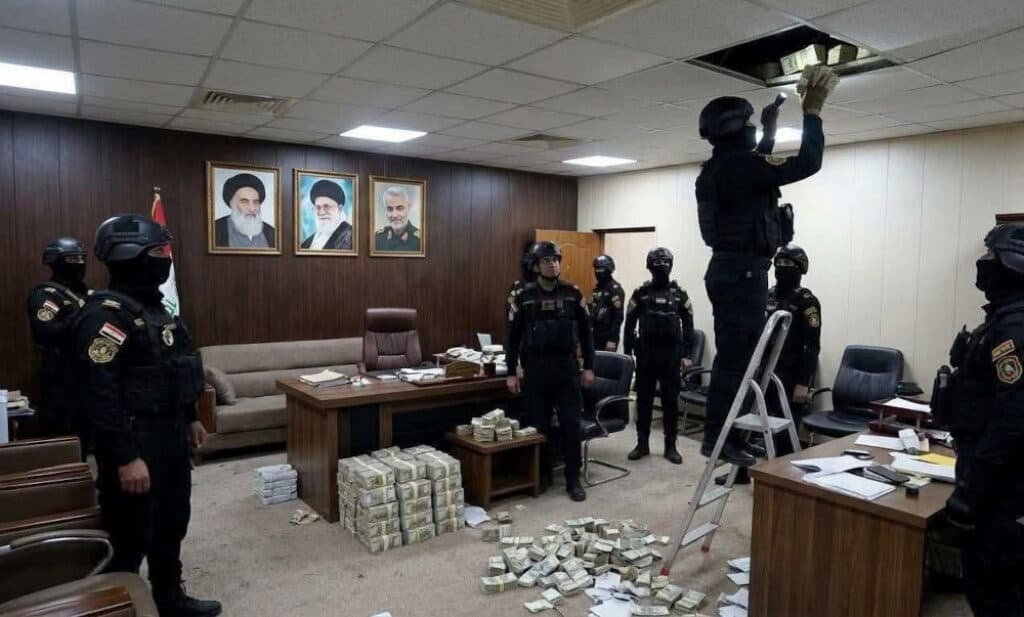
Iraq launched a series of raids targeting corrupt politicians and officials on June 28. “Elite Counter Terrorism Service units raided homes inside Baghdad’s heavily fortified Green Zone in overnight operations, detaining multiple suspects, legal and security sources said,” Reuters reported. The raids come as Iraq’s new prime minister, Ali al Zaidi, has also vowed to confine arms in Iraq to state control.
The initial raids targeting corruption led to the arrest of more than 45 people. “Those named include lawmakers Ziyad al-Janabi, Bahaa al-Nouri, Mohammed al-Karbouli, Alia Nassif, Mohammed Jamil al-Miyahi, Hassan al-Khafaji, Abdulrahman al-Luwaizi, Mudhar al-Karawi, Hind al-Abbasi, Mohammed Farman al-Jubouri, and Bushra al-Qaisi, as well as former lawmaker Mohammed al-Sayhoud. The list also includes Deputy Oil Minister for Distribution Ali Maarij and Ibrahim al-Sumaidaie,” Iraq’s Shafaq News reported. By June 30, at least 67 people had been detained, and Shafaq estimated that more than 200 may eventually be arrested as security forces fan out around the country.
The detained politicians come from across the political spectrum, including Sunni and Shiite politicians. For instance, Muthanna al Sammari, the head of the Sunni Azm alliance, was one of those detained, and a number of Shiite officials linked to former Prime Minister Shia al Sudani have been detained.
“Authorities have also arrested Abbas al-Sudani, the brother of former Prime Minister Mohammed Shia al-Sudani, Abdul Karim al-Sudani, the former prime minister’s office chief, Sami al-Sudani, a former government adviser, and Saif al-Din al-Karbouli, director of the Azm Alliance office,” The New Arab noted. Bahaa al Nouri, who was arrested, is also a parliament member in Sudani’s Reconstruction and Development Coalition.
Photos and videos of the arrests show that some of those arrested had stockpiled large amounts of money and valuables in their homes. For instance, around $15.5 million was found in the home of politician Alia Nassif. Al Arabiya noted that Nassif’s son served as “office director of former Iraqi Prime Minister Mohammed al-Sudani.” A stable of horses was also shown in videos related to her arrest. It appears that as the corruption drive continues, more entities and individuals will be investigated.
Various Iraqi political factions have backed the anti-corruption raids. Muqtada al Sadr, the high-profile cleric who heads the Shia National Movement, expressed support for the campaign. Sadr was the first well-known figure to announce that his militia, which he also dissolved, would place its arms under state control on May 27. The Kurdistan Democratic Party (KDP), the largest Kurdish party in Iraq and the dominant party in the Kurdistan Regional Government, also voiced support for Zaidi’s policy. The Sunni National Council, a group of Sunni parties in Iraq, also said it supports Zaidi, according to a report by Shafaq on June 29.
As Baghdad cracks down on corruption, the prime minister has continued pushing for various armed groups in Iraq to place their arms under state control. Government Spokesperson Haider al Aboudi said that armed groups have until September to hand over their weapons. September is when the US-led anti-Islamic State Coalition is expected to end its role in Iraq.
“Mr. Al-Zaidi outlined the government’s vision for the upcoming phase and the reform programs and development plans it encompasses, pointing out that confining arms to the hands of the state is not merely a slogan, as it has been initiated and they are continuing with this policy, especially since September 30 will witness the complete withdrawal of coalition forces,” Iraq’s Prime Minister’s Office said in the wake of Zaidi’s meeting with ambassadors from European countries on June 29.
A “national sovereignty conference” will take place toward the end of the year as part of the state’s effort to achieve a monopoly on arms. Zaidi has linked this collection of weapons to the anti-corruption campaign.