No, John Andrew Grush and Taylor Newton Stewart are not actually brothers. But together, they form “The Newton Brothers”—an award-winning composer duo known for their musical work on many movies and shows, including Marvel Television’s Daredevil: Born Again. With Marvel Animation’s X-Men ‘97, Grush and Stewart helped honor the past sonic world of the original series, while also bringing their own mutant sound to a modern audience. Their rollicking synth work added an especially pounding heartbeat to the second season… a musical journey that started when they were both kids.
As Grush recounted, “For me, the X-Men were all about escape. I would ride my 10-speed bike to the bookstore to read the comics, because my parents wouldn’t let me read them.” For Stewart, the original X-Men: The Animated Series was actually what got him into comics. “At the time, I wasn’t a big comic collector,” he remembered, “but when I saw the morning cartoons, it hooked me and I became obsessed.”
Their entry into the Marvel Universe was also their first foray into creating music for animation. Was there a significant difference? For the pair, it all boiled down to one thing: timing. “Because it’s a television show, it has to move very quickly,” said Stewart. “We were constantly going from something that’s emotional and soft to something that’s crazy and a big action sequence—all in a very short period of time. In a feature film or even generally in live-action, there’s a bit of a slower progress into that. It doesn’t quite hit so hard or quick, and I think that’s the big challenge of animation, and this show particularly.” Grush agreed, adding: “They’re packing a lot into each episode, and every frame counts. Every frame always counts, but when it’s been animated very specifically, it’s doubly important.”
In order to stay grounded, the duo had to remain focused on the overall thrust of the mutants’ story. “We were always trying to think in terms of the arc of the season, and where we were going,” shared Grush. “The producers, writers, and editors on the show would come in and help us navigate certain things like, ‘Hey, this moment should actually not be scary—it should be positive.’ It was really helpful. Sometimes there would be misdirection in the story, but you still wanted to keep everyone going in the right direction.”
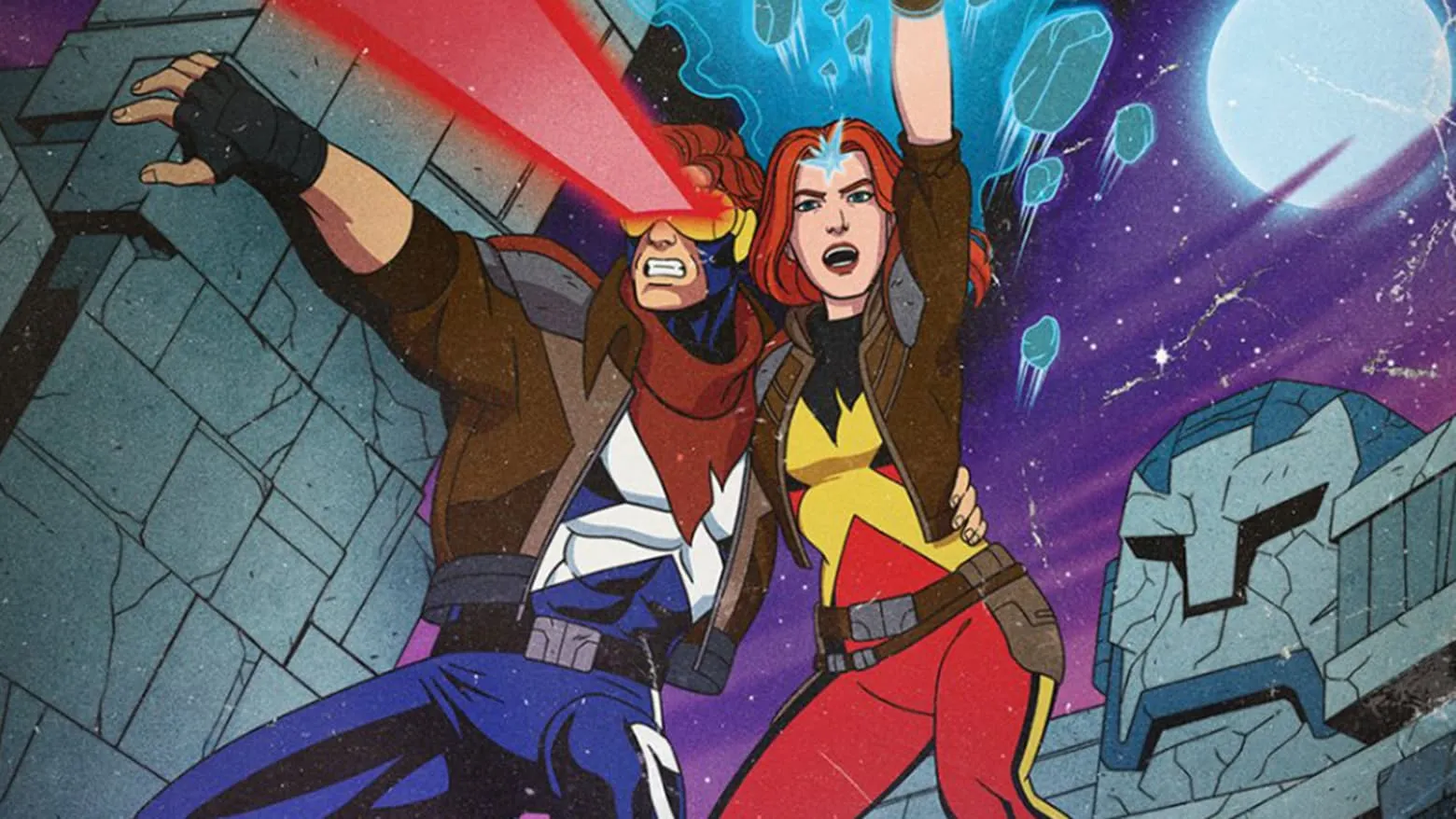
The train crash in Season 2’s first episode was one of those moments. “We were told, ‘This is not actually a dark moment,’ and so we wrote accordingly.” Despite their perilous circumstances, Scott, Jean, and their son Nathan Summers were literally running towards destiny.
In order to achieve the sound they were looking for from scene to scene, the Newton Brothers relied on the tools and instruments popularized during the ’80s and ’90s—a.k.a. lots of synths and electric guitar, including the classic Roland JD-800. “We used a lot of Roland stuff,” explained Stewart. “In Season 1, we used some old synthesizers, including a JV-1080, which I had when I was a kid.” Grush continued, “A lot of these things just have a sound that you couldn’t get with anything else. You would pull it up, and be like, ‘Oh, there we are.’ It added some nice sauce.” But there definitely needed to be a balance: they didn’t want the score to be all just throwback synths, or all just new synths, or all just orchestra choir. There was a fine line for each cue. “It needed to sound very specific.”
When the first season of X-Men ‘97 ended, our heroes were strewn across space and time. The exploration of multiple timelines during the first few episodes of Season 2 added a bit more complexity to the Newton Brothers’ process. “We talked in great detail with the creatives, and with ourselves, to figure out what we were trying to accomplish in each [time] period,” explained Stewart. “How do we want the audience to know that they’re in Egypt? How do we play around, and how do we bring in a little bit of that ’90s sensibility? When playing with these elements, we strategically built out a palette, and then stuck to it, so we didn’t break outside of it. That way there was connection and cohesion.”