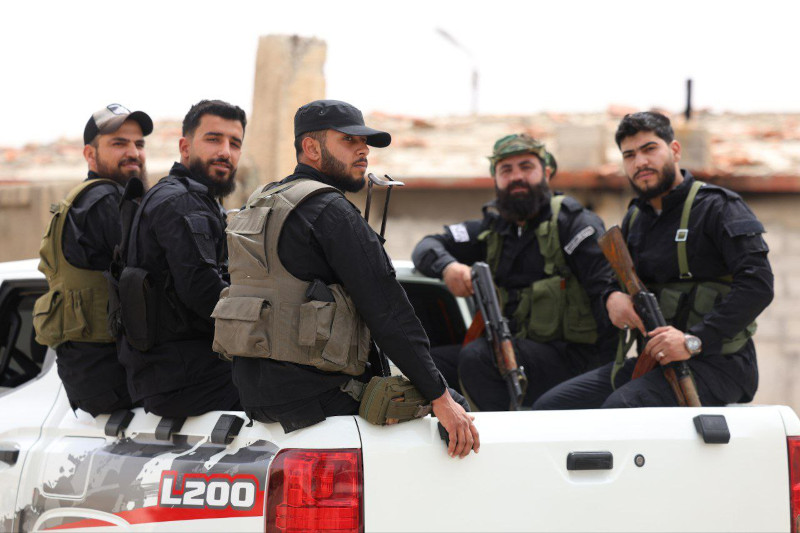
Tensions in the Syrian governorate of Suwayda continue to rise following clashes between government forces and Druze militias affiliated with prominent Druze leader Hikmat al Hijri between July 14 and 16, as well as intense Israeli strikes targeting government assets in Damascus and southern Syria. In response, Syrian interim President Ahmad al Sharaa decided to withdraw government troops from the area and allow local Druze militias to assume responsibility for security in the governorate.
Following the commencement of the ceasefire between Sharaa’s forces and Druze militias, the Suwayda Military Council, a militia affiliated with Hijri and composed of former Assad regime officers, launched a widespread campaign against the Sunni Arab Bedouin tribes inhabiting Suwayda. In the early hours of July 17, videos emerged of Druze militants attacking Bedouin communities and torching their homes. These developments prompted Bedouin tribes across Syria to mobilize and resume armed clashes in Suwayda with the stated goal of freeing detainees held by Druze militias.
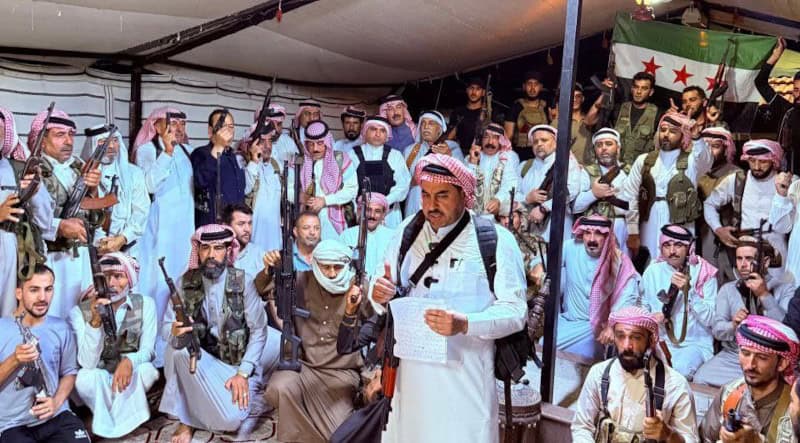
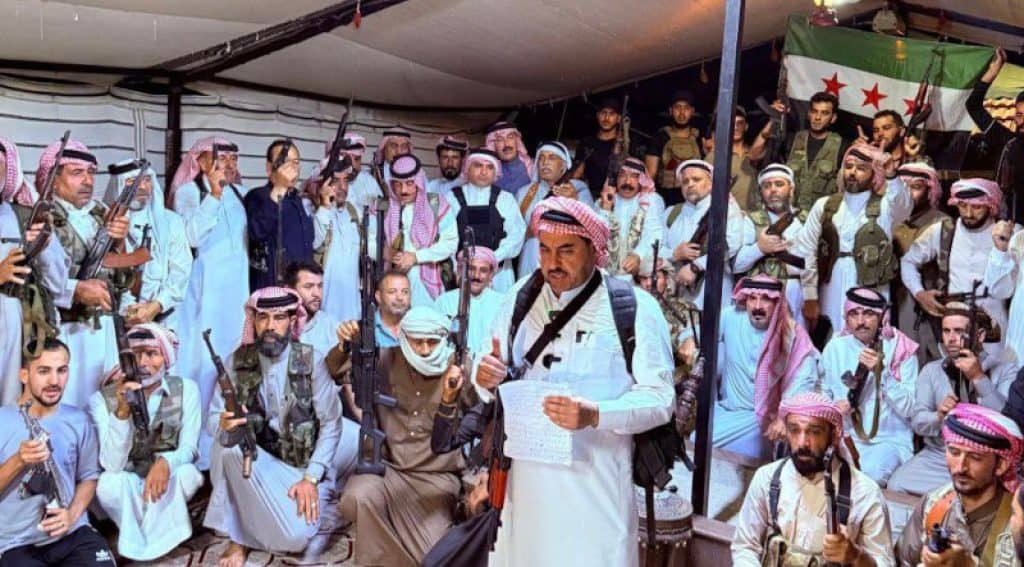
Since July 17, 41 Arab tribes have mobilized, many of them from across Syria, including Deir Ezzour, Homs, Aleppo, and Raqqa, and taken control of large areas within Suwayda Governorate. On July 18, the tribes engaged in intense clashes with Druze militias, including in parts of Suwayda city. While the number of Bedouin fighters is estimated at around 50,000, they do not operate as a unified force, each likely taking action within their own tribal structure.
Since July 18, reports of alleged violations against the Bedouin community by Druze militants have circulated on social media. One video, filmed by a Druze militant, shows a group of women and children held hostage in a room as the militant threatens to kill them if Bedouin fighters reach Suwayda city. Another video shows a Druze convoy driving with dead bodies—believed to be those of Bedouin fighters or civilians—hoisted on top of the vehicles as onlookers cheer. A third image, posted by a Druze fighter, shows him standing in front of two bodies of Bedouin fighters or civilians hanging from a sign at the entrance to a city in the Suwayda governorate.
These reports of growing violence have spurred some blowback, even among Druze supporters. Wiam Wahhab, a Druze Lebanese politician who is known for being pro-Hezbollah and a big advocate for Hijri, called on the Druze leader to “release all the Bedouin brothers and return them to their homes to achieve a ceasefire that prevents bloodshed.”
However, reports of abuses are not limited to one side. Evidence has emerged of Bedouin fighters executing unarmed Druze civilians in two different cases. In another video, tribal forces humiliated a Druze man and shaved his mustache, an insulting gesture given the cultural importance of mustaches in Druze culture. A Bedouin fighter was also recorded saying that his forces won’t stop in Suwayda, and, once they are done, “will go and fight Israel.” He added, “We understand nothing but war. Killing and bloodshed. The Israelis and those Druze pigs.”
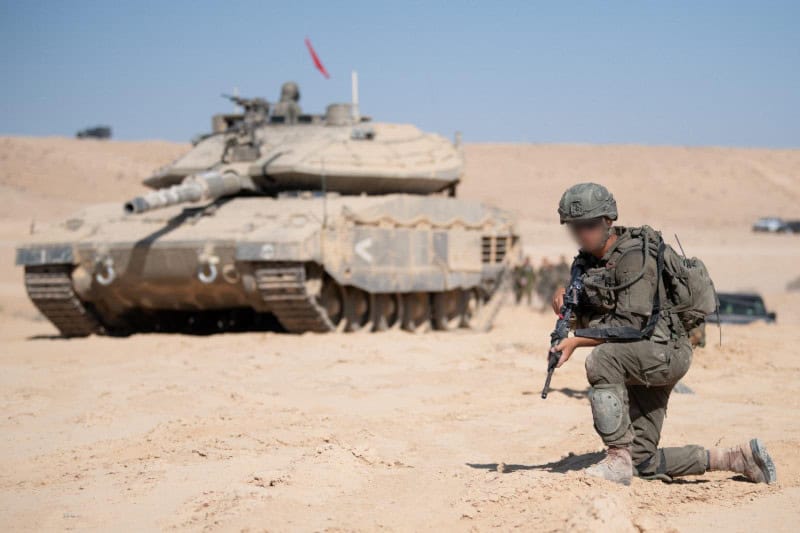
So far, Israel, which had pledged to protect the Druze, has not responded to the Bedouin tribes’ latest advance on Suwayda. According to The Times of Israel, the Israeli government is reportedly allowing the Syrian Army to enter Suwayda for 48 hours to restore order and prevent the Bedouin fighters from entering the city. The Syrian government released a statement calling for “all sides to control themselves and to prioritize the voices of reason,” adding that it plans to send a “specialized unit for disengagement.”
The ongoing tensions in Suwayda have also had repercussions in Jordan. Given the transnational nature of Bedouin tribes—many of whom have relatives across the region—there’s a possibility that tribal communities in Jordan will also begin mobilizing. The Jordanian Armed Forces has deployed reinforcements to the northern border, roughly 25 miles south of Suwayda. There are also reports that Jordanian forces opened fire on an armed convoy belonging to the Suwayda Military Council as it approached the Jordan-Syria border.