

-
Written by: Si Spurrier
-
Art by: Vasco Georgiev
-
Colors by: Matt Herms
-
Letters by: Hassan Otsmane-Elhaou
-
Cover art by: Davide Paratore
-
Cover price: $3.99
-
Release date: September 24, 2025
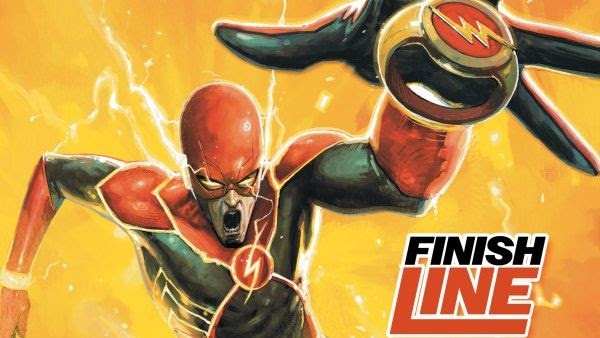
The Flash #25, by DC on 9/24/25, barrels toward a cosmic crisis—then promptly trips over its own shoelaces. Omnipotent Eclipso, the westward-drifting moon, and an army of hurriedly summoned supporting speedsters all swirl together, and what’s left is a storm of confusion.
First Impressions
From the first page, it’s clear this finale is drinking from the “everything and the kitchen sink” punch bowl. The chaos tries to be profound but lands closer to a spectacular pile-up at top speed. The result feels like a time loop of clumsy plot gymnastics and emotional shortcuts.
Recap
Last issue, The Flash and his family faced Eclipso in a showdown that left the world teetering on the brink of endless night. Eclipso’s power tipped reality off its axis; the moon’s drift threatened extinction, and alternate versions of the Flash collided as the fate of the world hung by a thread. Attempts to resist Eclipso’s ascension fell short, and the heroes were left desperate for a last-ditch solution.
Plot Analysis
The issue opens at the brink—Flash and friends grappling with cosmic devastation. Eclipso, now a “god of gods,” is busy savoring his victory, drawing out the destruction of Earth as the moon’s orbit spirals, triggering tsunamis and tectonic chaos. The supporting characters, Flash’s children included, fumble through psychic family drama while Wally West agonizes over being “the one true Flash,” but never really earns the title.
A “dimensional weirdness” plot device gets everyone inside Foxy’s belly via the classic superhero backdoor: Barry Allen’s ring, which holds…dimensional access, because of course it does. Emotional confessions and wobbly space-time mechanics try to carry the scene, but no thread is ever pulled tight. Flash’s family stages a united stand within the shadowlands, and somehow, with just enough “Speed Force” willpower and pep talks, they break Eclipso’s hold with a burst of unexplained emotional light.
Out in the real world, all the villains simply “reappear” as if no one at editorial really cared to make their exits matter. The moon’s orbit? Handwaved as a minor errand for the supporting kids and treated with all the weight of a trip to the store. By the end, loose ends are left flapping—Eclipso’s fate glossed over in a line about forced “reflection,” and there’s no sense that the cataclysm even mattered. Everything wraps with a “nothing ever ends” shrug.
Writing
The script aims for existential weight and falls flat on overwrought monologues and murky metaphysics. Wally West handwrings about identity, but it all reads like cosmic therapy notes hastily scribbled in the margins. Nothing gets proper closure: Eclipso’s defeat is a punchline, and the moon’s catastrophic drift is patched with dialogue alone. There’s promise in the supporting cast, but every big moment fizzles into word salad and unsatisfying reversals.
Art
Vasco Georgiev’s work swings hard, but the muddled layouts and flat coloring drag down even the action beats. Scenes inside the “shadowlands” lack visual clarity, while power displays blur into a tired wash of speed lines. Emotional character acting falls victim to heavy inking, and the most explosive pages get lost under visual noise.
Characters
Wally gets talked up as “the one true Flash,” but the script never sells it—his big moment feels more like a plot obligation than an earned victory. Secondary characters, especially the kids, get props for being involved but never step past mouthpieces for the theme. Eclipso is supposed to be a world-ending threat, yet his defeat is so glib, even he seems bored by the outcome.
Positives
The book at least swings for the fences—there’s ambition to the existential angle, and the notion of a Flash family united against cosmic doom has the right flavor. Some of the banter lands, and fleeting moments capture the legacy, if only for a panel at a time. A few splash pages try to inject scope, and the sheer commitment to go big does provide spectacle.
Negatives
Every major plot thread resolves with the grace of a botched baton pass. The defeat of Eclipso is utter nonsense, hinging on emotional handwaving and deus ex ring-tricks (They give Foxy and “enema”?). The moon’s correction, treated like a routine afterthought, torpedoes any real stakes. Loose ends—Eclipso’s fate, the fates of the villains, and any sense of consequence—are brushed off, and the climax is as weightless as a Zoom meeting.
On a closing note, this issue marks the end of the arc and the end of Si Spurrier’s time on the title. I wish I could say it was a pleasure, but it wasn’t. From the onset, this run was a mess, in both concept and execution.
Goodbye, Si Spurrier. May you find better purchase elsewhere because The Flash is better off without you.
Final Thoughts
The Flash #25 introduces doomsday cosmic stakes, then stumbles so badly in the wrap-up that even Speed Force therapy can’t save it. It’s a finale that promises meaning and consequences but delivers a pile of handwaves and unanswered questions. If this is the finish line, someone tripped on their own shoelaces twenty yards back and never bothered to check the stopwatch.
We hope you found this article interesting. Come back for more reviews, previews, and opinions on comics, and don’t forget to follow us on social media:
Connect With Us Here: Weird Science DC Comics / Weird Science Marvel Comics
If you’re interested in this creator’s works, remember to let your Local Comic Shop know to find more of their work for you. They would appreciate the call, and so would we.
Click here to find your Local Comic Shop: www.ComicShopLocator.com
As an Amazon Associate, we earn revenue from qualifying purchases to help fund this site. Links to Blu-Rays, DVDs, Books, Movies, and more contained in this article are affiliate links. Please consider purchasing if you find something interesting, and thank you for your support.