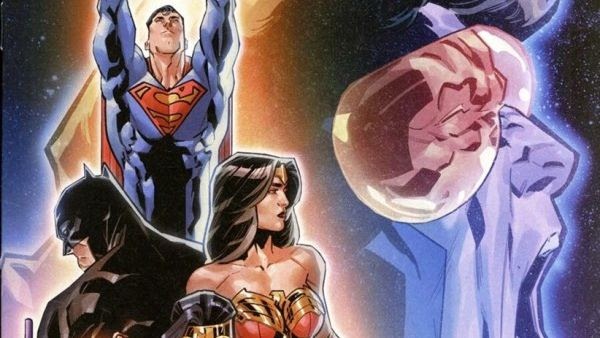
Justice League: Dark Tomorrow Special #1, by DC Comics on 7/30/25, throws a lot of confusing plot developments at the reader from the very first page, setting up an epic-scale story that mostly falls flat.
First Impressions
This comic is a whole lot of noise with very little signal. The story is an immediate mess of names and places that assume the reader is already up to speed on events that happened in a different stories and CW shows (specifically, Legends of Tomorrow), which is a mistake that makes it hard to care about what is happening on the page.
Plot Analysis
The story begins with the time traveler Matthew Ryder, also known as Waverider, who has the power of precognition
The narration shifts to another unnamed time traveler who is also running for his life from the same type of shadowy figures
Elsewhere and when, Gold Beetle uses a card to travel to the Justice League’s Watchtower. Upon arrival, she greets a confused Wonder Woman and the rest of the League, asking for help. Mr. Terrific and The Atom explain that Gold Beetle’s body is “phasing in and out of existence” due to “numerous disruptions to the time stream”. Gold Beetle has come to the League for help, as she and other time travelers are being hunted.
A team is assembled to combat the threat. The group is sent to “The Robin’s Nest,” where they meet Jonah Hex, Marilyn Moonlight, and Huntress, who are debriefed by a mysterious time traveler who refuses to unmask but refers to himself as Legend. Legend explains they need to confront the villains, referred to as “Omega Demons,” who are hunting time travelers. They eventually find themselves at “The Vanishing Point,” a hypertime interface, where they are confronted by a villain who proclaims that they “can’t stop what’s coming”
Story and Pacing
The writing is functional but not exciting. The narrative is heavily expository, with characters constantly explaining what is happening, which makes the dialogue feel unnatural and clunky
Art and Design
The art by Cian Tormey is clean, and the colors by Romulo Fajardo Jr. are vibrant
Characters
The comic introduces a slew of new and old characters but does little to make them memorable. Gold Beetle’s personality feels forced and annoying rather than witty. The other heroes are little more than plot devices, moving the story forward without any real personality. Their interactions feel shallow and unearned, and it is hard to feel any connection to them, even when one sacrifices themselves at the end.
Positives
The art is easily the best part of the book, with a clean and vibrant aesthetic. The introduction of new characters like Gold Beetle and the Omega Demons is a good idea, even if they aren’t fully developed here. The idea of a team of time travelers trying to fix a broken timeline is a solid premise that could have been a great story with better execution.
Negatives
The story is disjointed, relying too much on outside knowledge to make sense. The dialogue is heavy-handed and exposition-filled, making it feel more like a summary than a story. The new characters are not given enough room to grow and feel like hollow imitations of other characters. The humor falls flat and the overall tone is an attempt at epic that feels more like an overstuffed, chaotic mess.
About The Reviewer: Gabriel Hernandez is the Publisher & EIC of ComicalOpinions.com, a comics review site dedicated to indie, small, and mid-sized publishers.
Follow @ComicalOpinions on YouTube, Facebook, Instagram, and Twitter