

-
Written by: Kevin Smith, Eric Carrasco
-
Art by: Nick Pitarra
-
Colors by: Michael Garland
-
Letters by: Dave Sharpe
-
Cover art by: Nick Pitarra, Michael Garland
-
Cover price: $4.99
-
Release date: April 1, 2026
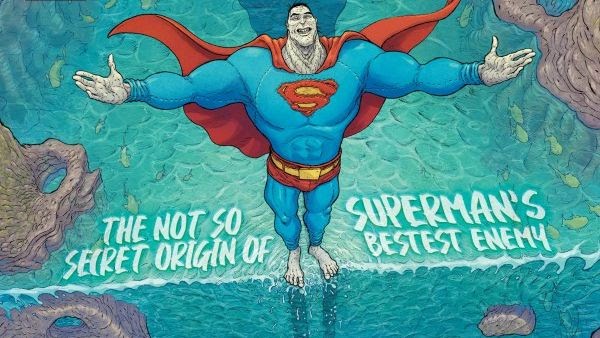
Bizarro: Year None #1 (DC Comics, 4/1/26): Writer Kevin Smith and Eric Carrasco alongside artist Nick Pitarra deconstruct the Daily Planet newsroom before launching Jimmy Olsen and Perry White into a warped parallel reality via a duplicator ray mishap, delivering a media-satire origin tale. Uneven execution with sharp banter but delayed pacing and confusing inciting beats make it a mixed bag. Verdict: For die-hard fans only.
First Impressions
You drop into a world that wants to be funny, strange, and a little bit embarrassing all at once, and for a while the issue makes that work. The Daily Planet material has a fast, bruised newsroom energy, and the banter between Perry, Jimmy, and the rest of the staff crackles with real rhythm. But once the story shifts into its bigger premise, the wheels start to wobble, because the setup takes too long to earn its central reveal and the art leans more off-putting than expressive.
Plot Analysis (SPOILERS)
Jimmy’s day starts in the middle of Metropolis chaos, with the Planet still reacting to Toyman’s assault and Perry assigning coverage like a general trying to turn catastrophe into copy. Jimmy uses the moment to argue for a real newsroom role, but Perry shuts him down hard, framing experience as something earned, not claimed. At the same time, David Dalton prepares another duplicator test, and the story cross-cuts between Jimmy’s career pitch and the machine’s failure in a way that tries to build momentum through parallel tension. That structure works in theory, but the issue spends so much time chewing through setup that the actual hook lands later than it should.
Dalton’s experiment tears open a breach and sends Perry and Jimmy into an alien reality that resembles a warped Metropolis built from newspaper fragments, obsessive fandom, and outright distortion. There they meet a Superman-like figure who explains that he created this world from the Daily Planet’s pages, then dragged the pair there so Perry could help teach his own reporters how to make news. The reveal keeps widening into stranger territory, with the figure presenting himself as both ruler and super fan, then naming Jimmy the editor-in-chief of his Daily Planet clone while Perry watches the whole thing spiral into absurdity. The issue closes with a final step into this twisted cosmology, where the new reality’s “Superman” becomes even harder to categorize, which is exactly where the book should be most exciting, if it had arrived there faster.
Writing Quality
The dialogue is the issue’s best weapon, because it gives Perry, Jimmy, and the Planet staff a sharp newsroom snap that feels lived-in and commercially aware. That said, the structure keeps circling the same setup beats before committing to the premise, so the pacing feels delayed rather than deliberate. The thematic material about journalism, legacy, and who gets to define a story is solid, but the issue buries that strength under too much stage-setting before the main conflict properly ignites.
Art Quality
The layouts push for spectacle and disorientation, and in the right moments they do a decent job of making the reader feel like reality has gone sideways. Still, the visual design often works against clarity, because the grotesque character modeling and the intentionally skewed proportions create a sense of unease that never quite turns into compelling unease. Instead of enhancing the mood, the art too often feels like it is daring the reader to keep looking, which is a problem when the story depends on welcoming the audience into an already strange concept.
The character acting is more successful in the newsroom scenes than in the surreal material, where expressions and body language sometimes read as exaggerated to the point of distraction. Michael Garland’s colors give the book a distinct, off-kilter tonality, but that palette does not always compensate for how visually abrasive the page compositions can be. The result is a book with personality, yes, but not always with visual grace, and that matters when so much of the premise depends on making weirdness feel inviting rather than hostile.
Character Development
Jimmy gets the clearest motivation here, because his hunger for a place at the Planet feels direct, understandable, and rooted in a recognizable working-world ambition. Perry, meanwhile, comes off as stubborn but coherent, a veteran editor who speaks like someone protecting a brand he actually believes in. The trouble is the central Bizarro figure, whose identity and emotional logic feel so detached from any known version of the character that he reads less like an evolution and more like a different concept wearing the name tag.
Originality & Concept
The idea of a mirrored Metropolis built from newspaper culture and distorted fandom has real novelty, and the issue clearly wants to treat journalism as myth-making machinery. That is a strong hook, because it lets the book play in both Superman mythology and media satire without turning into a simple parody. But the execution gets muddy fast, and the version of Bizarro on display feels so far removed from the recognizable character that the concept loses some of its intended payoff.
What We Loved
- Perry and Jimmy’s banter lands with real newsroom bite.
- The concept of a newspaper-shaped parallel world feels fresh.
- The colors give the book a strange, memorable tonality.
Room for Improvement
- The opening spends too long before the core premise kicks in.
- The central Bizarro interpretation feels disconnected from the character.
- The art is visually abrasive and often works against clarity.
The Scorecard
Writing Quality (Clarity & Pacing): 2/4
Art Quality (Execution & Synergy): 1.5/4
Value (Originality & Entertainment): 1.5/2
5/10
We hope you found this article interesting. Come back for more reviews, previews, and opinions on comics, and don’t forget to follow us on social media:
Connect With Us Here: Weird Science DC Comics / Weird Science Marvel Comics
If you’re interested in this creator’s works, remember to let your Local Comic Shop know to find more of their work for you. They would appreciate the call, and so would we.
Click here to find your Local Comic Shop: www.ComicShopLocator.com
As an Amazon Associate, we earn revenue from qualifying purchases to help fund this site. Links to Blu-Rays, DVDs, Books, Movies, and more contained in this article are affiliate links. Please consider purchasing if you find something interesting, and thank you for your support.