-
Written by: Jeff Lemire
-
Art by: Haining
-
Colors by: Adriano Lucas
-
Letters by: Tom Napolitano
-
Cover art by: Nick Robles (cover A)
-
Cover price: $4.99
-
Release date: March 18, 2026
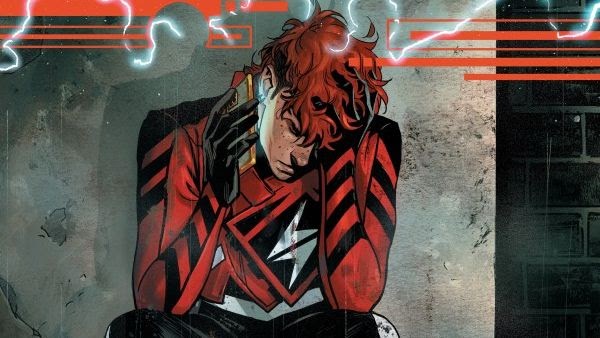
Absolute Flash #13 (DC Comics, 3/18/26): Writer Jeff Lemire and artist Haining pivot Wally West from Fort Fox fallout into a teen character drama that mutates into a supernatural Mirror Master trap story. This issue delivers emotionally honest writing and visually inventive mirror horror, although the cliffhanger structure feels slightly incomplete on its own; Verdict: Worth reading.
First Impressions
First thing you feel cracking this issue open is that Lemire hits the brakes on giant lightning monsters and leans hard into Wally’s emotional hangover, and that quieter gear shift actually lands with surprising weight. The opening stretch with Wally and Linda talking over greasy drive‑in food plays like a raw, late‑night debrief, where grief, guilt, and snarky teasing all tumble together in a way that crackles authentically. Haining’s art and Adriano Lucas’s colors keep the pages humming with energy anyway, using expressive faces, patient paneling, and saturated night palettes so the issue never feels static while the script unpacks trauma. When the visit back to Fort Fox morphs into a mirror maze nightmare, the book masterfully accelerates from thoughtful teen drama into full‑tilt horror, which makes the final pages hit like a trapdoor opening under your feet. You walk away feeling like you got a strong character study and the first half of a horror thriller, not just a plug‑and‑play superhero episode.
Recap
Previously, Wally West tore through Fort Fox to stop an enormous Thawne monstrosity, only to watch his father Rudy sacrifice himself to help seal the monster away inside a Still Point portal, leaving Wally convinced Rudy survives somewhere beyond reach.[user-provided] The Rogues and their allies helped contain the threat, but they refused Wally’s desperate demand to reopen the portal, arguing the risk and their promises outweighed his grief‑driven hope, which left him furious and alone again.[user-provided] Grodd vanished in the chaos, Elenore Thawne slipped away intact, and the Rogues walked out as free agents planning their own future while Wally ran off, drowning in anxiety even as the world was technically saved.[user-provided] In the quieter aftermath, the Rogues joked over recovered gear while a young Grodd, standing by his fallen protector, sensed more cruelty ahead and vowed in his own way that “all men pay,” his glowing eyes hinting at future menace.
Plot Analysis (SPOILERS)
The issue opens with Wally and Linda catching their breath in a remote landscape after Wally has just taken her on a blistering speed run, and their banter quickly turns into a casual test drive of his powers as a shared thrill ride. They land above the Blue Valley Drive‑In, where burgers and fries become the backdrop for Linda methodically pressing him about Thawne, the Rogues, and most of all the missing “monkey,” Grodd, while Wally admits he is hoping that bond means Grodd will eventually find him. The conversation deepens as Linda asks about his family, and Wally lays out how his mother’s untreated bipolar swings and eventual suicide shattered the family, how he unfairly hated his father for being away, and how he now believes Rudy’s absence might not have changed the outcome yet still clings to finding him in the Still Point. Linda pushes him to turn that desperate hope into a concrete plan, arguing that if he wants to reach his father again he should hunt down Elenore Thawne, the one person likely to know how to access that realm, and she caps the strategy session with a playful demand for the remaining fries as “brain food.”
Acting on that idea, Wally and Linda travel back to the ruins of Fort Fox, which now sit as a hollow ghost town wrapped around the shell of Project Olympus, and Wally uses a sharp blast of speed energy to punch through the gate so they can investigate. Inside dark, abandoned corridors, Linda shows off her tech skills by reviving consoles that he assumes are wiped, while Wally grows unsettled by a whisper that sounds like someone, maybe his father, calling his name from deeper in the complex. The pair follow the sound into a room littered with smashed mirrors, with one intact surface that warps their reflections into trailing ghost images, and the effect ratchets up the unease before Linda is suddenly yanked into the mirror itself. Wally finds her image scattered across floor shards as she begs for help, only to warn that she is not alone “in here” as a monstrous hand erupts from the glass, grabs Wally, and drags him into a bleak mirror dimension full of hooded figures chanting “Let us out,” setting the stage for the two‑part “Mirror Master” arc.
Writing
Lemire’s script smartly trades bombastic spectacle for a tightly structured character piece that steadily ramps into horror, and the pacing mostly nails that progression by letting conversations breathe before snapping into danger. The dialogue between Wally and Linda feels refreshingly conversational, peppered with sarcastic jabs, music digs, and food jokes that sound like two actual teens working through heavy stuff rather than exposition robots dumping lore. When Wally opens up about his mother’s bipolar disorder and suicide, the language stays direct and emotionally clear, using simple, precise phrasing that lands with more power than melodramatic speeches ever would. Structurally, the issue builds in clean stages from recovery to confession to investigation to trap, which keeps the stakes escalating in a straight line even as the cliffhanger reminds you this is very much “part one” of a larger beat rather than a fully closed chapter. If there is a knock, it is that the last‑page reveal comes so abruptly that readers who want at least a minor resolution per issue may feel like the story paused right as the real conflict finally snapped into place.
Art
Haining’s line work and Lucas’s colors carry a huge share of the storytelling here, and they do it with a clarity that keeps every emotional turn readable even when the script slows down to pure conversation. The early drive‑in sequence uses wide, open panels and grounded body language, like Wally folding in on himself as he talks about his mom or Linda leaning forward with a half‑smirk, which makes the whole scene play like a live‑action drama you could storyboard straight to film. Facial acting is a consistent strength, from the way Wally’s eyes harden when he admits he hated his dad to Linda’s mix of concern and relentless curiosity, and that precision sells the quiet moments so the later scare beats feel earned rather than random.
Composition takes a deliberate turn once they reach Fort Fox, shifting from relatively static rooftop and drive‑in staging into deeper perspective shots along empty hallways and control rooms that visually underline how small these kids are inside the machinery that messed with Wally’s life. The mirror room in particular uses panel borders and reflection angles cleverly, letting shards slice the page into jagged fragments that echo Wally’s fractured mental state while still keeping the action easy to track from panel to panel. Lucas’s color work leans into grounded blues and warm fast‑food yellows early on, then gradually desaturates into colder tones inside Olympus so that the sudden glow of Wally’s lightning and the unnatural sheen of the surviving mirror feel like alarm sirens for your eyeballs. By the time the hooded figures crowd the reflections, the palette tips into eerie greens and deep shadows that make the horror turn feel like a natural culmination rather than a genre hard‑pivot, and the final page cover tease for “Mirror Master” sells the menace with bold, iconic framing.
Character Development
Wally’s characterization here is quietly strong, rooted in survivor’s guilt and resentment that tracks cleanly from the prior arc into this smaller, more introspective chapter, and his motivation to find Rudy again reads as a believable mix of denial and hope rather than generic heroism. His admission that he once hated his father, then walked that anger back, gives him a messy, human interior that makes his current quest feel personal and flawed, which is exactly where a teen lead like this should live. Linda comes off as sharply drawn, a pushy yet empathetic catalyst who refuses to let Wally hide, and her blend of snark, curiosity, and underlying care makes her feel like more than a plot device even though the script does not dig much into her own backstory yet. The dynamic between them, trading jabs over music and fries while talking about suicide and cosmic speed limbo, feels authentic enough that readers should have no trouble latching onto them as the emotional core of the series.
Originality & Concept Execution
Absolute Flash as a concept is not reinventing the idea of a young speedster crushed by trauma, but the way this issue threads mental health, grief, and a partner who refuses to let the hero vanish into stoic isolation does feel freshly grounded. The choice to pivot into a Mirror Master story that functions more like a supernatural bottle episode than a heist or standard Rogue caper also gives the villain concept a horror tilt that stands apart from most Flash mirror gags. Execution wise, the book clearly states its premise here: Wally is searching for a way back to his lost father and is willing to walk straight back into the machinery that broke him, and the script delivers that premise by literally trapping him in a funhouse of distorted selves and trapped voices. It is not wild, high‑concept innovation, but it is a focused, confident spin on familiar pieces that feels specific to this continuity and this version of Wally and Linda.
Pros and Cons
What We Loved
- Honest, unflinching dialogue about grief and parental mental illness that still feels conversational.
- Clever mirror‑dimension visuals, with fractured layouts and eerie reflections amplifying psychological tension.
- Linda’s persistent, sarcastic support, giving Wally a grounded, engaging partner instead of a passive sidekick.
Room for Improvement
- Cliffhanger pacing that stops just as the central Mirror Master conflict really begins.
- Limited exploration of Linda’s own history, keeping her slightly underdeveloped compared to Wally.
- Action stakes mostly deferred to the next issue, which may undercut satisfaction for single‑issue readers.
The Scorecard
Writing Quality (Clarity & Pacing): 3/4
Art Quality (Execution & Synergy): 3.5/4
Value (Originality & Entertainment): 1.5/2
Final Verdict
Absolute Flash #13 earns its slot in a tight pull list by delivering a sharply observed, emotionally grounded breather that smartly repositions Wally and Linda before shoving them into a visually arresting horror scenario, even if the “part one” structure leaves the conflict only half‑lit. On the plus side, you get authentic character work, clean pacing through the conversational beats, and art that turns mirrors and empty hallways into kinetic shadows and unnerving compositions, all of which make the issue feel substantive despite its relatively quiet surface. On the minus side, the abrupt cliffhanger and limited payoff for the Mirror Master hook mean readers looking for a complete arc or big, bombastic set pieces this month may feel shortchanged and pushed toward buying the next chapter for real resolution.
8/10
We hope you found this article interesting. Come back for more reviews, previews, and opinions on comics, and don’t forget to follow us on social media:
Connect With Us Here: Weird Science DC Comics / Weird Science Marvel Comics
If you’re interested in this creator’s works, remember to let your Local Comic Shop know to find more of their work for you. They would appreciate the call, and so would we.
Click here to find your Local Comic Shop: www.ComicShopLocator.com
As an Amazon Associate, we earn revenue from qualifying purchases to help fund this site. Links to Blu-Rays, DVDs, Books, Movies, and more contained in this article are affiliate links. Please consider purchasing if you find something interesting, and thank you for your support.