
The US and Israel continued strikes across Iran over the last week, including precision hits on military sites, industrial facilities, and urban areas, alongside applying pressure on Tehran over the Strait of Hormuz. Washington has pushed for the reopening of the strait through an indirect proposal, but Iranian authorities rejected the US terms and advanced their own demands. Signs point to US and Israeli decision-makers anticipating that the war will continue for at least several additional weeks.
Inside Iran, internal security checkpoints have expanded into a dispersed network across various cities, and arrests by regime forces targeting alleged collaborators and dissenters have increased. However, some acts of defiance by Iranian citizens continue to surface, while dissidents claim a readiness for mobilization.
Military overview
In his fifth video update since the beginning of the war on February 28, Admiral Brad Cooper, commander of US Central Command (CENTCOM), said on March 25 that US forces remain on track in the fourth week of Operation Epic Fury, having struck more than 10,000 Iranian military targets. Cooper highlighted the destruction of over two-thirds of Iran’s missile, drone, and naval production facilities and the neutralization of 92 percent of its navy’s “largest vessels.”
On March 25, the Department of War announced an agreement with BAE Systems and Lockheed Martin to “quadruple the production of seekers” for the Terminal High Altitude Area Defense (THAAD) anti-ballistic missile defense system. The THAAD system is operated by the United States and has been deployed to defend Israel and Gulf partners against Iranian attacks.
Israel has authorized the call-up of up to 400,000 reservists amid ongoing fighting with Iran and Hezbollah, raising the previous cap of 280,000 approved in December. The military clarified that this number is a ceiling for operational flexibility rather than an immediate mobilization, continuing a pattern of periodic emergency authorizations since the war with Hamas began in October 2023.
Meanwhile, the regime in Tehran remains defiant. State media aired a segment showing regime forces holding congressional prayers in what appeared to be one of Iran’s infamous ‘missile cities,’ hardened underground complexes designed to protect its stock of missiles from airstrikes. The Telegraph reported on March 26 that Moscow has started providing Tehran with drone systems, such as Geran-2 and Shahed-136 variants, the first direct transfer of weapons between the two countries since the start of the war.
Washington and Tehran’s talks over the Strait of Hormuz appear stalled
The US has demanded the full restoration of shipping traffic through the Strait of Hormuz after Iran partially closed the vital economic choke point. The US sent a 15-point proposal through Pakistan that discusses easing sanctions, scaling back Iran’s nuclear program, limiting missile capabilities, and reopening the Strait of Hormuz. Iranian authorities rejected the US proposal and outlined their own terms that include ending targeted killings of regime officials, guarantees against future attacks, war reparations, a ceasefire, and the recognition of Iran’s sovereignty over the Strait of Hormuz.
US President Donald Trump has twice set a new deadline regarding his threat to target Iranian energy infrastructure as Washington pressures Tehran over disruptions in the Persian Gulf. In the latest delay, Trump said yesterday that he was pausing strikes on Iran’s energy plants for 10 days at Tehran’s request, adding that talks were “going very well.” However, the same day, Trump stated that Iranian negotiators need “to get serious soon … before it’s too late.”
Israeli sources have reportedly confirmed that Washington is “planning a weeks-long operation” to secure the Strait of Hormuz. These reports come amid other reports that Washington is weighing a ground deployment, with the Pentagon considering dispatching roughly 3,000 paratroopers from the 82nd Airborne Division alongside two Marine Expeditionary Units to support ground operations that could involve seizing Kharg Island or other islands closer to the strait. Located in the northern Persian Gulf about 25 kilometers off Iran’s coast, Kharg serves as the country’s main oil export terminal, handling the vast majority of crude shipments and making it a critical economic lifeline for the regime.
Meanwhile, media affiliated with Iran’s Islamic Revolutionary Guard Corps (IRGC) claimed that the regime’s armed forces are mobilizing one million fighters in response to the prospects of the US “launching a ground invasion on the southern front of Iran.” The figure is likely inflated, as even the most generous estimates place the Islamic Republic’s total forces at around 500,000, of whom a significant share are conscripts rather than full-time personnel.
The latest regime figures eliminated
A series of US or Israeli precision strikes between March 20 and 23 targeted secluded villas and compounds across the forested Caspian provinces of northern Iran, where senior regime officials and security operatives had relocated to avoid detection. The attacks hit locations in Mazandaran, Gilan, Alborz, Semnan, and areas around Tehran.
Some of the individuals killed in the past week include:
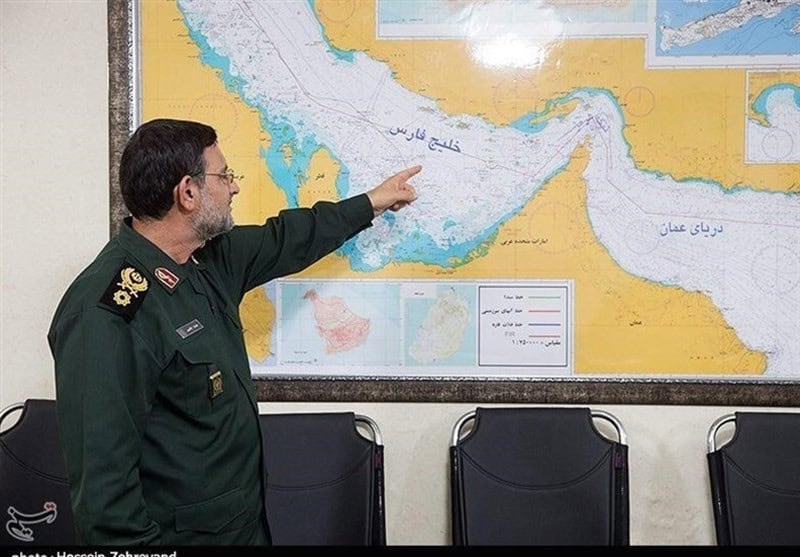
- Alireza Tangsiri, commander of the IRGC Navy, oversaw maritime operations, tanker attacks, and efforts to disrupt shipping in the Strait of Hormuz.
- Behnam Rezaei, deputy intelligence chief of the IRGC Navy, was killed alongside Tangsiri.
- Amir Amirmohammadi, a senior IRGC commander in Kerman province, was killed.
- Mohammad Ali Khodabakhsh, an IRGC air defense operations expert, was reportedly killed in strikes in Isfahan.
- Ebrahim Mortazavi-Nasb, a Basij unit commander in Shiraz, was killed.
- Akbar Ghorbanizadeh, head of the ideological-political office of Army Aviation in Kerman, was killed in a missile strike alongside 12 others.
- Saeed Shamghadari, a university professor linked to missile development, was killed in a Tehran strike.
Reported kinetic strikes
Locals described hearing multiple heavy explosions in central Tehran along Zartosht Street ON March 22, followed by electricity cuts across parts of the area. The affected zone included sections of Behjatabad and stretched from Vali Asr toward Laleh Park and Mehr Hospital, indicating strikes in a dense urban corridor.
Strikes also hit military sites in Konarak in Sistan and Baluchestan on March 23 and areas around Mashhad on March 25, including near Hashemi Nejad Airport, where air defenses were activated. The two locations lie more than 1,500 kilometers apart.
IRGC media said that US and Israeli strikes hit major steel facilities in Khuzestan and Isfahan earlier today, with emergency crews dispatched to both sites.
Regime intensifies repression efforts, but some signs of anti-regime sentiment persist
Security forces have expanded their footprint across numerous Iranian cities, turning urban space into a dense grid of surveillance and control. Checkpoints have multiplied and shifted to smaller, dispersed units, with Basij paramilitary militia patrols and plainclothes regime security forces operating side by side. In Tehran alone, multiple stops were observed along major arteries like Shariati Street, while similar measures were seen nationwide, including full entry-point control in cities like Rudsar, and nighttime checkpoints in Arak.
Iranian authorities say that 1,463 checkpoints and nearly 129,000 personnel are now deployed in the country alongside tens of thousands of patrol units. Parallel repression efforts include mobilizing civilians, including those as young as 12, into operational and security roles, reinforcing the regime’s reliance on mass participation for enforcement.
Arrests in Iran have surged, with security bodies announcing detentions of individuals accused of conducting sabotage efforts or having links to Israel or opposition groups. In the past week, more than 100 people were detained for supposed collaboration with the “enemy,” alongside dozens more accused of disrupting public order or sharing information. Additional arrests targeted individuals allegedly planning attacks on checkpoints or infrastructure, as well as those using satellite internet or tools to get online.
A forced confession aired on state-linked media showed a detained citizen accused of sharing intelligence used for hyperlocal drone strikes on checkpoints, reflecting the regime’s concern over the precise targeting of its internal security network. The messaging frames such strikes as enabled by domestic collaborators, pointing to heightened paranoia within the security apparatus.
Despite the crackdown, some signs of anti-regime momentum persist. Footage provided to Iran International shows banners of slain Supreme Leader Ali Khamenei being burned in Gonabad, while dissidents claim that the public remains ready for mobilization. On March 23, Admiral Cooper told Iran International that the United States would send a “very clear signal” for when Iranians should take to the streets.