The US campaign against Iran has continued to degrade the Islamic Republic’s military capacity, with thousands of targets struck, including missile infrastructure, air defenses, drone systems, and naval assets, alongside the use of bunker-penetrating munitions against fortified coastal sites near the Strait of Hormuz. Operations by the Israel Defense Forces (IDF) have complemented the US effort with strikes across Iran, including on missile-related sites and personnel. Strikes have also extended to economic targets, including gas processing facilities in Asaluyeh, which prompted Iranian threats of retaliation against regional and Israeli energy infrastructure.
At the same time, the focus of the campaign has increasingly shifted toward the regime’s internal security apparatus, with strikes targeting Islamic Revolutionary Guard Corps (IRGC) security units, Basij internal security militia positions, police logistics centers, and command nodes.
Senior Iranian regime figures tied to intelligence and repression, including Minister of Intelligence Mohammad Khatib, Secretary of the Supreme National Security Council Ali Larijani, and Basij commander Gholamreza Soleimani, were killed, further disrupting leadership structures. These developments coincide with signs of strain inside Iran’s security forces. Despite this pressure, the regime has continued its internal crackdown.
A military overview
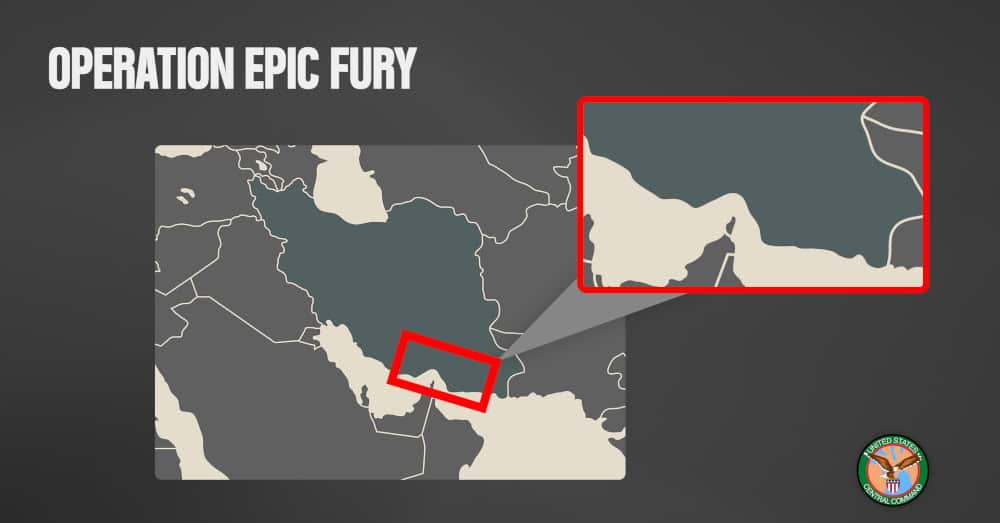
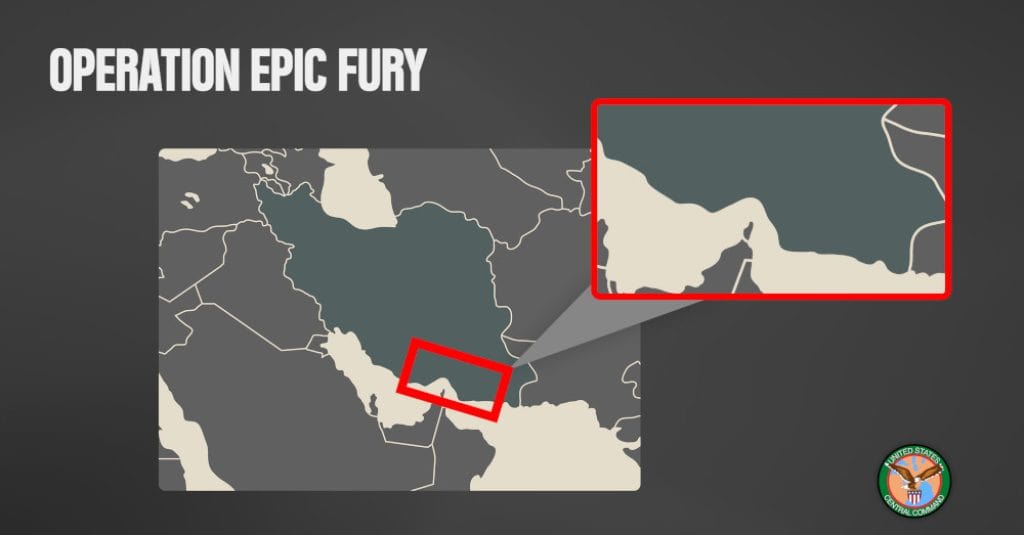
CENTCOM’s March 18 summary of Operation Epic Fury indicates that the campaign has surpassed 7,800 strike targets, with over 8,000 combat sorties flown and more than 120 Iranian vessels put out of action. The US’s targeting focus has remained consistent, centered on command-and-control infrastructure, IRGC leadership and intelligence nodes, air and missile defense systems, and Iran’s ballistic missile and drone ecosystem, alongside naval and military support capabilities. Yesterday, US Central Command (CENTCOM) stated that US forces had carried out strikes using heavy bunker-penetrating munitions against fortified Iranian missile positions near the Strait of Hormuz.
Israeli operations between March 17 and 18 hit more than 200 regime-linked sites, including ballistic missile storage and launch facilities, drone infrastructure, air defense systems, missile launchers, and war production sites. In western Iran, real-time intelligence enabled the identification and killing of five regime military personnel operating at a missile-related site. In Tehran, strikes also hit infrastructure tied to the Islamic Republic of Iran Air Force’s ballistic missile array.
The latest high-profile assassinations
- Mohammad Khatib, Iran’s minister of intelligence, was killed by Israel on March 18. “Khatib played a significant role during the recent protests throughout Iran, including the arrest & killing of protestors, and led terrorist activities against Israelis & Americans around the world,” the IDF noted in an X post announcing the elimination.
- Ali Larijani, secretary of the Supreme National Security Council and the former parliament speaker, was killed by Israel on March 17. The IDF noted, “Larijani was considered one of the most veteran and senior figures within the Iranian regime leadership, and was a close associate of the Supreme Leader Ali Khamenei,” adding that he “personally oversaw the massacre that was carried out against Iranian protestors.”
- Gholamreza Soleimani, the commander of the Basij, was killed on March 17 by Israel. The IDF noted, “Under Soleimani, the Basij unit led the main repression operations in Iran, employing severe violence, widespread arrests, and the use of force against civilian demonstrators.”
- Ghassem Ghoreyshi, Basij deputy commander, was reportedly killed on March 17, according to the London-based Iran International.
Attacks against Iranian energy infrastructure
Iran’s Passive Defense Organization, a state body responsible for civil defense and protecting critical infrastructure, stated on March 18 that Iran’s “enemies” struck “refineries 3, 4, and 6 in the South Pars Special Economic Zone (Asaluyeh),” the country’s main offshore gas processing hub along the Persian Gulf coast. Videos posted by regime outlets corroborated the story, showing heavy smoke in the vicinity of the facilities. Axios claimed that the attacks were carried out by Israel “in coordination” with Washington.
Islamic Republic President Masou Pezeshkian condemned the strikes and threatened, “This will complicate the situation & could have uncontrollable consequences, the scope of which could engulf the entire world.”
The IRGC-affiliated Fars News Agency stated that “refineries in the region and Israel are awaiting Iranian missiles.” It added, “Immediately after the Zionist regime’s attack on the gas refining facilities in Asaluyeh, Iran published a list of Israel’s and the region’s gas fields and refineries, urging people to stay away from these areas.”
Israel intensifies attacks on the regime’s repression apparatus
Alongside conventional military targets, the Israeli portion of the campaign has placed a clear emphasis on dismantling the regime’s internal security command. Israeli strikes in Tehran hit an IRGC security unit responsible for suppressing protests, a national police logistics and support center, and Basij positions operating across more than 10 locations in the city. The IDF’s messaging accompanying these strikes was explicit: “We will eliminate those who have Iranian blood on their hands,” alongside a pledge to pursue Basij forces “at checkpoints, in tents, and wherever they are present.”
Consistent with these claims, Israeli strikes have reportedly hit key Basij repression infrastructure, killing close to 300 field commanders and operatives. Targets included a Basij logistics repair and maintenance center used to service vehicles and motorcycles for street crackdowns, as well as sites tied to the IRGC’s 27th Mohammad Rasulullah Division. In addition, the “Imam Hadi” security unit, a central command node in Tehran, and the “Imam Ali” battalions, a frontline force used to suppress protests, were both struck and suffered heavy personnel and equipment losses.
The Israel Ministry of Foreign Affairs Persian-language account posted a video on March 17 showing a Special Units (riot police) vehicle burning in Enghelab Square following an Israeli airstrike that was captioned, “Step by step,” a phrase suggesting a gradual, systematic effort to dismantle the regime’s repression forces. The account posted another clip later that day showing aerial footage of a hyperlocal strike that destroyed a regime security checkpoint in Tehran. Another post showed a blast hitting a Basij member inside a tent, reflecting how personnel have shifted to improvised setups after infrastructure was destroyed.
Fars News Agency reported on March 17 that the US and Israel have carried out assassination attempts against regime officials with the aim of “demoralizing the public.”
Iran International, citing anonymous sources, claimed that morale within Iran’s security forces is deteriorating, with growing absenteeism and desertion across units, including cases where large portions of personnel failed to report for duty. The outlet also noted repeated delays in salary payments to Special Units Command personnel, with some units experiencing multiple late-wage cycles this year, contributing to refusals to participate in regime-backed deployments and public events. The combined pressure of financial strain and operational losses has reportedly begun to disrupt force availability in some urban areas.
A March 17 Wall Street Journal article claimed that the Mossad has contacted Iranian military and security personnel directly, including through phone calls and messages, warning them they have been identified and could be targeted. The communications reportedly reached individuals across the IRGC and other security bodies, with messages delivered in real time during the conflict.
Regime repression continues
Authorities executed a man accused of allegedly spying on behalf of Israel on March 18, with officials claiming that he had “provided images and information of the country’s sensitive sites to Mossad officers”.
IRGC media also announced that some 75 Iranians were arrested on suspicion of ties to “terrorists” and “monarchists.” Security forces also raided a gathering on March 17 in Tehran’s Chitgar neighborhood and reportedly fired shots toward the crowd.