
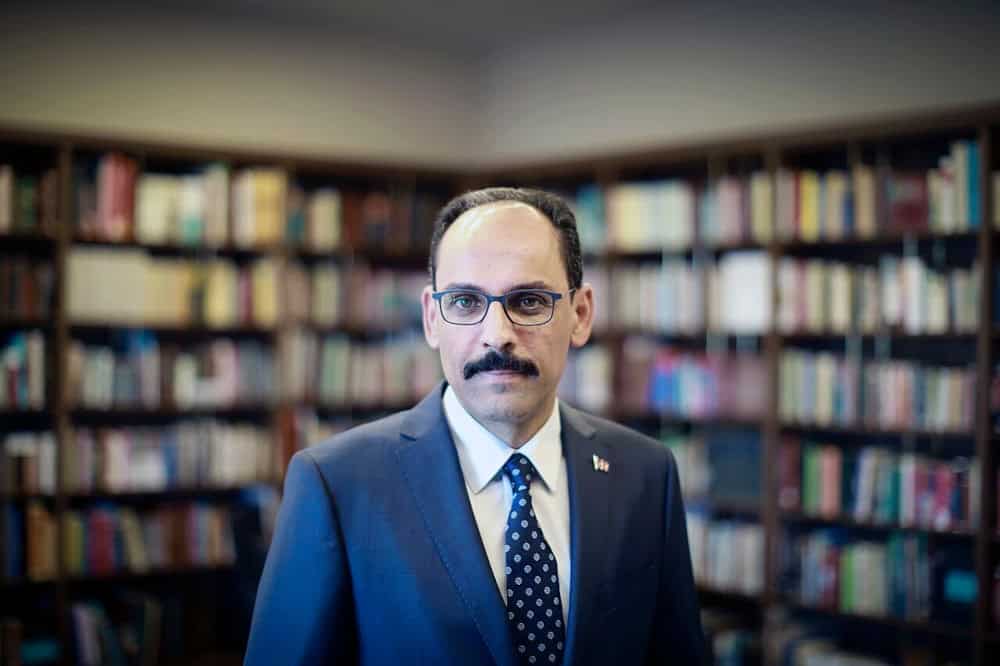

Ibrahim Kalin, head of Turkey’s National Intelligence Organization (MIT), hosted senior leaders of Hamas in Istanbul on March 22, underscoring Ankara’s continued engagement with the Islamist group amid ongoing regional conflict.
Kalin met with members of Hamas’s political bureau to discuss the next phase of the Gaza ceasefire signed in October 2025 and ongoing Israeli military operations. The talks reportedly emphasized coordination against Israel’s campaign and rejected any “fait accompli” outcomes in Gaza. Notably absent from public summaries of the meeting was any discussion of Hamas’s disarmament—an issue central to the US-backed ceasefire proposals.
The meeting is not an isolated incident but part of a sustained pattern of Turkish engagement with Hamas leadership. Ankara has hosted officials from the widely designated terrorist group since 2011 and has repeatedly positioned itself as a mediator in Gaza negotiations. Turkish intelligence officials maintain direct channels with Hamas to facilitate ceasefire talks, reinforcing Turkey’s role as an intermediary between the group and Western-backed diplomatic efforts.
Turkey’s relationship with Hamas extends beyond mediation. Ankara has refused to designate Hamas as a terrorist organization and has provided political legitimacy by hosting its senior leadership and allowing the group to operate networks from Turkish soil. Israeli and Western officials have long alleged that Hamas operatives have used Turkey as a base for recruitment, financing, and operational coordination.
Kalin’s March 22 meeting reflects a disparity in Turkey’s relationship with Hamas. Publicly, Turkey has presented itself as a diplomatic broker seeking a ceasefire. Privately, its continued high-level engagement with Hamas, particularly through intelligence channels, signals an enduring political alignment and a willingness to preserve the group as a relevant actor in postwar Gaza.
Underscoring Ankara’s continued support for Hamas, the US Treasury Department on March 12 sanctioned a new group of Turkish charities accused of facilitating the organization’s activities. The Office of Foreign Assets Control (OFAC) designated Ghazi Destek Dernegi (GDD), Hayat Yolu, and the Palestinian White Hands Assistance and Solidarity Association for their roles in channeling funds to Gaza-based charities under Hamas’s control—effectively enabling the group to generate and transfer resources in support of its military operations.
Treasury officials cited internal Hamas documents obtained by investigators showing that GDD, in coordination with other sanctioned entities such as Waed Society Gaza, provided material support to individual Hamas operatives and contributed to construction projects that directly advanced the organization’s infrastructure. Hayat Yolu, meanwhile, was identified as facilitating fundraising networks tied to the Muslim Brotherhood, elements of which have been designated as terrorist organizations by the Trump administration.
Ankara’s maintenance of access to Hamas leadership is likely intended to help ensure Turkey retains influence over any future political settlement. For Washington and its allies, the meeting likely reinforces concerns that Turkey is not merely mediating the conflict but actively sustaining one of its principal militant actors.


