

-
Written by: Matt Fraction
-
Art by: Ryan Sook
-
Colors by: Tomeu Morey
-
Letters by: Clayton Cowles
-
Cover art by: Jorge Jimenez, Tomeu Morey (cover A)
-
Cover price: $4.99
-
Release date: April 1, 2026
Batman #8 (DC Comics, 4/1/26): Writer Chip Zdarsky and artist Jorge Jiménez turn Bruce Wayne into the target of a slow-burn political and personal pressure campaign, with Batman tracking a Gotham power play that has gone straight from civic theater to open war. Uneven, talk-heavy, and too light on forward momentum, Verdict: For die-hard fans only.
First Impressions
Batman #8 opens like it wants to be a chess problem, not a brawl, and that choice gives the issue a cool, controlled surface even when the pages start to feel crowded. The best moments land when the book lets Gotham’s power brokers talk in clipped, poisoned sentences, because that is where the tension actually lives. But the issue keeps circling the same pressure points instead of driving cleanly through them, so the whole thing feels like it is building atmosphere on top of delay.
Recap
In Batman #7, Bruce walked into a deeply trapped Arkham Towers and found Joker wired into a monstrous containment setup, where every answer came wrapped in Zeller’s technology and Joker’s usual venom. The issue ended with Joker revealing that someone wants Batman dead, then leaning in with the one card that matters, Bruce’s secret identity. That is the kind of ending that should snap the whole run into a new gear, which makes the follow-through here worth watching carefully.
Plot Analysis (SPOILERS)
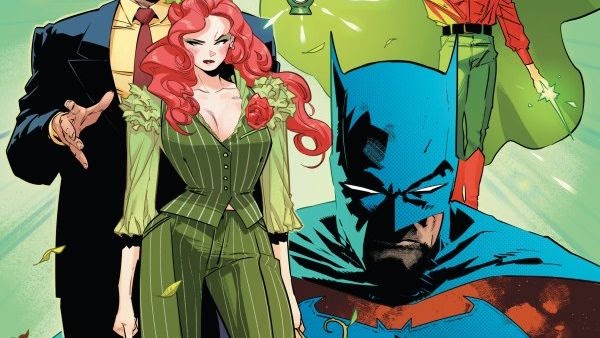
Batman #8 opens with political maneuvering in Gotham City Hall, where Commissioner Savage argues for Operation Peregrine and Mayor Pamela Isley pushes the city into a more aggressive stance against Batman. Their conversation frames the issue’s central threat as bureaucratic, not just physical, and the book smartly treats that as its own kind of violence. Elsewhere, an old man and Huston talk through survival, fear, and the hard lessons Gotham keeps teaching the people trapped in it. The issue uses that exchange to widen the lens, but it also slows the momentum down hard.
Batman then reconnects with allies as the pressure around Savage and the mayor’s order continues to build, and the issue leans into Gotham as a city where every system has been weaponized. Alan Scott gets a brief but useful scene with Bruce, which reinforces the idea that Batman is trying to think long-term while everyone else is scrambling from crisis to crisis. The issue closes on the Gotham Eye turning the city into a public enemy machine, with Batman and Robin framed as wanted criminals under the new order. That ending lands as a clean escalation, even if the path there spends a lot of time talking in circles.
Writing
The older man and Huston material is where the issue starts to strain. The dialogue has ideas, sure, but the scene feels like it is talking around itself more than building to anything specific. It contributes to theme, but not enough to justify the amount of page time it consumes.
The writing has a clear sense of Gotham as a pressure cooker, and it does a good job of making every authority figure sound like they are working from the same corrupt playbook. What it does not do is maintain strong forward momentum, because the issue keeps stacking conversation on top of conversation without turning those exchanges into fresh movement. The result is a story that understands its mood but keeps stalling its own engine.
The dialogue is most effective when it sounds transactional and political, because those lines actually reveal character and conflict at the same time. It weakens when it turns abstract or repetitive, especially in the Huston material, where the book keeps reaching for insight but does not sharpen it into a concrete dramatic turn. That leaves the structure feeling more like setup maintenance than a chapter with its own hard edge.
Art
Jiménez’s layouts keep Gotham looking sleek, mean, and constantly on edge, and that matters because this issue lives or dies on atmosphere. The page flow is generally clean, with city interiors, street-level exchanges, and rooftop framing all moving with a confident visual rhythm. Even the quieter scenes carry a hard urban texture that keeps the book from feeling dead on the page.
The character acting does a lot of quiet work here, especially in the political scenes, where expressions carry the kind of polite menace that Gotham thrives on. The color mood leans into steel, shadow, and civic chill, which gives the issue a properly suffocating feel. That said, the art is doing heavy lifting for pages that ask more from mood than from motion, so the visuals sometimes have to outrun the script’s reluctance to advance the plot.
Character Work
Batman comes across as disciplined and alert, which fits the run, but the issue keeps him in a reactive posture rather than giving him a strong emotional beat to own. Savage and Isley, meanwhile, get the sharper material because the writing lets them define the city in terms of power, leverage, and public control. Huston is the weak link, since the issue hints at significance without giving him enough specificity to feel fully earned.
Originality & Concept Execution
The concept here is solid on paper, a Gotham-wide political crackdown that turns Batman into an official enemy while the city’s power structure quietly tightens the screws. The problem is execution, because the issue leans too hard on exposition and atmospheric talk when it should be cashing in on the tension it has already built. The premise has teeth, but this chapter spends too much time showing the jaws instead of biting.
Pros and Cons
What We Loved
- Gotham’s political rot feels sharply inked and disturbingly plausible.
- Savage and Isley give the issue real authoritarian bite.
- Jiménez keeps the city visually tense and breathable.
Room for Improvement
- Huston’s scene needs a clearer dramatic purpose.
- Several stretches of dialogue repeat the same thematic point.
- The issue delays plot movement for too many conversation scenes.
The Scorecard
Writing Quality (Clarity & Pacing): 2/4
Art Quality (Execution & Synergy): 3/4
Value (Originality & Entertainment): 0.5/2
5.5/10
We hope you found this article interesting. Come back for more reviews, previews, and opinions on comics, and don’t forget to follow us on social media:
Connect With Us Here: Weird Science DC Comics / Weird Science Marvel Comics
If you’re interested in this creator’s works, remember to let your Local Comic Shop know to find more of their work for you. They would appreciate the call, and so would we.
Click here to find your Local Comic Shop: www.ComicShopLocator.com
As an Amazon Associate, we earn revenue from qualifying purchases to help fund this site. Links to Blu-Rays, DVDs, Books, Movies, and more contained in this article are affiliate links. Please consider purchasing if you find something interesting, and thank you for your support.