Five countries have agreed to commit troops to the International Stabilization Force (ISF) in Gaza, US Army Major General Jasper Jeffers said on February 19 at a meeting of the US-backed Board of Peace in Washington, DC. Representatives from 40 countries attended the gathering and, along with the US, pledged around $17 billion to the initiative. The meeting took place as clashes between the Israel Defense Forces (IDF) and militants continued in Gaza, despite a ceasefire in the territory.
The Board of Peace is one of the key components of the US- and UN-backed ceasefire in Gaza, which began in October 2025. In January, the White House announced that it was moving to a second phase of the ceasefire and was establishing various institutions linked to the Board of Peace. “The Board of Peace will play an essential role in fulfilling all 20 points of the President’s plan, providing strategic oversight, mobilizing international resources, and ensuring accountability as Gaza transitions from conflict to peace and development,” the White House said on January 16. The Board was ratified in Davos on January 22, where some of the first members gathered for a meeting.
The meeting in Washington on February 19 provided countries the chance to announce their pledges of financial support for the US plan and commit personnel to the endeavor. Major General Jasper Jeffers, who was tapped in January to lead the ISF in Gaza, announced that five countries—Indonesia, Morocco, Kazakhstan, Kosovo, and Albania—have committed to sending troops. Reports indicate that Indonesia could contribute up to 8,000 personnel who could be deployed by June. Indonesia may also take on the deputy commander role of the ISF under Jeffers, The Jakarta Post reported on February 20. Up to 20,000 ISF troops and 12,000 local police are expected to be needed for Gaza.
The Egyptian media outlet Ahram Online noted on February 19 that Egypt and Jordan have already begun training police for Gaza. “Nickolay Mladenov, the High Representative of the Board of Peace (BoP) for Gaza, announced Thursday the launch of recruitment for a transitional Palestinian police force, reporting that 2,000 applicants had registered within hours. The force is expected to be trained in Egypt with broad support,” the report noted. The goal is to concentrate weapons under one authority in Gaza, a process that is expected to take place alongside disarming Hamas. A Palestinian-run National Committee for the Administration of Gaza (NCAG) has also been established to enable civilian-led control of Gaza. Its head, Ali Shaath, attended the Board of Peace meeting and said that his organization hopes to restore security and services to Gaza.
On top of the troop and police commitments, several countries have also pledged financial contributions to the Board of Peace. The pledges of approximately $7 billion have come from the UAE, Kazakhstan, Morocco, Bahrain, Qatar, Saudi Arabia, Uzbekistan, and Kuwait. The UAE has pledged $1.2 billion to the effort, Saudi Arabia has pledged $1 billion, and the US is contributing $10 billion.
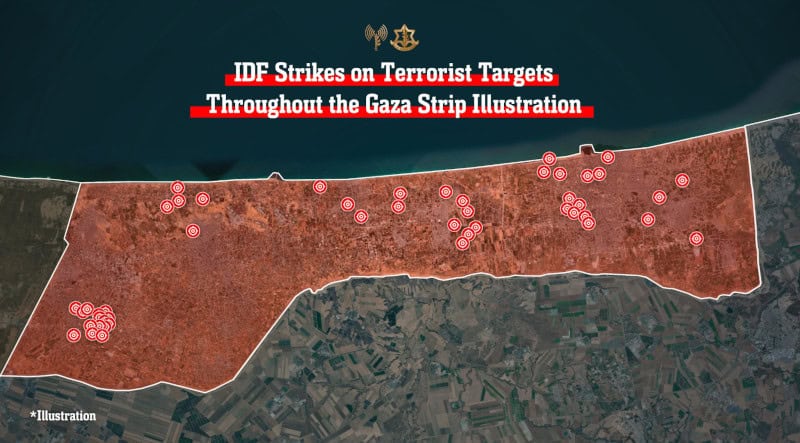
As the plan for Gaza takes shape in Washington, there are still frequent clashes in Gaza between the Israel Defense Forces (IDF) and gunmen. The IDF noted on February 13 that “IDF troops operating in the northern Gaza Strip identified 2 terrorists who entered a structure east of the Yellow Line.” The IDF then carried out a strike on the site. The Yellow Line is the area the IDF controls in Gaza, which includes around half the territory of the enclave.
On February 14, the IDF said there was another ceasefire violation during which a “terrorist approached IDF troops” in Gaza. The Israeli military has also published footage of ceasefire violations in Gaza. On February 16, the IDF said it had eliminated six terrorists in the southern Gaza city of Rafah, an area the Israeli military has operated in since May 2024. In addition to continued clashes with gunmen, the IDF continues to find and destroy Hamas tunnels in Gaza. One tunnel was found in Beit Hanoun, near the Israeli city of Sderot, the IDF said on February 19.
Beyond clashes, other incidents have occurred in Gaza. On February 18, the IDF said that a soldier was killed in a friendly fire incident. In addition, during the evening of February 19, a number of Israeli activists crossed into Gaza before IDF soldiers stopped them, returned them to Israel, and transferred them to Israeli police forces. Israeli President Isaac Herzog also toured the Civil-Military Coordination Center (CMCC) in Kiryat Gat on February 19. The CMCC was set up by US Central Command in October to facilitate the flow of humanitarian aid to Gaza.