
On March 24, Lebanese Foreign Minister Youssef Raggi announced that he had instructed his ministry’s secretary-general “to summon the Iranian Charge d’Affaires in Lebanon,” Tufiq Samadi Khoshkhou, and inform him that Lebanon had withdrawn its tentative approval of Mohammad Reza Shibani’s status as “the designated Iranian Ambassador.” Raggi said that Shibani would consequently be “persona non grata” and set a deadline for him to leave Lebanese territory “no later than” March 29.
The Lebanese official did not specify the reasons for expelling Shibani, but the decision may relate to his possible involvement in claiming protected diplomatic status for Islamic Revolutionary Guard Corps (IRGC) personnel operating in Lebanon, the IRGC’s claims of joint operations with Hezbollah, and his unapproved contacts with the organization.
On February 25, Tehran had tapped Shibani as its new ambassador to Lebanon. He appears to have arrived in Beirut between February 26, per Lebanese reporting, and February 28, according to Iranian media.
However, as of the time of Raggi’s statement, Shibani hadn’t fully assumed his ambassadorial role in the formal diplomatic sense, as he had yet to schedule a meeting with Raggi and present the Lebanese foreign minister with his credentials. Raggi had hinted at this tentative status in his statement by describing Shibani as “the designated Iranian ambassador” and noting Beirut’s withdrawal of its formal approval for a foreign country’s proposed head of a diplomatic mission. This procedure ensures that a diplomat is accepted by the receiving state before their arrival but does not automatically allow the incoming diplomat to assume their role.
Underscoring this status, Raggi’s communications with the Iranian Embassy throughout the past month—including regarding Shibani’s expulsion—had been conducted exclusively through Khoshkhou, the Iranian charge d’affaires. These communications included an objection lodged with the Iranian diplomatic mission on March 12 to “a series of incidents and statements” by Iranian officials “that constitute a clear violation of [Lebanese] national sovereignty and a breach of our government’s decisions.”
The Lebanese foreign ministry subsequently clarified that its decision was specific to Shibani, “pursuant to Article 9 of the Vienna Convention on Diplomatic Relations,” which allows a receiving state “at any time and without having to explain its decision,” to declare any member of a diplomatic mission persona non grata. The ministry indicated that Shibani’s expulsion would otherwise have no impact on the Iranian Embassy’s operations or function in the country.
The foreign ministry’s statement accused Shibani of “violating diplomatic norms and obligations.” These violations, it said, included, through statements and “meetings with unauthorized parties,” Article 41’s prohibition on interfering in the domestic affairs of the receiving state. However, the ministry also stressed that the action did “not constitute a severance of diplomatic ties with Iran,” and that Beirut “remains keen on maintaining the friendliest of relations with the Iranian Republic and other states.”
Hezbollah expressed displeasure at Shibani’s expulsion. In a formal statement, the group described Raggi’s decision as an “irresponsible step and a strategic error and national sin” that would shatter Lebanese domestic unity. It also said the decision encroached on Lebanese President Joseph Aoun’s prerogatives and called on the foreign ministry to “immediately retract” it. However, Al Jadeed has reported that the decision was coordinated between the ministry and the presidency.
The AMAL Movement, Lebanon’s other major Shiite party and Hezbollah’s formal political partner, issued a similar condemnation. AMAL said it would not passively allow the decision to pass and reiterated its objection to President Aoun’s and Prime Minister Nawaf Salam’s proposals for direct negotiations “with the Israeli enemy.” AMAL Party chairman and Parliament Speaker Nabih Berri reportedly asked Aoun to retract the decision. Environment Minister Tamara Al Zein, a member of AMAL, even suggested that her party and Hezbollah would withdraw from the cabinet in response. Grand Jaafari Mufti Sheikh Ahmad Qabalan, a significant Shiite religious figure in Lebanon, likewise condemned the foreign ministry’s move.
Reports in Al Hadath suggested that Shibani would ask Hezbollah and Amal to pressure the Lebanese government into reversing course, but Iran otherwise intended to ignore the decision. Tehran has not issued a formal statement regarding the matter.
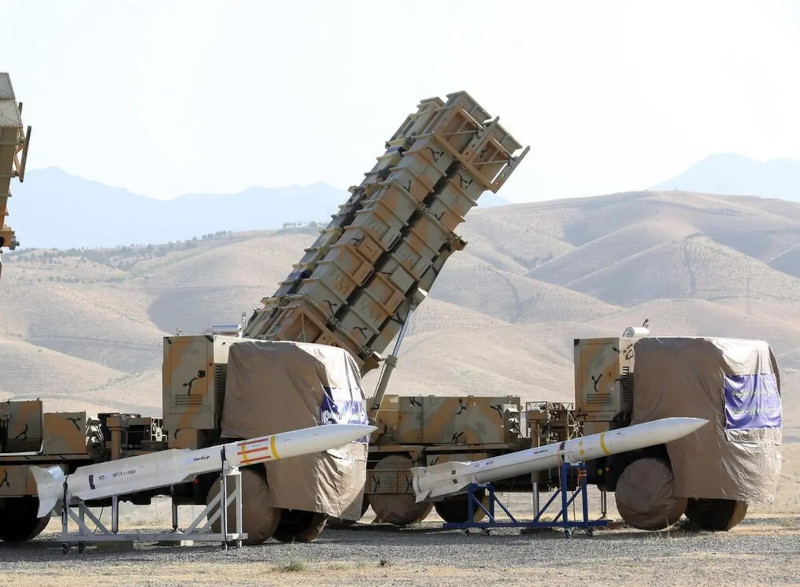
However, at approximately 3:30 pm, residents of Jounieh and other parts of the Keserwan District, north of Beirut, began reporting hearing muffled blasts. Witnesses said that they saw six detonations from what was later identified by the Lebanese Armed Forces (LAF) as an Iranian-made Qadr-110 medium-range ballistic missile containing several smaller munitions. Debris from the missile reportedly fell in the neighborhoods of Haret al Sakhr and Sahel Alma in Jounieh, as well as Faitroun and Baskinta, more inland. The impact caused minor damage to local buildings, but no casualties.
There was no immediate official comment from Lebanese authorities on the incident. However, reports citing unnamed Lebanese sources suggested that, in an event that is the first of its kind, the missile had been intercepted over Lebanese airspace, most likely by a foreign naval vessel offshore.
Meanwhile, by 3:57 pm, the Lebanese newspaper Annahar, citing unnamed Israeli media, claimed that the Iranian missile was headed toward an American target inside Lebanon. The earliest identifiable Israeli media reports stating anything similar to this claim, Israel Hayom at 4:42 pm and Channel 14 news at 4:58 pm, cited a 4:33 pm alert in the Lebanese media outlet Nidaa al Watan that alleged “the US Embassy in Beirut or Hamat Airbase” were the targets. Nidaa al Watan has a decidedly activist, anti-Hezbollah editorial line, casting doubt on its reliability. Nevertheless, Annahar also claimed that its own “information revealed an initial security assessment that the Iranian missile was targeting the US Embassy in Awkar [Beirut], or the Hamat Airbase.”
Hamat Airbase, located between Batroun and Tripoli, periodically hosts US personnel who provide security assistance to the Lebanese Armed Forces, but it is neither owned nor operationally controlled by the United States. Nevertheless, propaganda from the Iran-led Axis of Resistance routinely portrays Hamat Airbase as an American asset, and Iran’s Arabic-language IRIB channel Al Alam recently ran a short video of the base that was perceived as threatening an imminent attack.
The timing and reports of the missile’s intended target soon touched off speculation among certain Lebanon watchers that it was Iran’s response to Raggi’s announcement, which had rattled Tehran. However, Barak Ravid, reporting for Israeli Channel 12 News, cited an unnamed “U.S. official who said the U.S. military believes the Iranian missile that fell in Lebanon was aimed at another country—most likely Cyprus—but disintegrated in Lebanese airspace, with fragments falling near Beirut.”
A statement issued by the Lebanese Armed Forces the next day appeared to confirm Ravid’s version of events. The LAF said its inspection of the crash sites and debris revealed that the Qadr-110 missile apparently exploded due to either a technical issue or an interceptor, but “exploded [in Lebanese airspace] while still at high altitude, which suggests its target was outside of Lebanese territory.” The statement did not speculate on whether the intended target was Cyprus.
In early March, drones launched from Lebanon—either by Hezbollah or Islamic Revolutionary Guard Corps personnel—struck the Royal Air Force base in Akrotiri, Cyprus. On March 22, Beirut Time, a small, Lebanese news platform sympathetic to Hezbollah and “resistance” framing, claimed to have learned that Cypriot intelligence chief Tasos Tzionis conveyed reassurances to Iran, through Hezbollah, that Akrotiri would not be used to launch attacks against the Islamic Republic.
Beirut Time’s report could not be independently verified, but Reuters reported on March 21 and March 25 that the United Kingdom agreed not to involve Akrotiri in its defensive agreement with the United States to use UK bases. Reuters further reported that Nicosia had initiated a discussion with London regarding the future of British bases on the Mediterranean island.