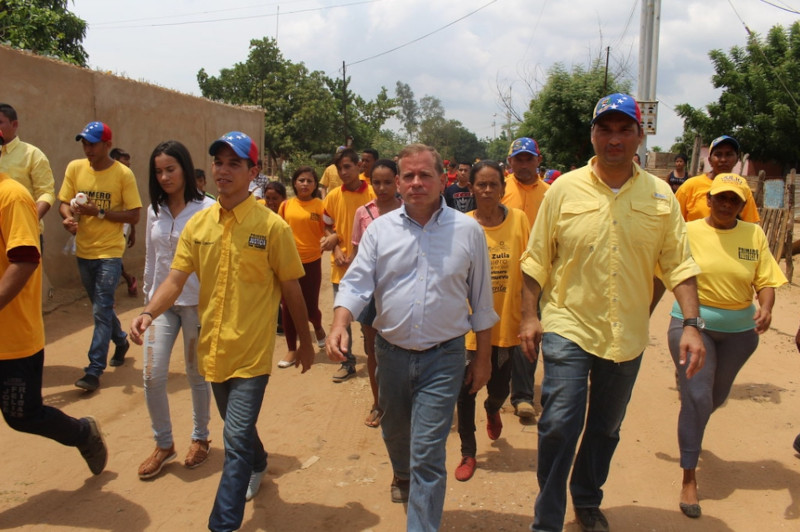

On February 8, Venezuelan opposition leader Juan Pablo Guanipa vanished from the streets of Caracas in what allies called a kidnapping, a development that could jeopardize US policy progress and efforts to stabilize the country. US Secretary of State Marco Rubio had expressed optimism days earlier, telling US lawmakers that Venezuelan interim President Delcy Rodriguez was cooperating with US priorities, including signing a new hydrocarbons law that dismantles the monopoly of Petroleos de Venezuela’s (PDVSA), Venezuela’s state oil company, over the industry. However, Guanipa’s disappearance and later house arrest cast doubt on whether the repression networks that were active under former Venezuelan President Nicolás Maduro are still operating during the country’s transition.
Rubio’s testimony and US policy direction
On January 28, Rubio testified before the Senate Foreign Relations Committee, where he outlined the Trump administration’s objectives and constraints in Venezuela. Rubio stated that the United States does not anticipate further military action and that the only US personnel currently in the country are Marine guards assigned to secure the reopened US embassy in Caracas.
Rubio also claimed that the interim Venezuelan government has begun discussions aimed at reducing or eliminating the presence and influence of Iran, China, and Russia within the country, and described US communications with the acting government as “respectful and productive.”
During the same week, Rubio met with Venezuelan opposition leader María Corina Machado, citing this engagement as evidence that Washington continues to work with opposition figures alongside interim government authorities.
Rubio acknowledged congressional concerns regarding executive authority and oversight. Democratic senators questioned whether the continued presence of Maduro-era officials in Venezuela’s government undermines the administration’s stated goal of democratic transition. Rubio declined to provide a timeline for elections but said conditions in Venezuela would improve “within months.”
In February, the Trump administration prepared to issue temporary no-bid licenses to US oil trading firms, allowing them to monetize seized Venezuelan crude while Washington develops longer-term commercial arrangements, potentially involving refineries and companies such as Chevron.
Earlier in January, a bipartisan War Powers resolution aimed at restricting further unilateral US military action in Venezuela narrowly failed.
Venezuela’s new oil law and sanctions relief
On January 29, acting President Rodríguez signed a sweeping hydrocarbons law that restructures Venezuela’s oil sector after the National Assembly unanimously approved the legislation through an expedited process led by Assembly President Jorge Rodríguez, Delcy’s brother.
The law dismantles PDVSA’s monopoly on hydrocarbons by allowing private and foreign firms to operate oil projects, hold majority stakes, commercialize production independently, and manage revenues without PDVSA intermediation. While the state retains ownership of subsurface resources, the law allows private operators to assume full operational control if they meet technical qualification requirements.
The reform introduces investor protections by granting access to international arbitration and removing the requirement that Venezuelan courts exclusively adjudicate disputes. It caps royalty rates at 30 percent, reduces certain taxes, and grants the executive branch discretion to offer fiscal incentives to attract investment.
Within hours of the law’s passage, the US Treasury Department expanded sanctions relief by issuing licenses that allow US companies to purchase Venezuelan crude and operate more freely in the country.
US officials stated that Venezuelan oil revenue will be managed indefinitely through US-approved mechanisms and directed toward imports, debt servicing, and reconstruction rather than discretionary government spending. The US also halted subsidized Venezuelan oil shipments to Cuba in early February.
Venezuelan opposition lawmakers raised concerns about transparency and oversight, warning that the absence of public revenue-tracking mechanisms risks replicating past corruption. The ruling majority rejected proposed amendments that would have required the public disclosure of oil revenues.
Kidnapping of opposition leader Juan Pablo Guanipa
On February 8, opposition leader Juan Pablo Guanipa disappeared in Caracas hours after his release from prison. Guanipa, a senior figure in the Justice First party and an ally of Machado, had been detained for more than eight months on charges that the opposition widely described as politically motivated.
According to Machado, heavily armed men in civilian clothing abducted Guanipa around midnight using multiple unmarked vehicles. Machado publicly described the incident as a kidnapping and demanded Guanipa’s immediate release.
Venezuelan Attorney General Tarek William Saab later claimed that Guanipa had violated the conditions of his release, which included travel restrictions and periodic court appearances, but did not confirm that authorities had detained him nor disclose his whereabouts. Interior Minister Diosdado Cabello said Guanipa had been re-arrested for “calling people to the streets.”
Earlier that day, Guanipa had publicly denounced the interim government as illegitimate and urged Venezuelans to push for a democratic transition. His disappearance intensified fears among opposition figures that security services or regime factions continue to operate beyond civilian oversight.
Guanipa was moved to house arrest on February 10. “He has been released from prison but remains under house arrest. […] He cannot make statements, he cannot go out. That is to say, he is less free than he was on Sunday,” Ramón Guanipa, Juan Pablo’s son, said.
Delcy Rodríguez’s interim leadership
Formerly Venezuela’s vice president, Rodríguez assumed the presidency on January 5 following Maduro’s removal. Reporting since Maduro’s capture indicates that she and her brother, Jorge Rodríguez, quietly signaled a willingness to cooperate with the US and regional intermediaries in advance of her predecessor’s capture.
Since taking office, Rodríguez has coordinated closely with US officials, including engaging in direct communication with President Donald Trump and Rubio during negotiations over the oil law. She has publicly called for the establishment of regular bilateral channels and described cooperation with Washington as necessary for her country’s economic recovery.
Rodríguez’s government has aligned with some US priorities, including opening the energy sector, prioritizing US access to Venezuelan oil, redirecting oil revenues through US-approved mechanisms, and ending energy support to Cuba. Trump stated that Rodríguez’s political survival depends on adherence to these commitments and has cited Maduro’s fate as an explicit warning.