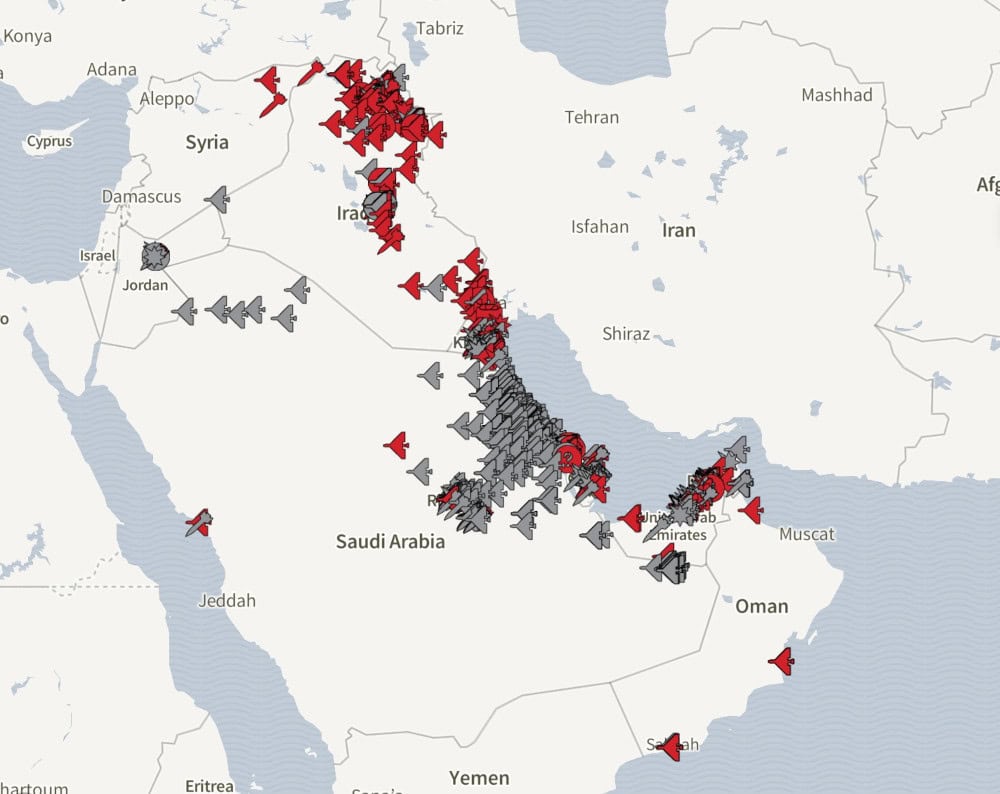

Iran and its allied militias continued launching drones, missiles, and rockets against regional countries between March 28 and April 1. There were nearly 90 incidents in this period, including distinct mass barrage events involving more than 20 ballistic missiles and 30–40 drones across multiple waves in the United Arab Emirates, alongside repeated barrages in Saudi Arabia, Kuwait, and Bahrain.
Unlike the opening phase of the war, which began on February 28, when larger numbers of systems were often launched but with more uneven results, the strikes over the past few days demonstrated greater accuracy, repeatedly hitting airports, energy infrastructure, ports, and telecommunications hubs. The effectiveness of these attacks also increased, with more frequent infrastructure disruption, casualties, and damaging secondary effects from intercepted projectiles.
The following is an account of the attacks conducted by Iran and its affiliated militias against Arab states between March 28 and April 1.
March 28
In Oman, two drones struck the port of Salalah, damaging a crane and injuring a foreign worker.
In Saudi Arabia, authorities reported intercepting a ballistic missile over Riyadh, alongside multiple drone interceptions in the Eastern Province and Riyadh, including groups of three and two drones.
In Qatar, air defenses intercepted a wave of drones launched from Iran.
In Bahrain, Iranian drones targeted industrial facilities in Al Hidd, while Bahraini forces intercepted a large-scale barrage consisting of 23 drones and 20 missiles across five different waves.
In Kuwait, multiple drones struck Kuwait International Airport, causing significant damage to the airport’s radar system.
In the United Arab Emirates, authorities reported one of the largest interception events to date. Air defenses engaged 20 ballistic missiles and 37 drones across three waves. Shrapnel from an intercepted missile ignited fires in the Khalifa Economic Zones in Abu Dhabi, injuring five people.
In Iraq, drone activity targeted both military and energy infrastructure. A drone struck the Majnoon oil field without detonating. Additional drones targeted Baghdad International Airport near the US diplomatic support center, while others were intercepted over Balad Air Base.
In Iraqi Kurdistan, drone attacks and interceptions were widespread. A drone struck near the residence of KRG President Nechirvan Barzani in Duhok. Other drones were intercepted over Erbil and Duhok, including the US consulate in Erbil, while additional strikes disrupted TV broadcasting in Khalifan. Iranian missile and drone strikes also targeted a civilian camp affiliated with the Democratic Party of Kurdistan (PDKI) opposition group.
In Syria, drones launched from Iraq targeted the Tanf base, though all were intercepted.
March 29
In the United Arab Emirates, authorities reported multiple interception events, including waves involving 16 ballistic missiles and 42 drones, alongside additional unspecified barrages.
In Saudi Arabia, air defenses intercepted 10 drones and a cruise missile in the Eastern Province.
In Kuwait, attacks targeted both civilian and military infrastructure. A warehouse belonging to a private logistics company was struck, while separate drone attacks targeted a Kuwaiti military camp, injuring 10 personnel.
In Bahrain, air defenses intercepted additional waves, including six drones.
In Qatar, another drone attack originating from Iran was intercepted.
In Jordan, authorities intercepted a missile and two drones, while recording 26 incidents of falling debris that damaged three vehicles.
In Iraq, drone strikes intensified around key infrastructure. A drone struck near the US Embassy in Baghdad, while others targeted the Baiji refinery and the American Baghdad Diplomatic Support Center at Baghdad International Airport.
In Iraqi Kurdistan, drone attacks targeted opposition-linked and international sites, including Komala party positions and the former United Nations headquarters in Sulaymaniyah. Additional drones targeted Erbil International Airport and were intercepted.
In Syria, multiple drones struck the Qasrak base, a key US position in the northeastern part of the country.
March 30
In Saudi Arabia, air defenses intercepted two and five drones in separate incidents, along with five ballistic missiles in the Eastern Province.
In Jordan, authorities intercepted five missiles and a drone, while recording 20 incidents of falling debris and one injury.
In the United Arab Emirates, air defenses continued to confront large-scale attacks, including waves involving 11 missiles and 27 drones. Additionally, a drone strike hit the Thuraya Telecom Gateway in Sharjah.
The Kuwaiti Ministry of Electricity and Water claimed that an Iranian attack targeted a desalination and power plant in Kuwait. One Indian national was killed.
The Bahraini Defense Forces claimed that it intercepted seven drones and eight missiles.
In Iraq, attacks continued to focus on US-linked and military targets. Rockets struck Baghdad International Airport, damaging an Iraqi Air Force aircraft and injuring a civilian. Additional drone strikes targeted the same airport and locations in Babil.
In Iraqi Kurdistan, drones targeted the former UN headquarters in Sulaymaniyah, causing structural damage, while additional drones were intercepted over Erbil International Airport.
March 31
On March 31, Iran and its affiliated militias sustained a high tempo of operations, launching coordinated drone and missile attacks across at least six countries, with a concentration on the Gulf and Iraq theaters.
Air defenses in Saudi Arabia intercepted at least 12 drones and eight ballistic missiles across multiple locations, including Riyadh and the Eastern Province. Debris from an intercepted drone in Al Kharj struck three homes and injured two civilians.
In the United Arab Emirates, one of the largest engagements of the day saw authorities confront eight ballistic missiles, four cruise missiles, and 36 drones, with debris falling in residential areas of Dubai, damaging property and injuring four individuals.
In Jordan, four missiles were intercepted, but falling debris caused 17 separate incidents.
In Kuwait, air defenses intercepted at least six missiles and eight drones across multiple barrages.
In Bahrain, authorities reported intercepting two drones.
Meanwhile, in Iraq and Iraqi Kurdistan, attacks focused on U.S.-linked and energy-related targets. Drones struck the American Baghdad Diplomatic Support Center in Baghdad International Airport and the West Qurna 1 oil field, while additional drones were intercepted targeting Balad Air Base and Erbil International Airport. Interceptions over Erbil caused damage in residential areas and injured civilians, including children.
April 1
In Saudi Arabia, air defenses intercepted at least four drones in separate incidents.
In Qatar, authorities intercepted two cruise missiles, but a separate cruise missile successfully struck an oil tanker leased to QatarEnergy in the country’s territorial waters.
In the United Arab Emirates, air defenses intercepted five ballistic missiles and 35 drones, with debris from interceptions killing one individual in Fujairah and falling in populated areas in Umm al Quwain.
In Bahrain, a drone strike hit Batelco, the country’s main telecommunications company hosting Amazon Web Services infrastructure, causing a fire, while Bahraini forces intercepted 19 drones and four missiles.
In Kuwait, authorities intercepted 15 drones and three cruise missiles, along with an additional six drones and two drones in separate interception events. A separate drone strike hit fuel depots operated by the Kuwait Aviation Fueling Company at Kuwait International Airport.
In Jordan, air defenses intercepted one missile and two drones, while authorities recorded six incidents of falling debris.
Meanwhile, in Iraq and Iraqi Kurdistan, attacks by Iranian-backed groups in the country concentrated on US-linked assets and energy infrastructure. Two drones struck inside the Baghdad International Airport complex near the American Diplomatic Support Center, while additional drone strikes hit the Castrol oil warehouse near Erbil and the Sarsang oil field, both causing fires. Air defenses also intercepted drones targeting Kurdish Peshmerga positions in Sulaymaniyah.