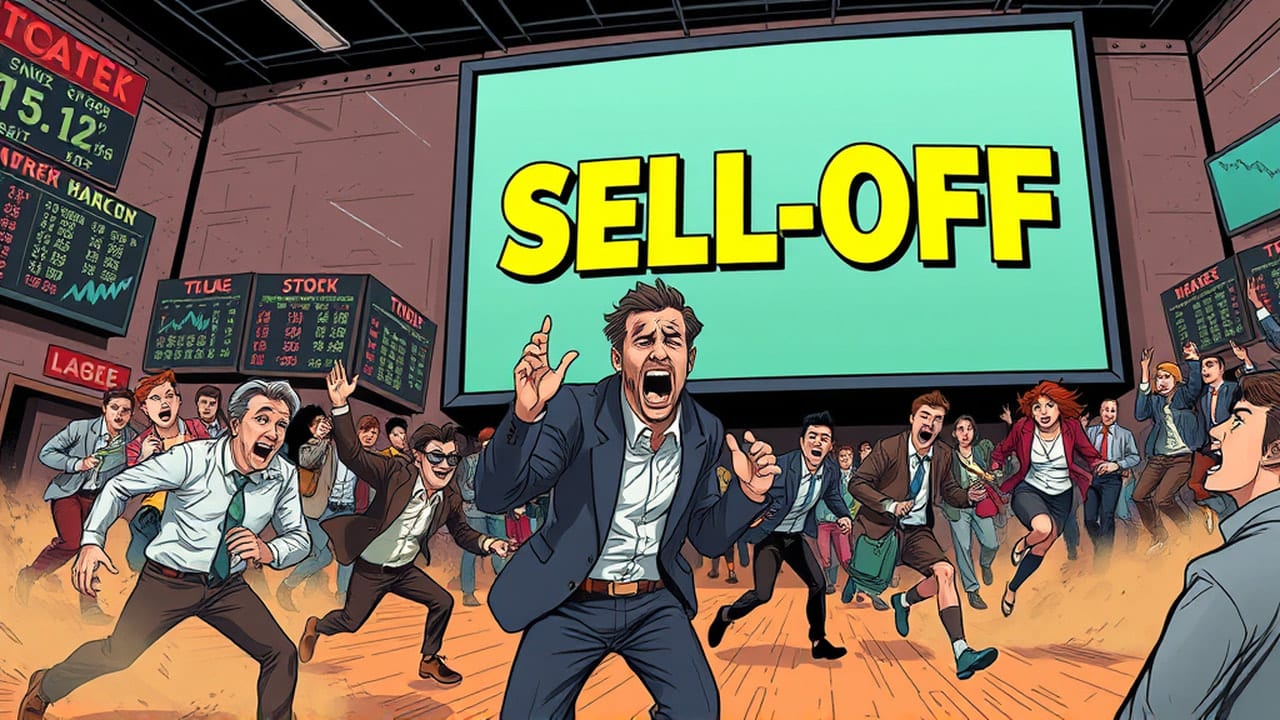
Investor sentiment toward US equities has taken a historic turn, with Bank of America’s latest survey revealing the sharpest reduction in exposure on record. Between February and March, exposure to US equities fell by 40 percentage points, marking the largest single-month decline since the bank began tracking the data in 1994. This dramatic shift, referred to as a “bull crash,” underscores waning confidence in US economic outperformance and mounting concerns about a potential global downturn.

The decline in equity exposure reflects broader anxieties about the market’s trajectory. A net 69% of surveyed fund managers indicated that they believe US economic exceptionalism has peaked. Such a significant shift could send ripples through riskIn stock and crypto trading, risk refers to the possibility of losing some or all of the capital invested in a trade. It represents the uncertainty about the future performance of … More assets, including Bitcoin, which has exhibited a persistent 52-week positive correlation with US equities. If investors continue reallocating capital away from stocks, cryptocurrencyA cryptocurrency is a digital or virtual form of currency that uses cryptography for security. Unlike traditional currencies issued by central banks, cryptocurrencies operate on de… More markets may face additional downward pressure.
However, not all market participants believe that the reduction in equity exposure stems from concerns about economic performance. Some speculate that elite financial players may be deliberately engineering a market downturn to obscure revelations about financial misconduct. Allegations have emerged regarding misuse of taxpayer funds through USAID, questionable payouts in social security exceeding 120 years of age, and various other schemes currently under scrutiny by regulatory bodies such as the Department of Justice and the Office of the Inspector General. If these claims gain traction, they could further erode confidence in traditional markets and heighten volatility across asset classes.
Adding to concerns, Bank of America’s survey reveals that cash allocations among investors have risen sharply. The proportion of cash holdings increased from 3.5% in February to 4.1% in March, marking the highest level since 2010. Such moves suggest a broad flight to safety, as investors hedge against growing market uncertainty.
Trade tensions also loom large as a potential catalystIn stock trading, a catalyst refers to an event, news, or announcement that causes a significant and often rapid price movement in a stock or the broader market. Catalysts can be p… More for market instability. A significant 55% of surveyed fund managers identified a trade war-induced global recession as the primary tail riskIn stock and crypto trading, risk refers to the possibility of losing some or all of the capital invested in a trade. It represents the uncertainty about the future performance of … More, up from 39% in February. Meanwhile, 19% of respondents expressed concerns about inflationary pressures leading to further Federal Reserve rate hikes. Both scenarios pose substantial risks for risk-on assets such as equities and cryptocurrenciesA cryptocurrency is a digital or virtual form of currency that uses cryptography for security. Unlike traditional currencies issued by central banks, cryptocurrencies operate on de… More, which are highly sensitive to macroeconomicAt its core, macroeconomics is the branch of economics that examines the behavior, performance, and structure of an economy as a whole. Unlike microeconomics, which focuses on indi… More conditions.
Despite these concerns, the survey indicates that some investors remain committed to riskIn stock and crypto trading, risk refers to the possibility of losing some or all of the capital invested in a trade. It represents the uncertainty about the future performance of … More assets. The “Long crypto” trade remains among the most crowded at 9%, coinciding with the recent establishment of the Strategic Bitcoin Reserve in the United States. This suggests that while broader market sentiment is shifting toward caution, a subset of investors continues to see value in digital assets as a long-term hedge.
Looking ahead, interest rateInterest rates are the cost of borrowing money or the reward for saving money, typically expressed as a percentage of the principal amount. When it comes to interest rate trading, … More expectations could play a pivotal role in shaping market dynamics. The survey found that 68% of fund managers anticipate Federal Reserve rate cuts in 2025, up from 51% last month. If the Fed does indeed pivot toward easing monetary policy, it could provide a tailwind for both equities and cryptocurrenciesA cryptocurrency is a digital or virtual form of currency that uses cryptography for security. Unlike traditional currencies issued by central banks, cryptocurrencies operate on de… More, potentially reversing some of the recent bearish sentiment.
Trading Implications
For investors, these developments highlight both risks and opportunities. Those looking to navigate the shifting landscape should consider the following:
- HedgingFinancial hedging is a strategy used to reduce or eliminate the risk of financial losses that may arise from unfavorable price movements. More Against Volatility – With rising cash allocations signaling a defensive posture, traders may consider increasing exposure to safe-haven assets such as gold, Treasury bondsUnited States Treasury securities are debt instruments issued by the United States government to finance its spending. Treasury securities come in a variety of forms, including bil… More, or cash equivalents. This strategy helps preserve capital during periods of heightened uncertainty.
- Watching Correlations – Bitcoin’s correlation with US equities suggests that further stock market declines could weigh on crypto prices. Traders should monitor equity trends closely when making cryptocurrencyA cryptocurrency is a digital or virtual form of currency that uses cryptography for security. Unlike traditional currencies issued by central banks, cryptocurrencies operate on de… More investment decisions.
- Opportunistic Buying – If equities and cryptocurrenciesA cryptocurrency is a digital or virtual form of currency that uses cryptography for security. Unlike traditional currencies issued by central banks, cryptocurrencies operate on de… More face additional selling pressure, long-term investors may find buying opportunities in undervalued assets, particularly if expectations for 2025 Fed rate cuts materialize.
- Monitoring Trade and Policy Risks – The rising concern over trade wars and inflationInflation refers to the rate at which the overall price levels of goods and services increase, gradually reducing purchasing power over time. It is commonly measured using indices … More suggests that geopolitical and economic policy developments will have a significant impact on market sentiment. Investors should stay informed about policy shifts that could affect their holdings.
As the market digests these evolving risks, investors must remain agile. Whether navigating equity weakness, crypto volatility, or shifting Fed policy, a well-balanced approach will be essential in managing riskIn stock and crypto trading, risk refers to the possibility of losing some or all of the capital invested in a trade. It represents the uncertainty about the future performance of … More and capitalizing on opportunities in the months ahead.

Lance Jepsen is the senior personal finance writer for Guerilla Stock Trading who has spent more than 25 years covering the stock market and economics. In addition, Lance has worked as a private stock analyst for a number of high worth individuals.