The Sinjar Resistance Units (YBS), a Yazidi armed group based in northern Iraq, has agreed to disarm, the Iraqi Prime Minister’s Office said on September 11. In the wake of the agreement, there are moves to stabilize areas around Mount Sinjar, where many Yazidis live, and to help displaced people return. This comes amid a larger push in Iraq to disarm various groups, including Iranian-backed militias, an issue that has also figured prominently in Baghdad’s relations with Washington. Iraqi Prime Minister Ali al Zaidi is expected to meet with US President Donald Trump on the sidelines of the United Nations General Assembly, which begins its annual general debate in New York on September 22.
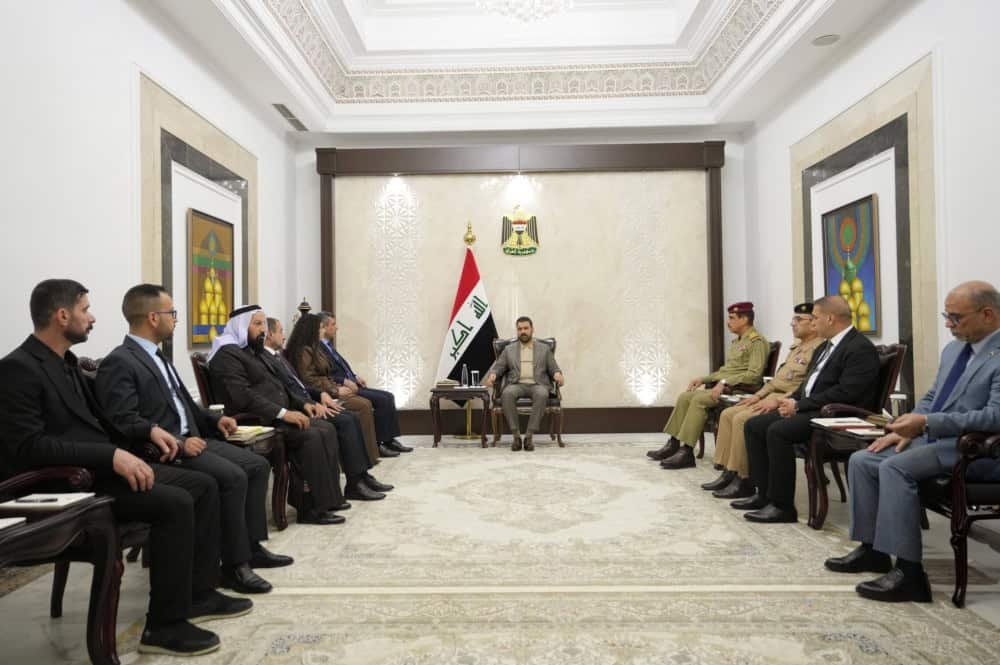
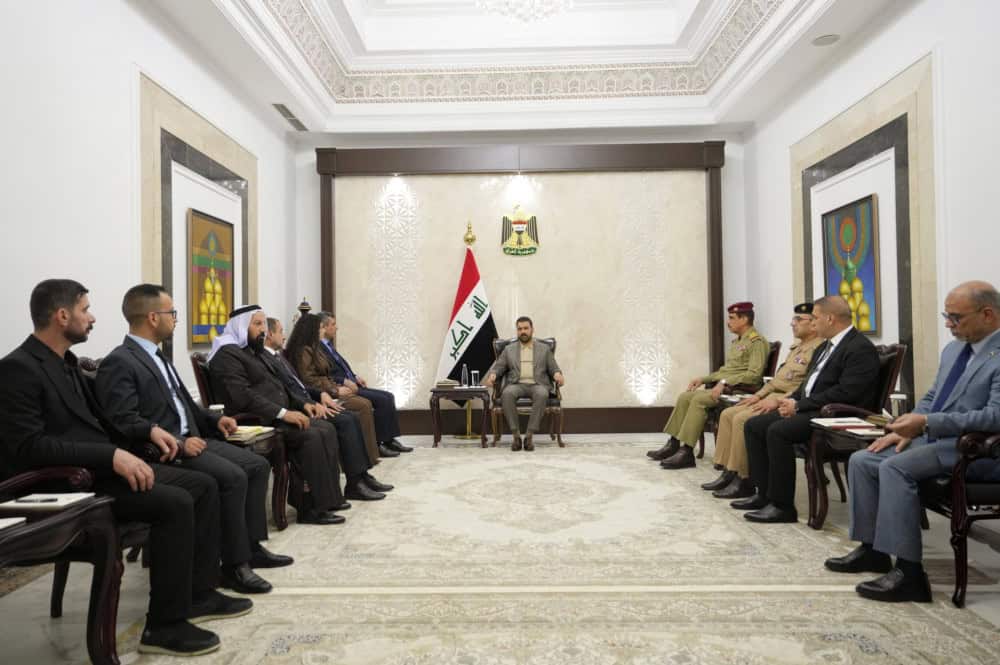
On September 11, Zaidi met with Yazidi members of the Yazidi Cause Alliance. At the meeting, the prime minister announced that the YBS would begin to hand over its weapons.
“The Prime Minister affirmed that the decision to hand over weapons comes within the framework of building a state of institutions, protecting the unity of national decision-making, and ending the multiplicity of security decision-making centers, stressing that the state will guarantee the rights of members of the Sinjar Resistance Units and the Women’s Units and their sacrifices, by regulating their status and integrating the qualified among them into Iraqi security institutions in accordance with legal and official frameworks,” a statement from the prime minister’s office said.
Murad Ismael, a Yazidi member of parliament who attended the meeting with Zaidi, praised the development. “We welcome a historic agreement to integrate the fighters of the Yazidi resistance, the YBS, into the ranks of Iraq’s official security forces, to bring all weapons under the authority of the state, and to close an important chapter — one that protects our people’s rights within the law and the Constitution,” Ismael posted on X.
The YBS was founded in 2007 and has links to the Kurdistan Workers Party (PKK), the Kurdish militant group that waged a decades-long insurgency against Turkey before announcing its dissolution in 2025. The YBS has been active across the Sinjar region of northern Iraq, defending the Yazidi minority. Yazidis were targeted in a wave of bombings in 2007 during the Iraqi insurgency. In 2014, the Islamic State attacked Sinjar and committed a genocide against the Yazidis, massacring thousands and kidnapping women and children. Sinjar was liberated from the Islamic State in 2015, with YBS playing a role alongside Kurdish Peshmerga and other groups. In 2017, the Iraqi government clashed with the Peshmerga and took control of the area.
YBS’s role in Sinjar was opposed by Turkey, which viewed it as a PKK threat, with Turkey conducting rounds of airstrikes in the area over the last decade. The YBS also clashed with the Iraqi Army in 2022. This left the Sinjar area unstable, and many Yazidis who had been displaced in 2014 by the Islamic State did not return.
“A key deterrent preventing the return of IDPs [internally displaced people] is the presence of a patchwork of armed groups, including Iraqi federal forces, Popular Mobilization Forces (PMF), and local armed groups, including the Shingal Protection Units (YBS),” the Rudaw Media Network noted on September 17. The PMF is made up of militias, most of which are backed by Iran and many of which are sanctioned as terrorist groups by the US. These militias are supposed to disarm, along with the YBS, in response to recent Iraqi government efforts, but no final date has been given to complete the process.
The YBS’s disarmament may be influenced by events in Syria. The New Region noted on September 16 that the Syrian Democratic Forces’ integration with the state in Syria may resemble the YBS agreement in Iraq. “After meeting the Yazidi Cause Alliance, Iraqi Prime Minister Ali al-Zaidi on Friday announced that the all-Yazidi Sinjar Resistance Units (YBS), which have links to the Kurdistan Workers’ Party (PKK) like the SDF, will begin handing over their weapons to the state, while eligible members will be integrated,” The New Region noted on September 16.
Ismael, the Yazidi member of Iraq’s parliament, proposed integrating the YBS into Iraq’s security forces in February 2026, soon after the SDF agreed to integrate into Syria’s new security forces. In addition, both the SDF’s major component, the People’s Defense Units (YPG), and the YBS have links to the PKK, which is slated to disband under a new peace initiative in Turkey. As such, key groups linked to the PKK in Syria and Iraq appear to be undergoing broader efforts to dismantle or integrate their existing armed structures.
Questions remain in Iraq about what comes next. “Reports that armed groups in Sinjar are preparing to surrender their weapons are unfounded, a senior Nineveh security official said Saturday, stressing that no concrete steps have been taken and that more than 4,000 armed fighters remain in the district,” Kurdistan24 reported on September 12. However, Ismael is optimistic that the process will move forward.
“A newly formed committee under the auspices of the Iraqi prime minister’s office will oversee efforts to rebuild the disputed district of Shingal [Sinjar] in northern Nineveh province and facilitate the return of thousands of people displaced by the Islamic State (ISIS) attack more than a decade ago, [Ismael] said,” Rudaw noted.
Reporting from Israel, Seth J. Frantzman is an adjunct fellow at FDD and a contributor to FDD’s Long War Journal. He is the senior Middle East correspondent and analyst at The Jerusalem Post, and author of The October 7 War: Israel’s Battle for Security in Gaza (2024).