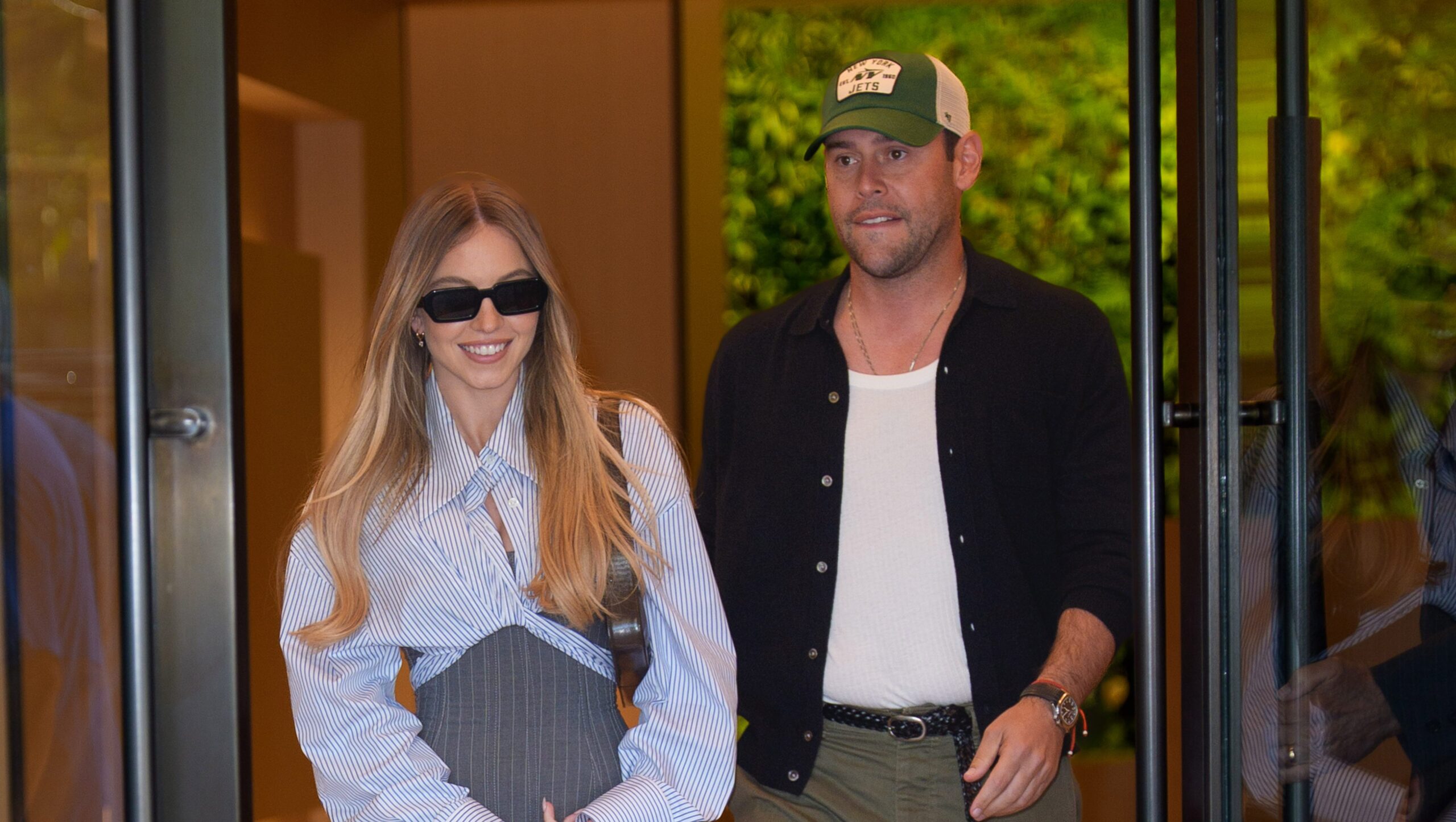

Sydney Sweeney, 28, posted a montage clip of Scooter Braun, 44, playfully gyrating on her during their Australian getaway, and the internet did what the internet does. Diagnosed them in ten seconds flat.
Predator. Daddy issues. Performance. Cringe. Pick your villain.
The age gap got flagged. Her Euphoria scenes got dragged back into the conversation. Somebody screenshotted the most unflattering frame of the video.
Here’s what I want to say from the couples therapy chair instead of the comment section. Two nervous systems are trying to feel safe inside a goldfish bowl where every kiss becomes content. That’s the actual story. And it’s a much more interesting one than the gossip take.
The Goldfish Bowl Makes Everyone Perform
The pattern I’m watching in this clip is what happens when two people use performance to try to secure a primal attachment bond.
Sydney and Scooter live in an environment where every version of themselves is recorded. Every heartbreak captured. Every mistake shareable. The village is watching. Both villages. Every move screenshot, saved, archived.
Inside that level of exposure, human beings develop character strategies to survive. One of those strategies is what I call “The Seducer.”
I know this one personally. In my mid to late twenties, I felt a bit of swagger for the first time, a sense that I could be desired. The Seducer lived inside me through my thirties and into my early forties. My worth in love got determined entirely by whether I could be wanted, whether I could perform the version of myself I believed I needed to be to be chosen.
For a young woman who has built a massive career playing provocative roles, getting a lot of her ego stability from being a sexually attractive person is a completely normal human storyline. Not a pathology. A storyline.
For the older partner, there’s an equally powerful pull. Our culture conditions men into what’s called “Centerfold Syndrome,” where masculinity gets validated through the desirability of young, beautiful women. I’ve had to confront this in my own shadow work. I try to deny that part of myself, but I have to own the ways I’ve been enthralled by it.
When you see a PDA-packed clip of this couple, you’re not watching a toxic failure. You’re watching The Seducer and the Centerfold colliding as two people use their most competent, public-facing protector parts to answer the only two questions the mammalian nervous system actually cares about. Are you there for me? Am I enough for you?
Why This Is Harder Than the Comment Section Knows
I see this exact dynamic every Tuesday in my San Francisco office. A high-profile couple comes in, terrified. They met when their sexy, competent selves were running the show. Then the honeymoon ended.
Almost every relationship has to make a transition. From sexual intimacy inspired by a simultaneous spark, where you come home from work and look hot, to something deeper. Waiting for those moments to be the only thing that inspires intimacy is ridiculous. Most couples don’t know that yet, which is part of the science behind what is a situationship and why so many high-chemistry relationships stall the second the cameras turn off.
In the therapy room, I watch these high achievers try to manage their intimacy from what I call the Penthouse of their emotional building. Up in the Penthouse, they rely on logic, PR strategy, performance. They avoid the raw, vulnerable feelings trapped down in the Basement.
They’re great at performing love for the public. Behind closed doors, they’re in biological panic.
If you’ve ever wondered which protector part runs your relationship, discover your attachment dynamic before you diagnose anyone else’s.
The terrifying part for couples like this is that dropping the seductive armor feels like a death. They feel at risk of being rejected for their not-enoughness, or they feel they’ll be too much and not be chosen. The public PDA is often a desperate, performative attempt to keep the spark alive because they don’t yet know how to be safe with each other in the quiet, unrecorded moments. The honeymoon high they’re surfing has a name and a half-life, and the limerence stages explain exactly why the chemistry that brought you in is never the chemistry that keeps you.
What Actually Works When the Spark Is Public
If Sydney and Scooter, or any couple trapped in this loop, sat on my couch, the first thing I’d do is normalize what’s happening. No pathologizing.
I’d tell them they can’t find a cognitive solution to what’s fundamentally a limbic problem. You can’t strategize your way out of a nervous system that’s performing for its life.
Then I’d look at them and say the line I say a lot. Your sexy self met your partner. Now your vulnerable self has to make love to them.
That move from Penthouse to Basement is the whole game. It looks like one partner saying, out loud, the thing the protector part has been hiding. I really do need to know I’m important to you. I really do need to know you’re not disappointed in me. Those needs aren’t weakness. Laying them on each other is the bond.
I’d guide them toward what I call Empathy Cubed. Compassion for me. Compassion for you. Compassion for the system we co-created. All at the same time.
And I’d ask them to step out of the Story of Other. The Story of Other never leads to growth, never leads to healing, never leads to sovereignty. It’s the path the lab rat discovers again and again has no food at the end.
True sovereignty isn’t standing alone, perfectly healed. It emerges through secure attachment and successful repair. With another nervous system. In private. Off camera.
The Part Nobody Posts
I cringe at how important being desirable was to who I thought I was for so long. But it was attachment wounding. The early kind. The kind that whispers you have to become someone else to be lovable.
We’re an interdependent species. We need to be emotionally bonded from the cradle to the grave. When a couple engages in loud PDA, it’s two humans saying, please tell me I matter to you. They deserve immense empathy for surviving the digital firing squad and trying to find stable ground together. Everybody is lovable. Everybody is doing the best they can. Always.
________________________________________________________________________________
Figs O’Sullivan and his wife, Teale, are couples therapists in San Francisco, relationship experts to the Stars and Silicon Valley, founders of Empathi, and built the Figlet platform, an AI relationship coach trained on their clinical work.