
Washington has signaled readiness to expand operations, including potential ground options, while continuing strikes on Iran’s military and weapons infrastructure. At the same time, the sustained Israeli targeting of Iran’s Islamic Revolutionary Guard Corps (IRGC), Basij paramilitary militia, and law enforcement organizations has reportedly caused thousands of casualties within the regime’s repression apparatus during the conflict.
In response to these pressures, Tehran has pushed for additional security manpower through mass recruitment drives and the deployment of Iraqi militia proxy forces. The regime has also tightened control at home through executions, mass arrests, and explicit threats against civilians accused of aiding external strikes.
Washington escalates threats against Tehran
President Donald Trump wrote on March 30 that absent a near-term agreement, US forces could dismantle Iran’s core infrastructure, including its power grid, oil production, and even desalination capacity. Trump paired those warnings with claims that negotiations are underway.
The Washington Post reported on March 30 that the Pentagon is preparing for a prolonged ground campaign, with thousands of additional US troops deployed to the region. CBS noted the same day that the growing presence of elite US units, including Navy SEALs and Army Rangers alongside Marines and airborne forces, is intended to give Washington flexible options for potential operations inside Iran.
Regime-linked media outlets had framed these developments as part of a far more expansive campaign. The Tehran Times claimed on March 27 that the plan would begin with targeted killings of senior officials, followed by coordinated strikes on infrastructure across major cities. It also alleged that there would be a subsequent ground phase involving “4,000” fighters entering from the northwest alongside “5,000” US troops split between Bahrain and southeastern axes. The report further prognosticated US forces’ use of airports in “Bandar Abbas,” “Kermanshah,” “Urmia,” and “Tabriz” to facilitate airlifts, alongside helicopter-borne teams tasked with striking missile and nuclear-related sites.
The joint US-Israeli military campaign continues
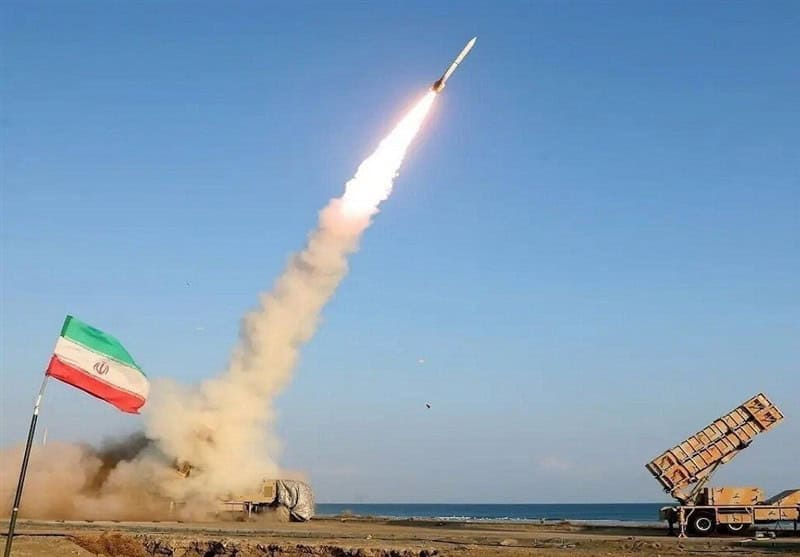
US officials told The Wall Street Journal on March 30 that US forces carried out a strike on an underground facility in Isfahan using a large number of bunker-penetrating munitions, targeting a major depot storing missiles, rockets, and other explosive materials.
The Israel Defense Forces (IDF) stated that throughout March 29 and March 30, roughly 40 weapons production and research sites in Tehran were targeted during air raids, with more than 80 munitions deployed. These operations included strikes on facilities tied to long-range air defense missile assembly, components used in anti-tank and short-range air defense systems, and infrastructure supporting ballistic missile engine development. Follow-on operations continued on March 31, with over 230 additional strikes within a 24-hour period targeting air defense systems, ballistic missile launchers prepared for use, and weapons production sites.
The latest assassinations of regime figures
Between March 28 and 31, various eliminations of Iranian leaders by US and Israeli strikes have been confirmed, including:
- Abbas Karami, commander of the Rapid Reaction Group at Khatam al Anbiya Air Defense Headquarters.
- Ali Fouladvand, head of research at the Organization of Defensive Innovation and Research (SPND), Iran’s military research and development body tied to nuclear weapons development.
- Majid Eshaghi, advisor to the Chief of Staff of the Iranian Armed Forces.
- Ali Khosravi, an IRGC Intelligence member.
- Majid Zakerikia, a commander of the IRGC’s Natural Resources Protection Unit.
- Majid Hassani, an IRGC member.
- Mohammad Ali Zaki, an IRGC member
- Ahmad Rasouli, an IRGC member.
- Hossein Ahmadlou, an IRGC member.
- Ali Biazar, an IRGC member.
- Sadegh Zakerikia, an IRGC member.
- Mehdi Hosseinali, an IRGC member.
- Alireza Mohiti, an IRGC member
- Omid Khoobroo, an IRGC member.
Thousands of casualties reported among the Islamic Republic’s security apparatus
Offering a one-month update since the start of the joint military campaign, an IDF Persian language spokesperson announced on March 30 that Israel has intensified its attacks against the IRGC, the Basij paramilitary militia, and Iranian law enforcement as the institutions responsible for suppressing protesters, adding that more than 2,000 of these forces have been eliminated.
Adding to these estimates, and citing an anonymous source, the London-based Iran International claimed on March 31 that nearly “4,770 members of the IRGC, Basij, and police” were killed and over 20,000 have been injured since the start of the war.
Recent regime announcements corresponded with external assessments of substantial losses. A March 31 call by the Islamic Propagation Coordination Council urged “committed youth,” revolutionary forces, and volunteers to enlist in the “Homeland Defenders” campaign, spanning civil defense, logistical support, and internal security roles. This recruitment push follows earlier IRGC job postings indicating a willingness to draw in minors as young as 12 for wartime support functions.
Another sign of Iran attempting to reinforce internal security is the deployment of Iraqi militias into Iranian cities. Videos show a convoy of fighters with Iraqi and Islamic Republic flags in the border city of Basra, while Iranian state media subsequently confirmed that these forces were moving through Abadan in Iran’s Khuzestan province.
The regime has continued its internal crackdown amid the conflict. Four political prisoners were executed between March 30 and 31, including individuals accused of “armed rebellion” and ties to opposition groups, while five protestors detained in January are facing imminent execution. On March 31, the regime’s Ministry of Intelligence said 54 people were detained across multiple provinces, while police in Khuzestan reported 138 arrests over 72 hours tied to alleged “hostile media” links. Authorities also warned that sharing images or footage with foreign actors could carry the death penalty.