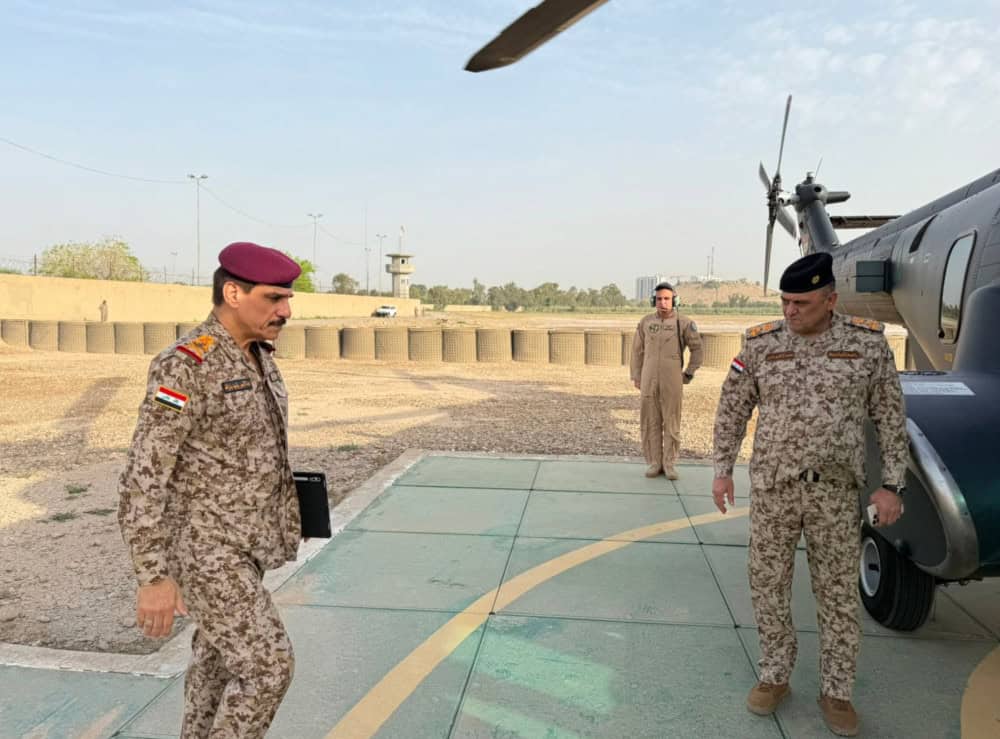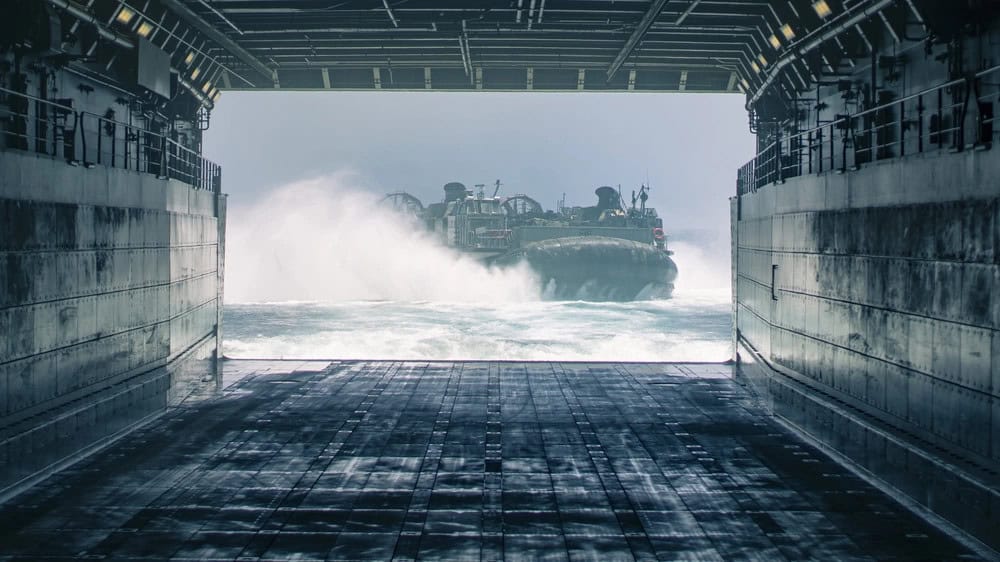

The battle for the Persian Gulf could be entering a new phase as thousands of US Marines are reportedly due to arrive in the Middle East on Friday, the same day that President Donald Trump’s deadline for Iran to reopen the Strait of Hormuz expires. The Marines’ arrival follows reports that Trump has potentially set his sights on seizing Iran’s Kharg Island, Iran’s vital oil export hub, in hopes of securing a quick opening of the strait and a decisive end to the conflict.
An operation to seize Kharg Island, however, is likely to have the opposite effect by incurring significant costs for little operational or strategic gains that can be achieved more effectively through other means. Indeed, a seizure and occupation of Kharg Island is more likely to expand and extend the war than it is to deliver any sort of decisive victory.
As the conflict enters its fourth week, US forces continue to pursue military objectives that have remained largely consistent: destroying Iran’s ballistic missiles, drones, and naval assets. American forces, alongside their Israeli partners, have made considerable progress in degrading those Iranian weapons and capabilities.
Despite initial operational successes, the Trump administration has reportedly focused on reopening the Strait of Hormuz, which would help stabilize global energy markets, as its immediate goal. With the administration perhaps growing impatient and searching for additional military means to achieve still-undefined political goals, reports emerged this week that Trump is considering plans to seize and occupy Kharg Island, through which Iran exported around 90 percent of its crude oil before the war, to pressure Tehran to open the strait and potentially use as leverage in future negotiations.
Reports of a possible operation have arisen as two US Navy Amphibious Ready Groups and their embarked Marine Expeditionary Units, numbering at least 3,000 Marines combined, are moving toward the Middle East. On Tuesday, the Pentagon also ordered elements of the US Army’s 82nd Airborne Division to deploy to the region, an additional force that could be used in such an effort.
However, the seizure and indefinite occupation of the island would pose significant operational challenges and come at a high cost for little strategic return.
A combination of Marines, Army airborne troops, and special operations forces could likely seize Kharg Island relatively quickly, though naval assets would encounter Iranian threats in transit to the island. However, the real problems for US forces would likely start once they are on the island, where they would face considerable force protection and sustainment challenges.
Sitting roughly 20 miles off the coast of Iran at the western end of the Persian Gulf and over 350 miles past the Strait of Hormuz, Kharg Island would leave US forces vulnerable to numerous threats. Despite the effectiveness of US and Israeli strikes at degrading Iran’s missile and long-range drone capabilities, the regime still retains some capacity to conduct missile and drone attacks and will likely continue to do so for some time. The proximity of Kharg Island to the mainland would also leave US forces within range of other indirect fire threats, including Iranian multiple launch rocket systems and potentially even some cannon artillery firing rocket-assisted projectiles.
An additional and underappreciated threat could come from Iranian first-person view (FPV) drones, millions of which have been employed on battlefields in Ukraine. Russia and Ukraine have developed technologies and tactics to extend the range of these quadcopters to 20 miles, and even developed un-jammable fiber-optic drones with a range of around 30 miles. If Tehran acquires or builds FPVs with sufficient range, the Iranian military could possibly identify and target individual systems and US service members in real time. Upon any successful strikes, the Iranian regime would be expected to release videos of those attacks online, using the graphic deaths of American service members as propaganda. Iranian proxies have already released videos of FPVs conducting reconnaissance and attacks against US positions in Iraq.
Utilizing these capabilities, Iran would likely attempt to mass fires against US forces both during the seizure of the island and during any subsequent occupation. Already ongoing Russian intelligence-sharing with Iran, including satellite imagery, would almost certainly improve the lethality of these strikes.
Given the range and volume of the Iranian threats, robust force protection would be needed for any American troops tasked with occupying the island. They would ideally be equipped with significant air, missile, and drone defenses. Many of these systems, however, require substantial personnel and equipment that are also needed elsewhere in the theatre. Some of them would also be difficult to quickly employ and maintain on the island. Critical ground-based systems, such as radars, would be especially vulnerable to being detected and struck by Iranian indirect fire or drones, potentially crippling ground-based American defenses there.
The US Navy would need to contribute to this force protection effort, too. Already strained across several missions, destroyers would likely be required to provide ballistic and cruise missile defense not only for the forces on the island, but also for the Amphibious Ready Groups needed to get the troops there and the support craft needed to sustain them. This effort would be particularly dangerous because of Kharg’s location at the western end of the Persian Gulf. Ships would have to transit the Strait of Hormuz, almost the entirety of the Gulf, and then linger close to the Iranian coastline—allowing Iran to attempt potentially deadly attacks. If troops on the island require continual seaborne logistical support, the risks would only increase over time. These naval assets would also then be unavailable for other tasks, such as convoying oil tankers through the strait. Given that the Navy has yet to begin conducting convoy operations, a mission to seize Kharg would almost certainly delay its ability to do so.
Perhaps most importantly, US forces would also need to conduct a large-scale air-to-ground suppression campaign along the Iranian coastline with a range of assets to disrupt Iranian attempts to concentrate effective fires on US positions. This effort would tie up a potentially significant amount of US air assets, preventing them from striking other targets while possibly exposing them to greater surface-to-air threats. Even with a robust air campaign, the combined threat of rocket and potentially cannon artillery, long-range and short-range drones, and cruise and ballistic missiles would be formidable, and unlikely to be completely removed from the air alone.
Air assets, particularly helicopters and V-22 Osprey tiltrotor aircraft, would likely also be tasked with logistical support for US personnel on the island. Numerous sorties would be needed, and the relatively low-flying aircraft would be more vulnerable to Iranian surface-to-air threats. Such threats might even include FPVs—Ukraine recently downed a Ka-52 attack helicopter behind Russian lines with a fiber optic FPV before finishing off the pilots with additional drones. Iran might attempt similar ambushes.
Given these challenges and others, a seizure of Kharg Island would be a high-risk operation involving large numbers of US forces that could lead to significant casualties. If conducting such an operation could deliver a decisive victory that shortens the war and secures American strategic objectives, one could perhaps argue that it might be worth the risk. However, even a successful seizure of the island would likely have the opposite effect.
First, Iran’s ability to generate revenue from oil sales is not a major determinant of the conflict’s outcome in the near-to-medium term; it would only be of real significance if the war lasts for many months or years.
Second, even if strangling Iranian oil sales and the associated revenue was key to the war’s outcome, the US can achieve all the objectives related to halting those sales through means other than invading Kharg Island. Sanctions, seizing Iranian tankers, or disabling portions of the oil infrastructure on Kharg are alternative options. Some of these approaches are wiser than others, but all are better than occupying the island.
Third, seizing Kharg would likely delay rather than accelerate reopening the Strait of Hormuz. Iran’s military capabilities on the island, which were already targeted by US strikes on March 13, are not particularly militarily relevant to the situation in the strait, given the more than 350 miles between these locations. And if US Navy ships are providing force protection around Kharg and convoying resupply ships to the island, they will have less availability to conduct convoy operations for merchant traffic through the strait. It will likely take some time before the US military can reopen the vital waterway, and seizing Kharg Island would likely only delay that goal even further.
Fourth, instead of increasing US leverage over Iran, seizing Kharg Island would enhance Tehran’s ability to inflict costs on Washington. Iran is currently limited to primarily using its diminishing long-range capabilities, but the US placing troops on the island would allow Iran to employ much more of its arsenal. Any American casualties then inflicted would increase political pressure on the Trump administration to end operations. Seizing Kharg Island may encourage Tehran to prolong the conflict if it sees an opportunity to exact mounting costs.
Fifth, there is an immense risk of mission creep inherent in seizing the island. Once US forces occupy it, any withdrawal would be seen as a defeat for Washington. If the troops positioned there take heavy casualties from Iranian fire emanating from the mainland—and air power alone is not sufficient to completely remove that threat—it is not hard to see how a subsequent seizure of coastal areas in the name of force protection could materialize. Iran, fighting a total war for regime survival, would have natural advantages in a ground war on its own soil against the United States, which entered the conflict seeking a quick, relatively low-cost, and decisive outcome, rather than a costly and extended contest of wills.
Political leaders in wartime often find themselves searching for a ‘decisive battle’ that will deliver a fast and conclusive victory. To be sure, it is tempting to envision a singular objective or operation that will bring an enemy to their knees, especially when the alternative appears to be a grinding war of attrition with an indefinite timeline.
Kharg Island, however, promises neither a swift decision nor victory. While some may view its seizure as a point of leverage to secure an as-yet-undefined political objective, it would be a risky operation likely to come with high costs for little benefit. Kharg is much more likely to become a liability than an asset and would draw the Trump administration closer to the war of attrition that it is trying to avoid.