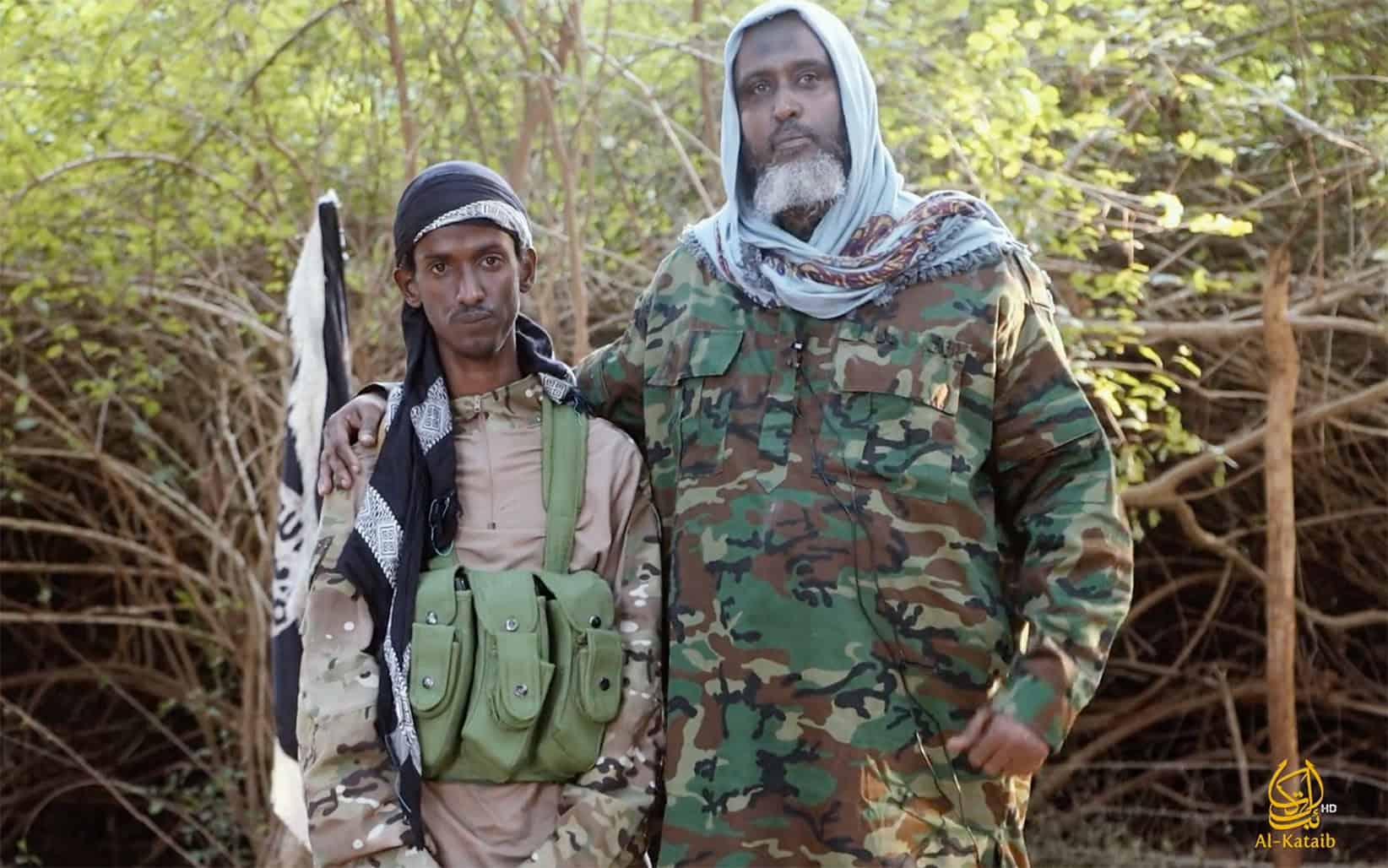
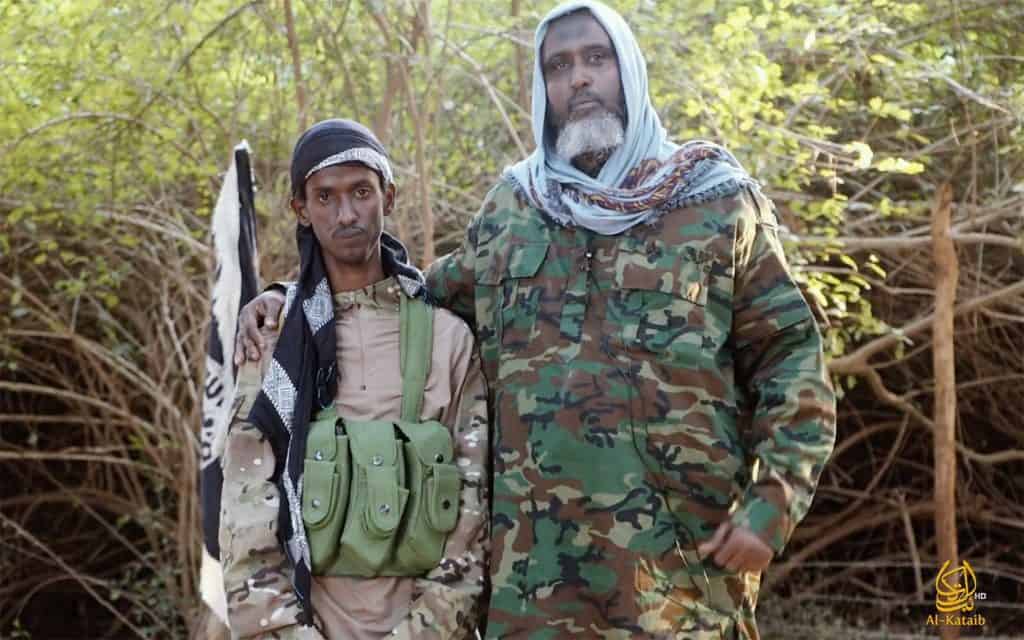
In a new video posted online as a so-called Eid celebration, Shabaab, Al Qaeda’s branch for East Africa, highlighted and celebrated last year’s assault on the Godka Jilacow prison in Mogadishu, which is operated by Somalia’s National Intelligence and Security Agency (NISA). Unusually, the group also made a point to showcase that one of the suicide commandos involved in the operation was the son of Ali Mohamad Rage, a top Shabaab official.
Last October, a coordinated assault that utilized a suicide car bomb and a team of gunmen targeted the Godka Jilacow prison in the heart of Mogadishu. Notably, the vehicle used for the car bomb, which easily made it through the facility’s security perimeters, was disguised as a NISA vehicle. Shabaab’s gunmen were also disguised as NISA security personnel.
The attack briefly broke some prisoners free, though Somali officials noted that they were all quickly recaptured. Videos posted on social media at the time of the incident appear to confirm the government’s account. Likewise, Somali authorities denied that there were any casualties in the assault, apart from the attackers.
Shabaab’s new video begins by explaining the group’s rationale for attacking the prison, claiming that the NISA-run facility was also used by the United States’ Central Intelligence Agency (CIA) to imprison and torture local Somalis. As such, Shabaab puts the facility in the same context as other American military and CIA prisons throughout the world during the global war on terror, which, according to Shabaab, abused and tortured innocent Muslims.
This rationale was also stated by the Al Qaeda branch when it first claimed the Godka Jilacow raid. In its official claim of responsibility, the group said that “it was part of an operation dubbed ‘Support for the Oppressed’” and that the explicit goal was to “free all the Muslim prisoners the apostates had been holding and torturing there.”
The video also features past prison assaults undertaken by the group. Footage is shown of the group freeing prisoners during a wider suicide attack on a Somali military base in the town of Balad Hawo in September 2017. Scenes from the group’s March 2021 prison break in Puntland’s Bosaso are also featured, as are some from its attack on a jail in Mogadishu’s Kadha District in August 2023.
In the latest video, Shabaab confirmed that the Toyota Land Cruiser it used was disguised as a NISA vehicle and its gunmen were disguised as NISA personnel. The group then showed previously released CCTV footage of the vehicle easily moving through security checkpoints, plus video recorded inside the vehicle by Shabaab’s driver. Footage from the actual assault in the group’s new film, however, is minimal.
These scenes highlight the security and intelligence failures that led to the assault, as the driver is continuously waved through checkpoint after checkpoint. Shabaab praises its Amniyat intelligence wing for pulling off the operation.
The second half of the video is dedicated to showing a pep talk given to the assailants by Ali Mohamad Rage, Shabaab’s top spokesman and one of its senior-most officials. Who Rage is speaking to in the speech, which focuses on justifying the need for the operation and encouraging the fighters, is noteworthy.
First, Shabaab identifies the attackers as members originating from Somalia, Ethiopia, and Tanzania, showing the continued presence and relevance of foreign fighters within its ranks. This paradigm is further evidenced by Shabaab releasing the video in Somali, Arabic, and Swahili, clearly seeking to expand its potential recruiting and support base geographically.
Second, one of the gunmen, or inghimasi (suicide commandos), was identified as “Abdulrahman, son of Sheikh Ali Mohamed Rage.” In a short speech to all the fighters present, Rage stands with his son and states that “this is my son and I love him very much. I raised him and taught him the Book of Allah … he has guarded the book and raised the banner of Tawhid [monotheism].” Further, Rage states that “without any pressure from me or anyone else,” his son “has chosen to follow the path of jihad and sacrifice his life for Allah.”
This marks a rare admission by Shabaab that the children of its leadership are not only actively involved in combat but also utilized in suicide assaults. Sons of jihadist leaders are typically commanders or other senior officials in their respective organizations. However, on rare occasions, these individuals are used in suicide bombings, such as when the son of Taliban leader Mullah Haibatullah blew himself up in southern Afghanistan in 2017.
Jailbreaks can often be a boon for jihadist groups. In addition to the significant propaganda value of such operations, these incidents can swell ranks, reinforce capabilities by freeing more highly trained individuals, and provide groups with a new sense of direction after springing leaders and key personnel.
It is for these reasons that jailbreaks are specifically a major part of the Islamic State’s overall global strategy, for example, and are often called for by the group’s central leadership as part of its long-term “Breaking the Walls” policy that originated during the Iraq War. Al Qaeda has also placed an increased emphasis on its cadres launching prison breaks, particularly in Africa, and Shabaab has been enthusiastic about carrying out its parent organization’s calls for such operations.