
On March 24, six members of the Kurdistan Regional Government’s Peshmerga forces were killed in an attack in northern Iraq. According to the local Rudaw Media Network, they were killed when missiles targeted one of their bases north of the regional capital of Erbil. Twenty additional Kurdish soldiers were injured. The Kurdistan Regional Government (KRG) has blamed Iran for the attack.
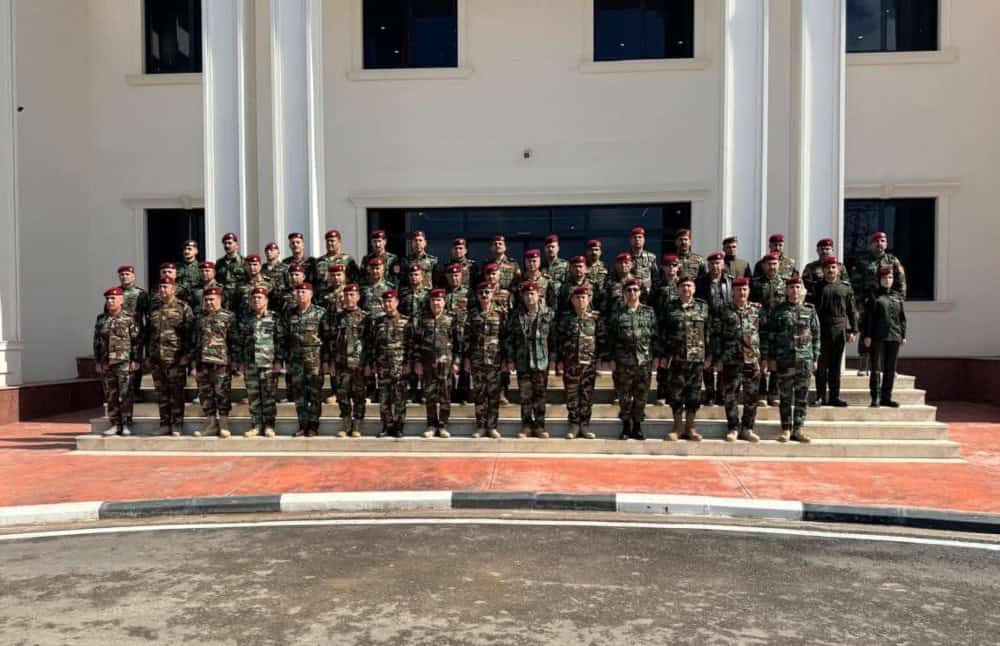
The Peshmerga are the armed forces of the Kurdistan Regional Government, which represents the semi-autonomous region in northern Iraq. The region has been targeted by hundreds of drone and missile attacks since the US and Israel began airstrikes on Iran on February 28. Iranian-backed militias and Iran have been behind the attacks, which have also targeted the US Embassy in Baghdad and other facilities in Iraq.
“Six Kurdistan Region Peshmerga fighters were killed, and more than 20 others were wounded in missile strikes targeting a base in Erbil province early Tuesday, as pro-Iran armed groups continue to target the Region amid ongoing regional war,” Rudaw reported.
The missile strike against the Kurdistan Region’s forces is the deadliest attack on the autonomous region since the start of the conflict. On March 18, three Peshmerga were also wounded in drone attacks. In addition, on March 8, a security officer was killed in an attack targeting Erbil International Airport.
The missile attack on March 24 was one of several serious incidents within or emanating from Iraq on March 23 and 24. On the evening of March 23, rockets were fired from an area north of Mosul, targeting Syria.
“A Syrian Arab Army base near al-Yarubiyeh in northeastern Hasakah province was struck by a missile attack on Monday, with forces put on full alert,” the Syrian Arab News Agency (SANA), a state media outlet, reported. The Syrian Army said that it was coordinating with Iraqi authorities in the wake of the attack, according to SANA. The rockets were fired from Tel al Hawa, which is around 80 miles north of Mosul, near the Syrian border.
Sipan Hamo, the recently appointed deputy defense minister for Syria’s eastern territories, condemned the attack. “We hold the Iraqi authorities fully and directly responsible for this act, due to their failure to control their territory and prevent its use to launch attacks that threaten our security and territorial integrity,” Hamo wrote on X.
In addition, more than 15 members of the Popular Mobilization Forces (PMF), a group of mostly Iranian-backed Shiite militias that are a paramilitary force reporting to the Iraqi government, were killed in airstrikes overnight between March 23 and 24. The strikes hit a PMF headquarters. In a post on X, the PMF accused the US and Israel of being behind the attacks, though neither the US nor Israel has claimed the operation.
KRG President Nechirvan Barzani condemned the March 24 attack on the Peshmerga. “We strongly condemn the Iranian missile attack that targeted the headquarters of the Peshmerga forces in Soran this morning, claiming the lives of a number of heroic Peshmergas and leaving others wounded,” he said in a statement. Barzani added that the “attack is a direct hostile aggression against the sovereignty of the country and has no justification and is completely contrary to the principles of good neighborliness.” He also called on the Iraqi federal government and the international community to prevent further attacks. Other Kurdish leaders and officials also condemned the strike.
The attack on the Peshmerga came amidst continuing drone and missile attacks on the Kurdistan Region throughout March 23 and 24. It also followed an attack on the National Intelligence Agency in Baghdad, Iraq’s intelligence service, three days prior. This strike killed one person, according to the Iraqi National Intelligence Service.
Iraq’s Foreign Minister Fuad Hussein was asked about the attacks in an interview published on March 23, before the deaths of six Peshmerga. “Responding to why the Iraqi government has not prevented pro-Iran armed groups from being involved in the war, Hussein said the issue has persisted for years, noting that ‘they also have power; they have military power, organizational power, and parliamentary power,’” Rudaw reported.